YaliyomoContents
01Kwa nini mfumo huuWhy this system
Hospitali nyingi zinaendeshwa kwa madaftari matano yasiyoongea: daftari la mapokezi, la maabara, la famasia, la mahesabu, na la wafanyakazi. Mgonjwa mmoja anaandikwa mara tano, na mwisho wa mwezi hakuna mtu anayejua kwa uhakika ni kiasi gani kilipatikana, ni dawa ngapi zimetoka, wala ni wagonjwa wangapi hawakurudi. Most hospitals run on five books that do not speak to each other: the front desk, the laboratory, the pharmacy, the accounts, and the staff register. One patient is written down five times — and at month end nobody can say with certainty what was collected, what left the shelf, or who never came back.
Kuandika mara mojaWritten once
Mgonjwa anasajiliwa mara moja tu. Maabara, famasia, wodi na uhasibu wote wanasoma faili moja — hakuna kuandika upya wala majina yanayotofautiana. A patient is registered once. Laboratory, pharmacy, wards and accounts all read the same file — no re-typing and no two spellings of one name.
Kila senti inafuatiliwaEvery shilling is traceable
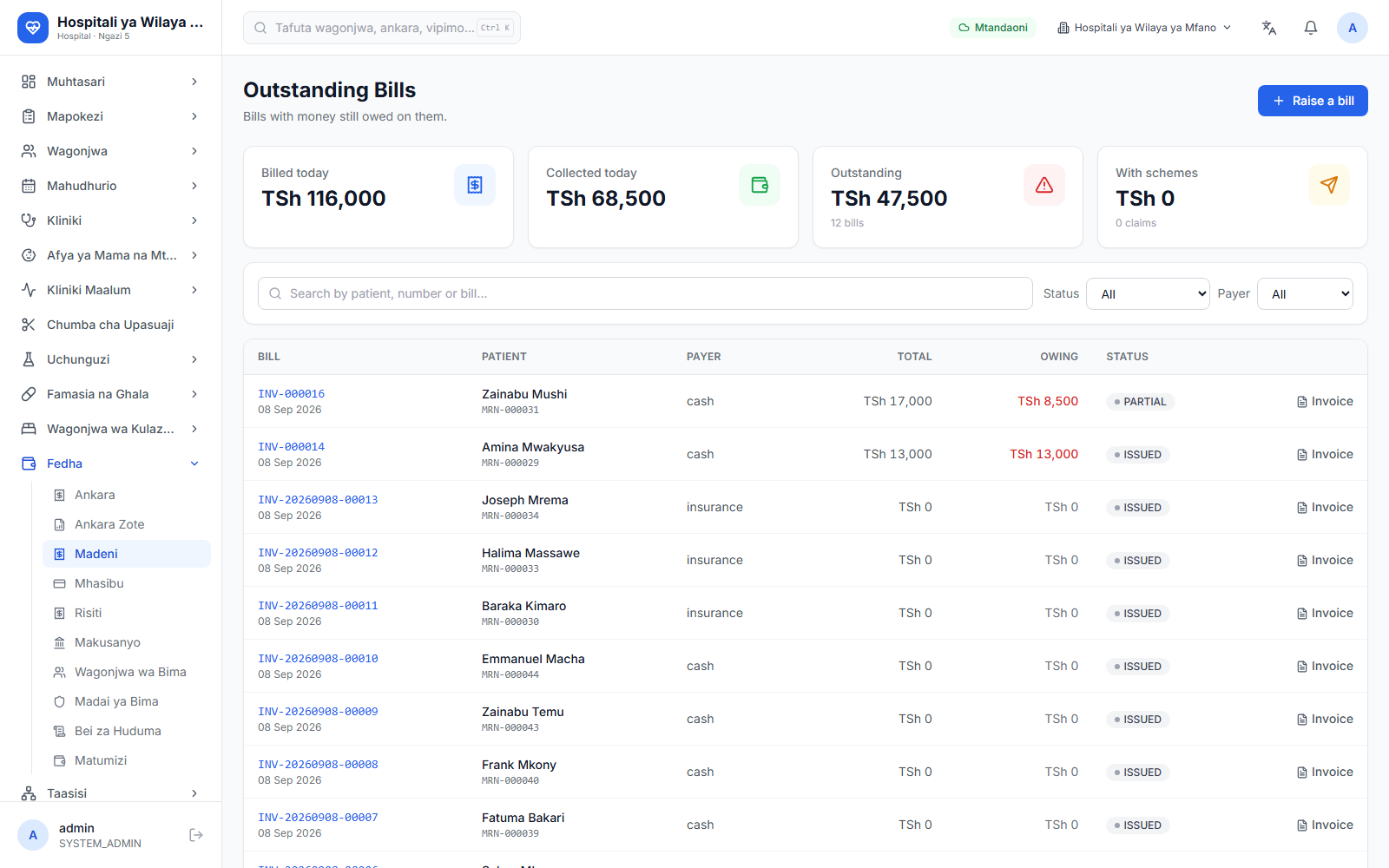
Huduma inayotolewa inatengeneza ankara; malipo yanatengeneza risiti; vyote vinaingia kwenye leja. Hakuna njia ya pili ya kupokea fedha. A service raises a bill, a payment raises a receipt, and both post to the ledger. There is no second place where money can be taken.
Foleni inayoonekanaA visible queue
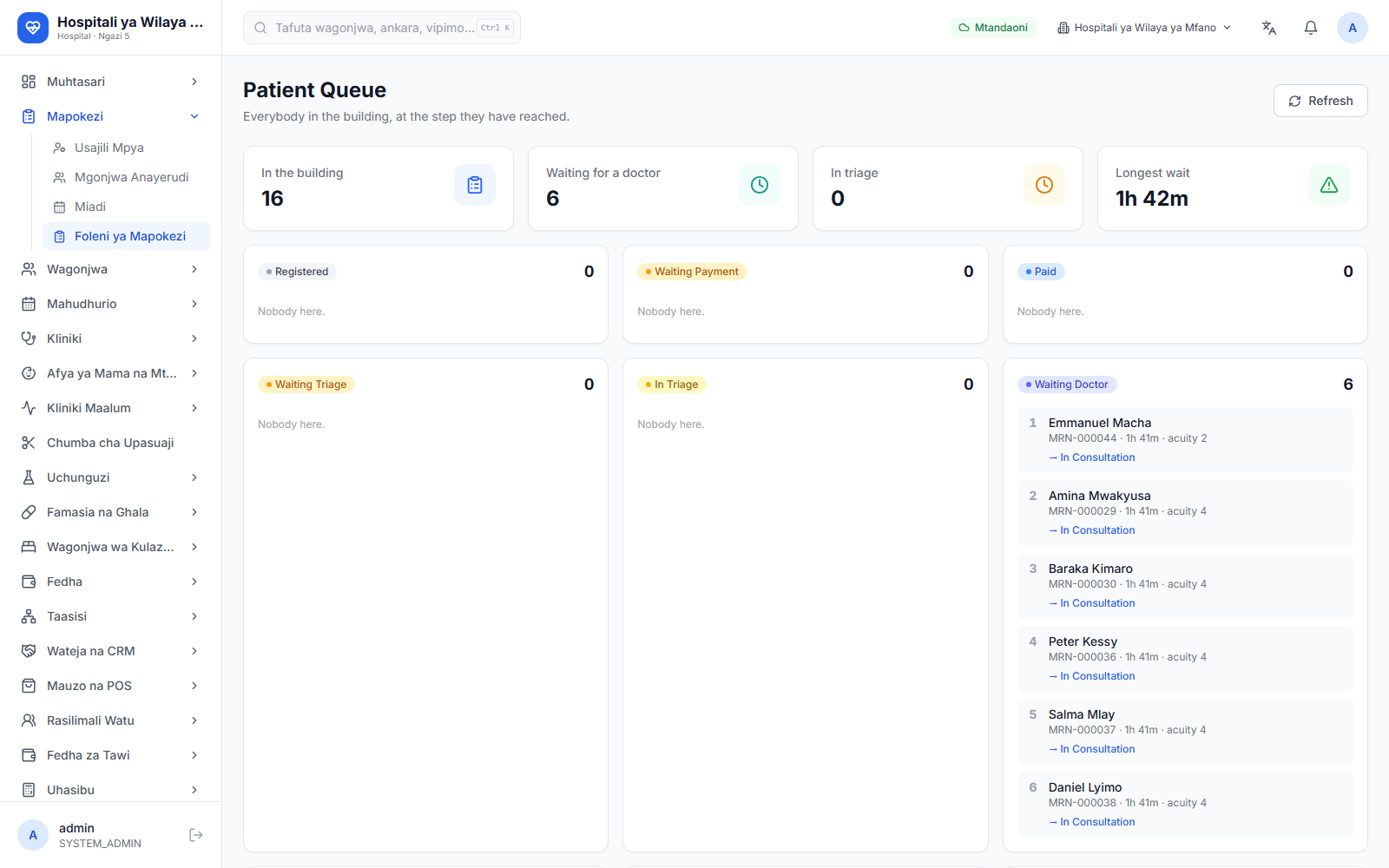
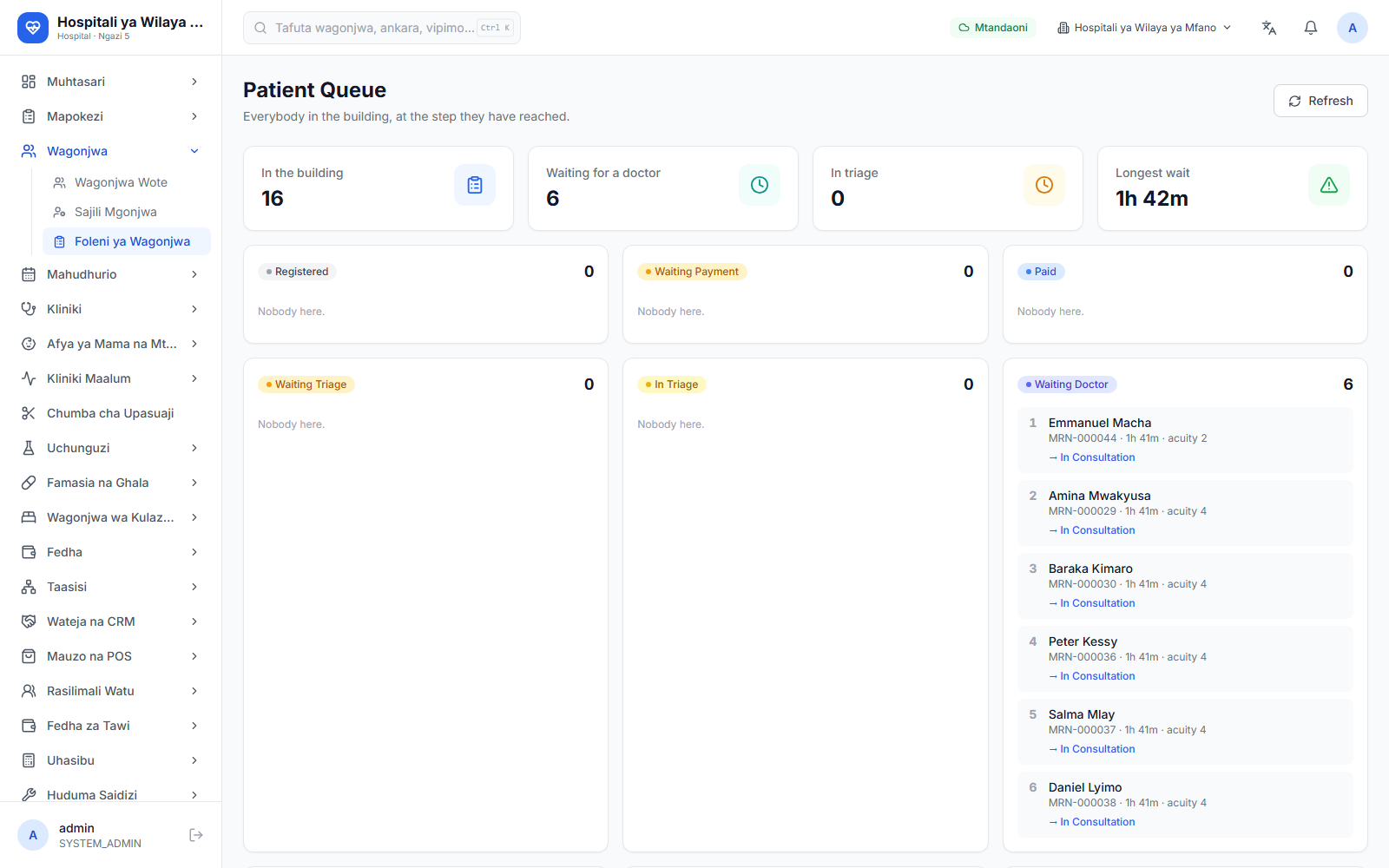
Uongozi unaona kwa wakati halisi ni wagonjwa wangapi wanasubiri, wanasubiri kwa muda gani, na wamekwama wapi. Management can see, right now, how many are waiting, how long they have waited, and where the queue is stuck.
Ripoti bila kukeshaReturns without an all-nighter
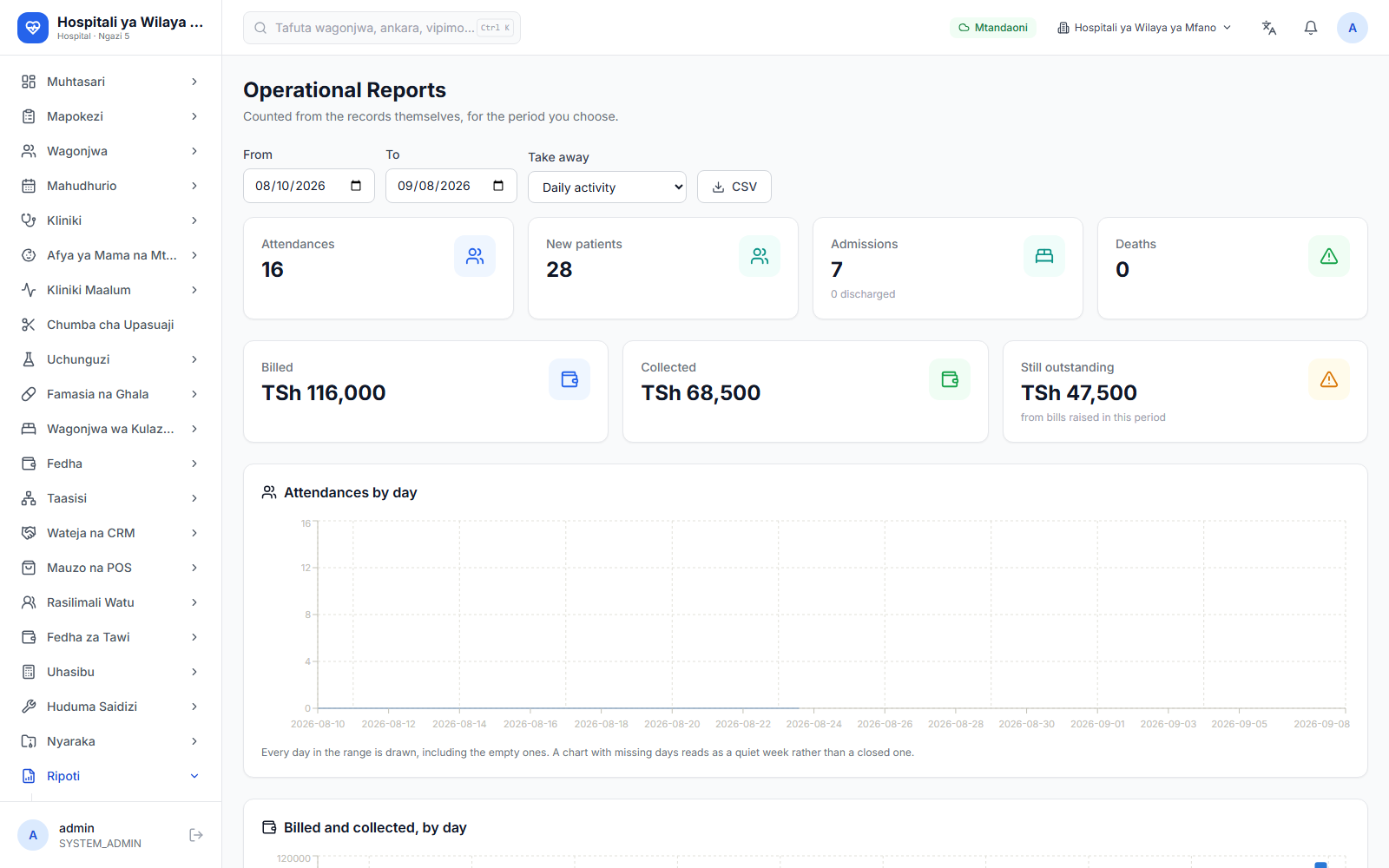
Ripoti za HMIS na ufuatiliaji wa magonjwa zinatoka kwenye kazi ya kila siku, siyo kwa kupiga hesabu za madaftari usiku wa kuamkia tarehe ya mwisho. HMIS returns and disease surveillance come out of the daily work, not from counting registers the night before the deadline.
Kila kitendo kina jinaEvery action has a name
Nani alifuta ankara, nani alitoa punguzo, nani alitoa dawa — kumbukumbu inaandikwa na seva yenyewe, na haiwezi kufutwa na mtumiaji. Who cancelled a bill, who gave a discount, who dispensed — the trail is written by the server itself and cannot be edited by a user.
Kiswahili na KiingerezaSwahili and English
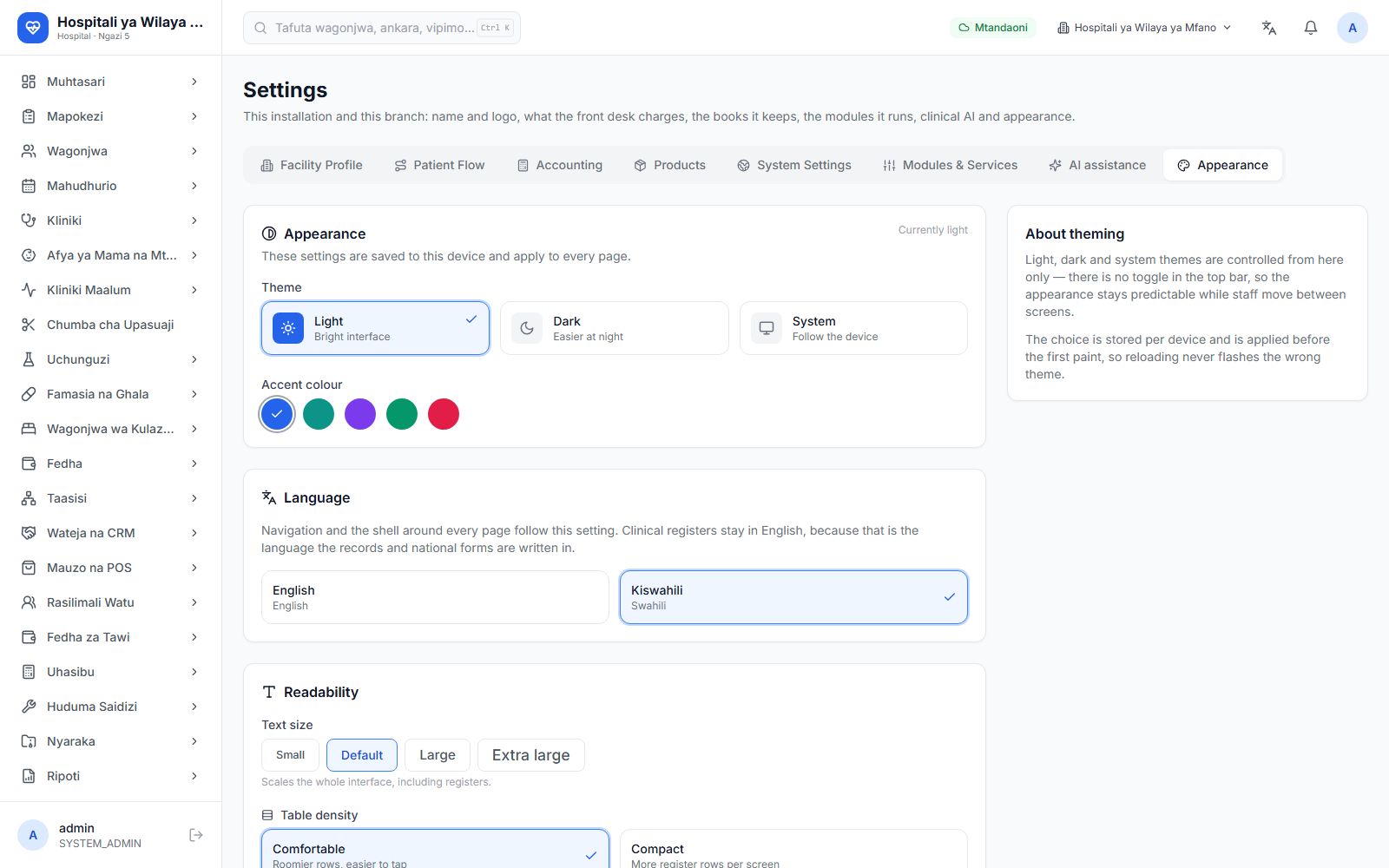
Menyu na maelekezo yapo kwa lugha zote mbili. Mfanyakazi anachagua lugha yake mwenyewe; rekodi za kitabibu zinabaki Kiingereza kama zilivyo kwenye fomu za taifa. Navigation and instructions are in both. Each member of staff picks their own; clinical records stay in English, as the national forms are.
02Mfumo kwa muhtasariThe system at a glance
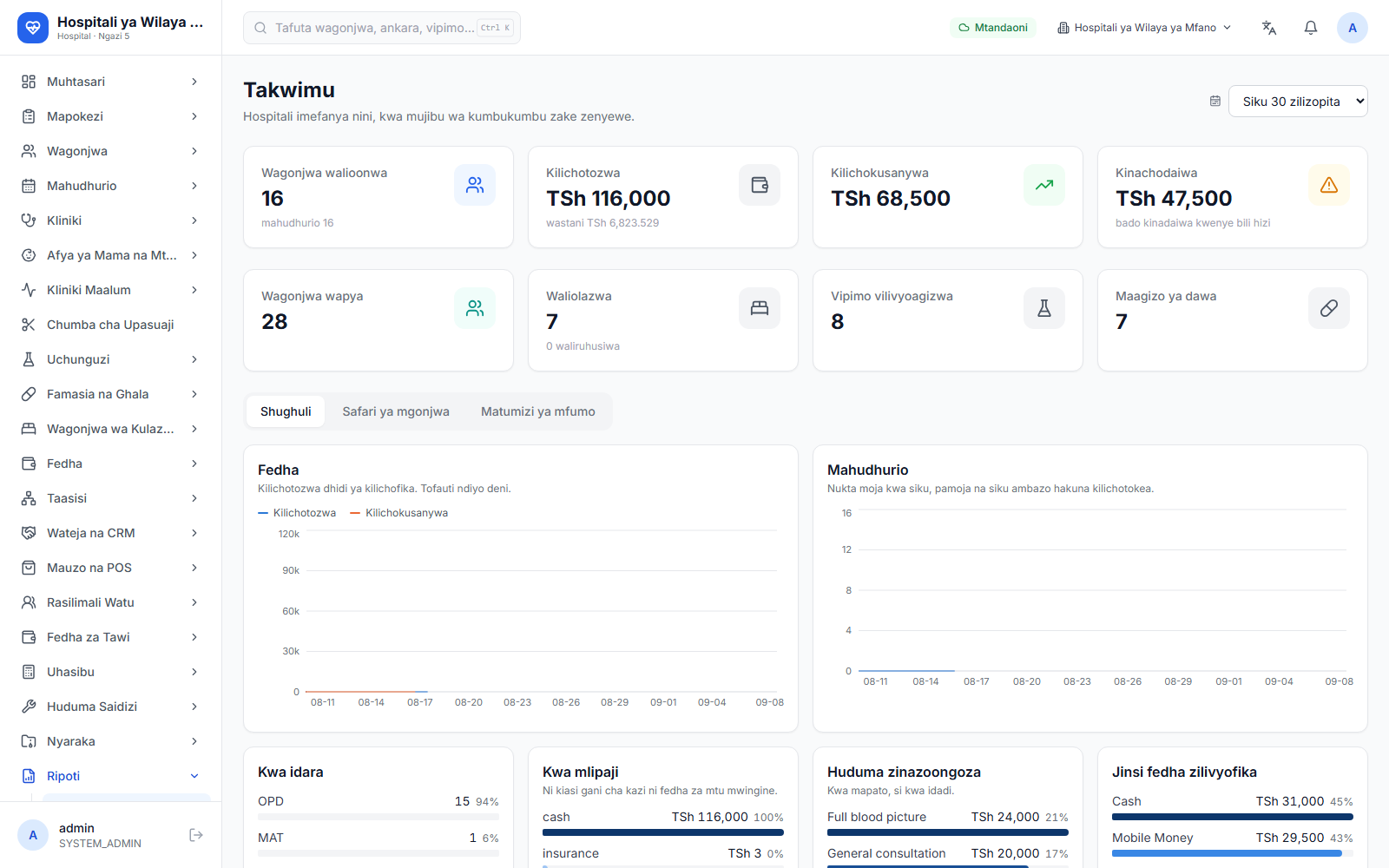
Sehemu zote zinazoonekana hapa zinaishi kwenye seva moja ya hospitali. Wafanyakazi wanaingia kwa kivinjari; simu na kompyuta binafsi zinatumia lango lilelile. Everything shown here lives on one hospital server. Staff reach it through a browser; phones and desktop clients use the same door.
Lango moja tu ndilo linalofunguliwa nje. Kila ombi linapita hapo, linathibitishwa, na linaandikwa kwenye kumbukumbu — hakuna njia ya kando ya kufikia rekodi. Only one door is open to the outside. Every request passes through it, is checked, and is recorded — there is no side entrance to the record.
03Safari ya mgonjwa, mwanzo mwishoThe patient journey, start to finish
Hatua kumi kutoka mlangoni hadi rekodi ya mwisho. Kila hatua inaonyesha kile mfanyakazi anachofanya, na kile mfumo unachozuia kisitokee. Ten steps from the door to the closed record. Each shows what the member of staff does — and what the system refuses to let happen.
Mapokezi: kusajili au kumtambua anayerudiReception: register, or find the returning patient
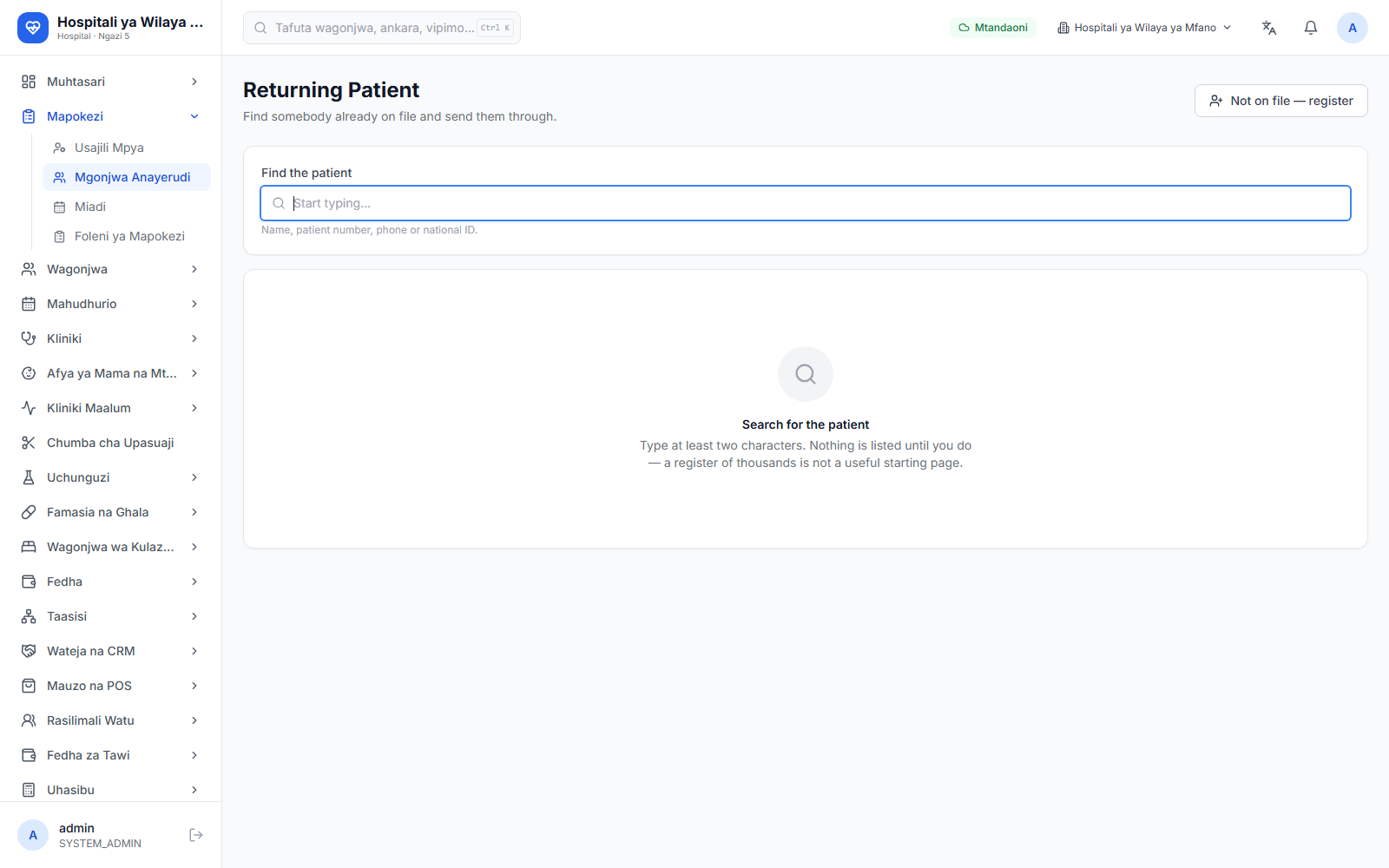
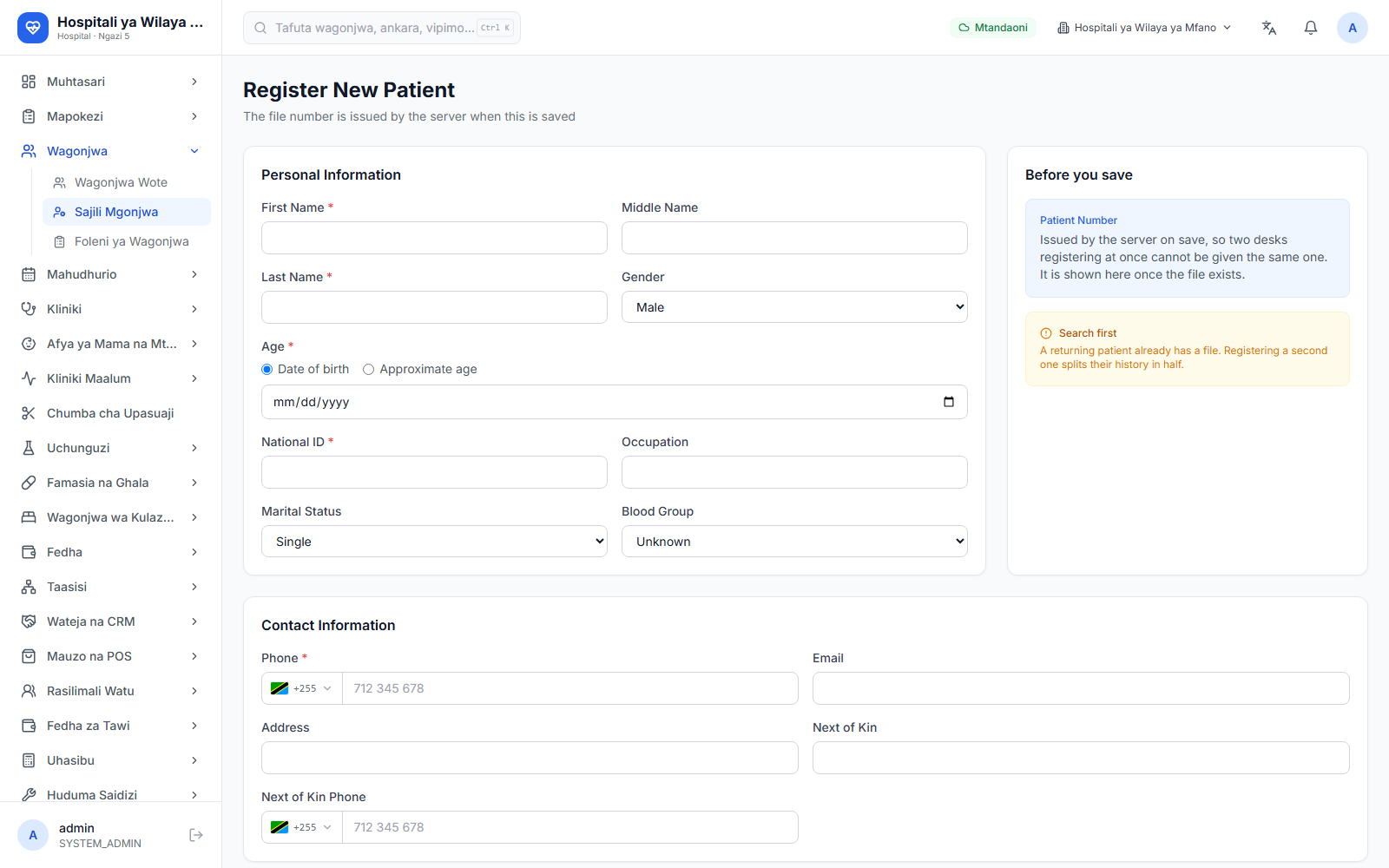
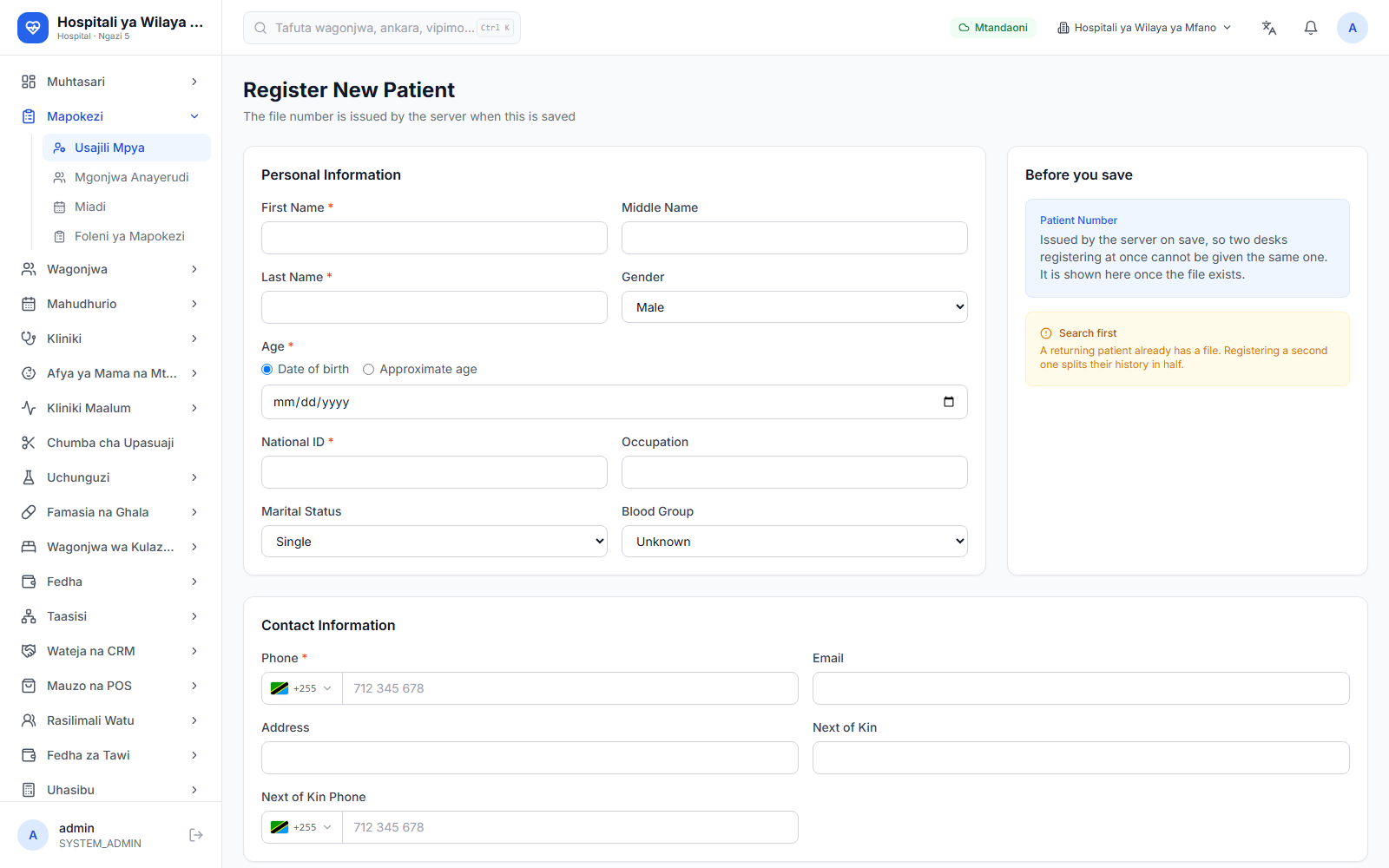
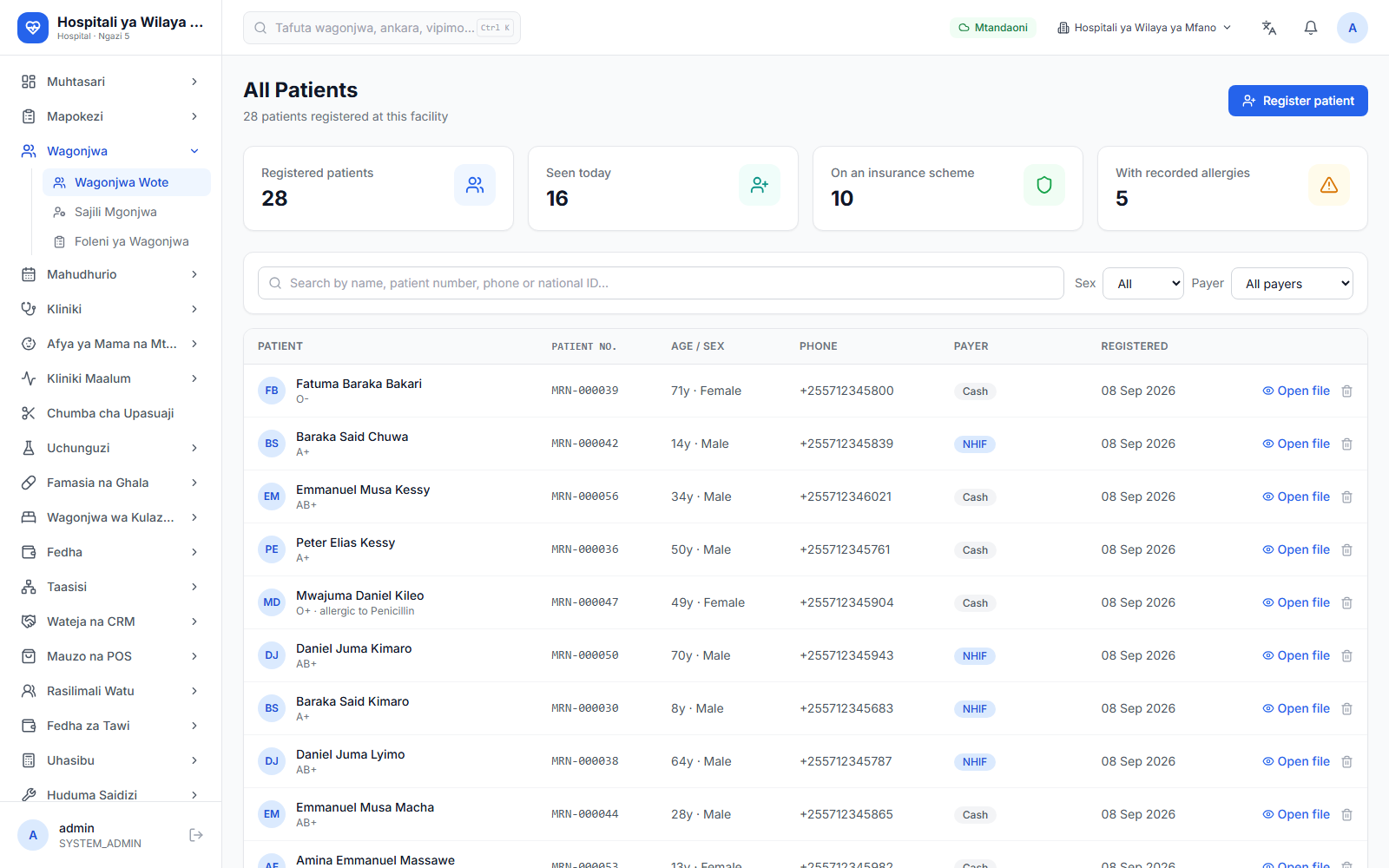
Mgonjwa mpya anasajiliwa kwa fomu moja: jina, jinsia, umri, simu, mkoa, ndugu wa karibu, na bima kama anayo. Mfumo unatoa namba ya faili (MRN) mwenyewe. Anayerudi anatafutwa kwa jina, namba ya simu au namba ya faili — halisajiliwi upya. A new patient is registered on one form: name, sex, age, phone, region, next of kin, and insurance if they have it. The system issues the file number itself. A returning patient is found by name, phone or file number — never registered twice.
Ada ya faili na ya daktariThe file fee and the consultation fee
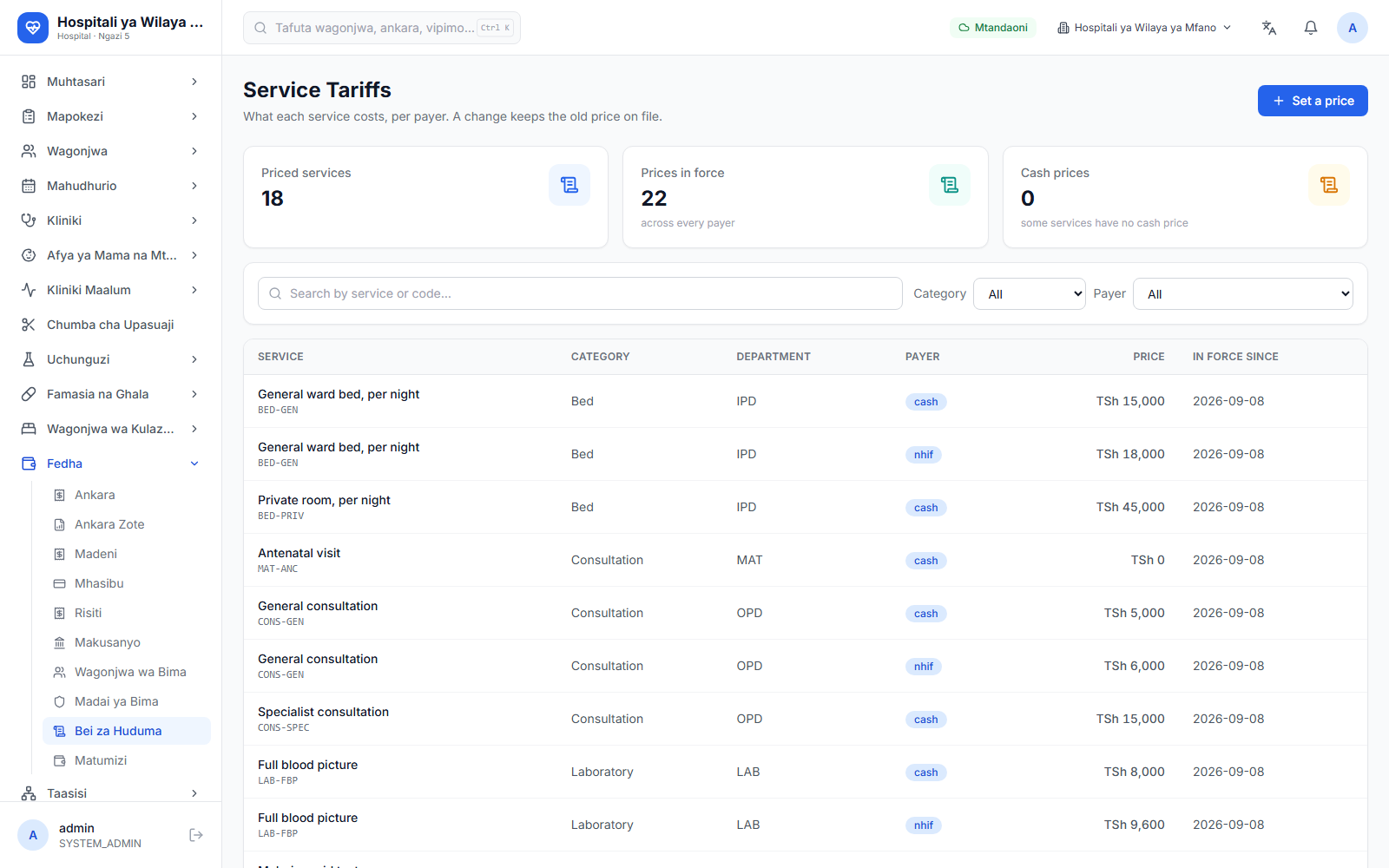
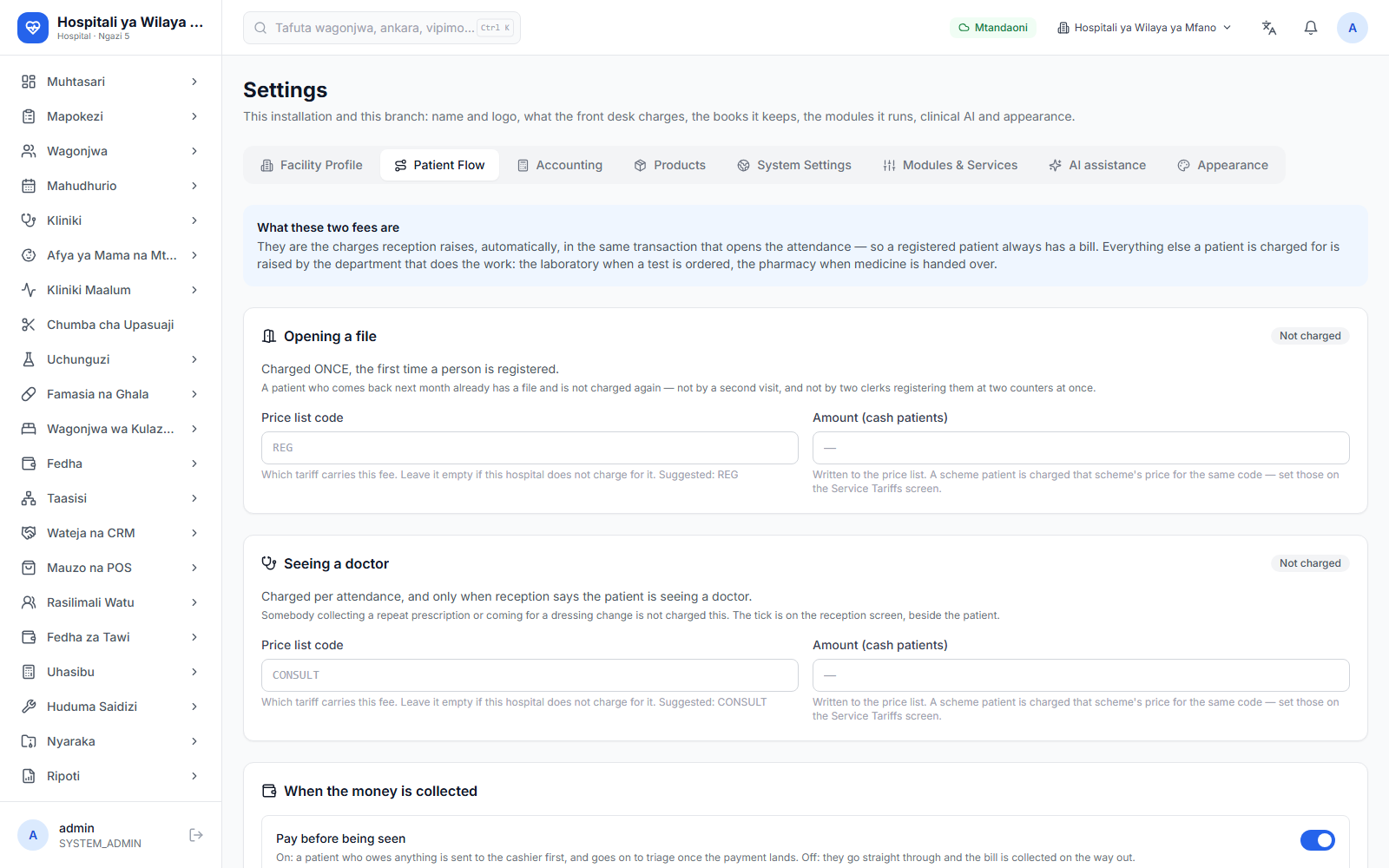
Hospitali inaweka ada zake yenyewe kwenye orodha ya bei. Ikiwa imechaguliwa kukusanya kabla ya kuonana na daktari, mgonjwa analipa mapokezi na risiti inatoka papo hapo. Mwenye bima haulizwi fedha — dai linatengenezwa badala yake. The hospital sets its own fees in the price list. If it collects before the consultation, the patient pays at the desk and the receipt prints there. An insured patient is not asked for money — a claim is raised instead.
Foleni: kila mtu anajua zamu yakeThe queue: everybody knows their turn
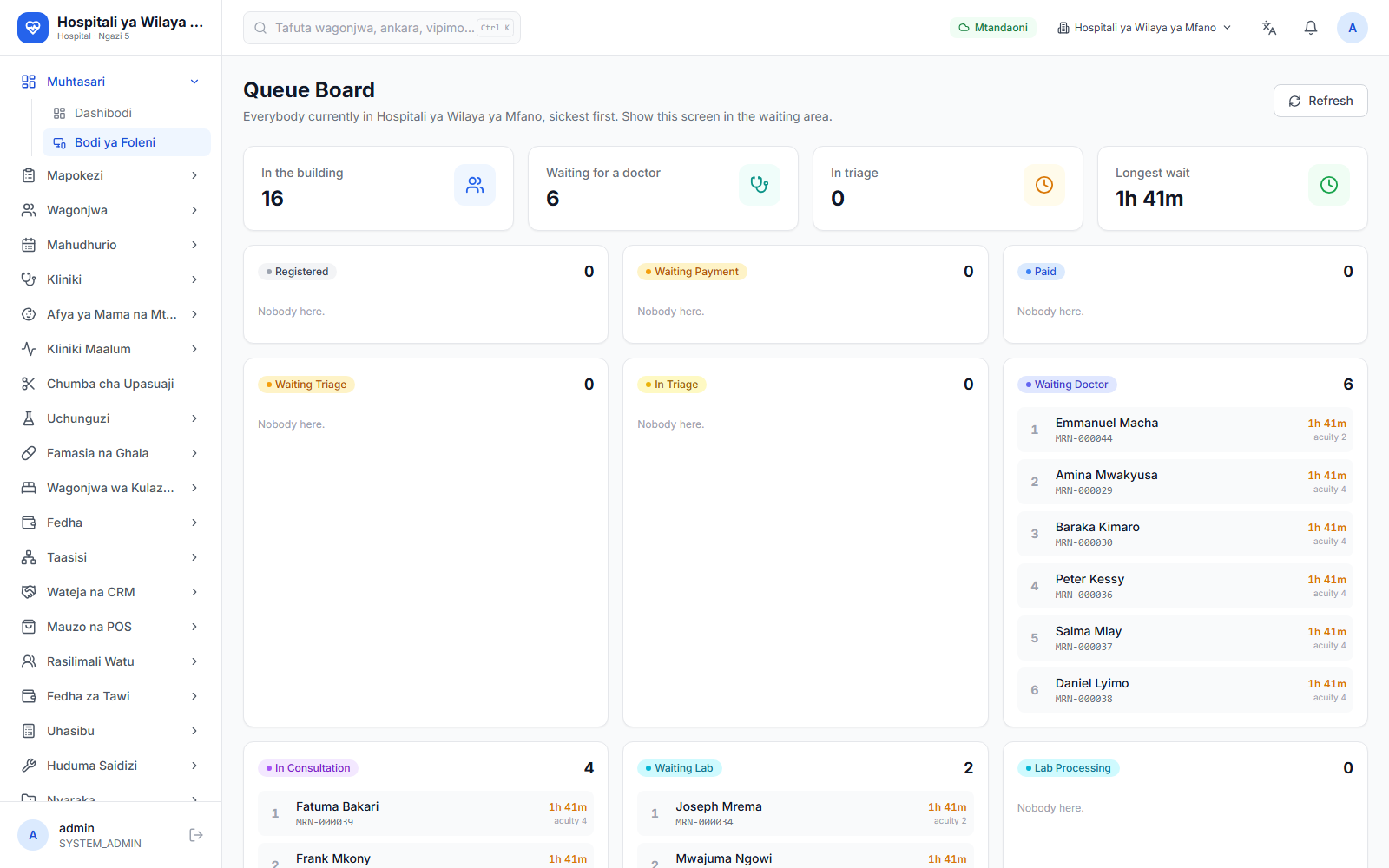
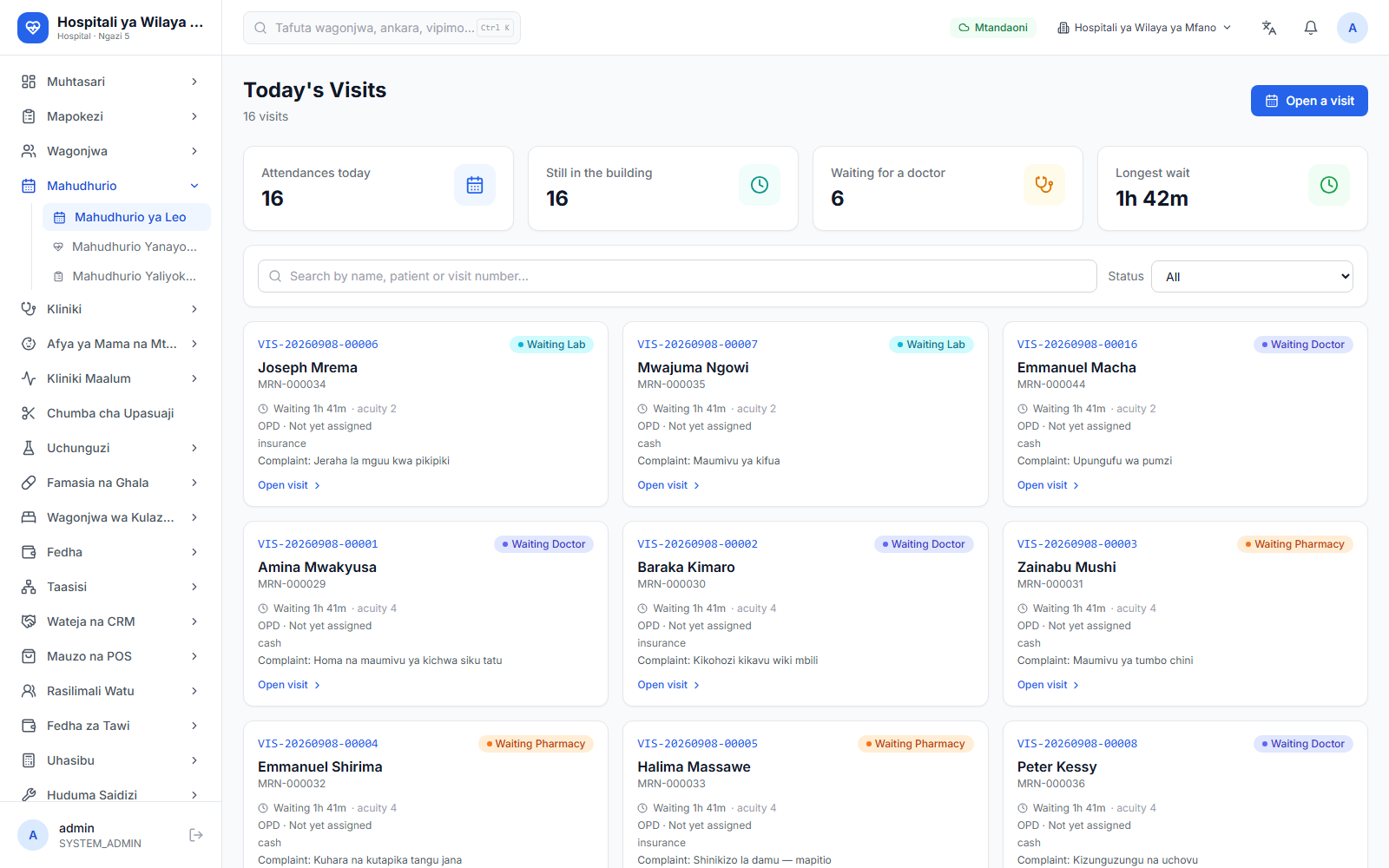
Bodi ya foleni inaonyesha namba na kituo. Wauguzi na madaktari wanaona orodha ileile: nani anasubiri, amesubiri dakika ngapi, na yupo hatua gani. The queue board shows the token and the service point. Nurses and clinicians see the same list: who is waiting, for how long, and at which stage.
Triage: vipimo vya awaliTriage: the first measurements
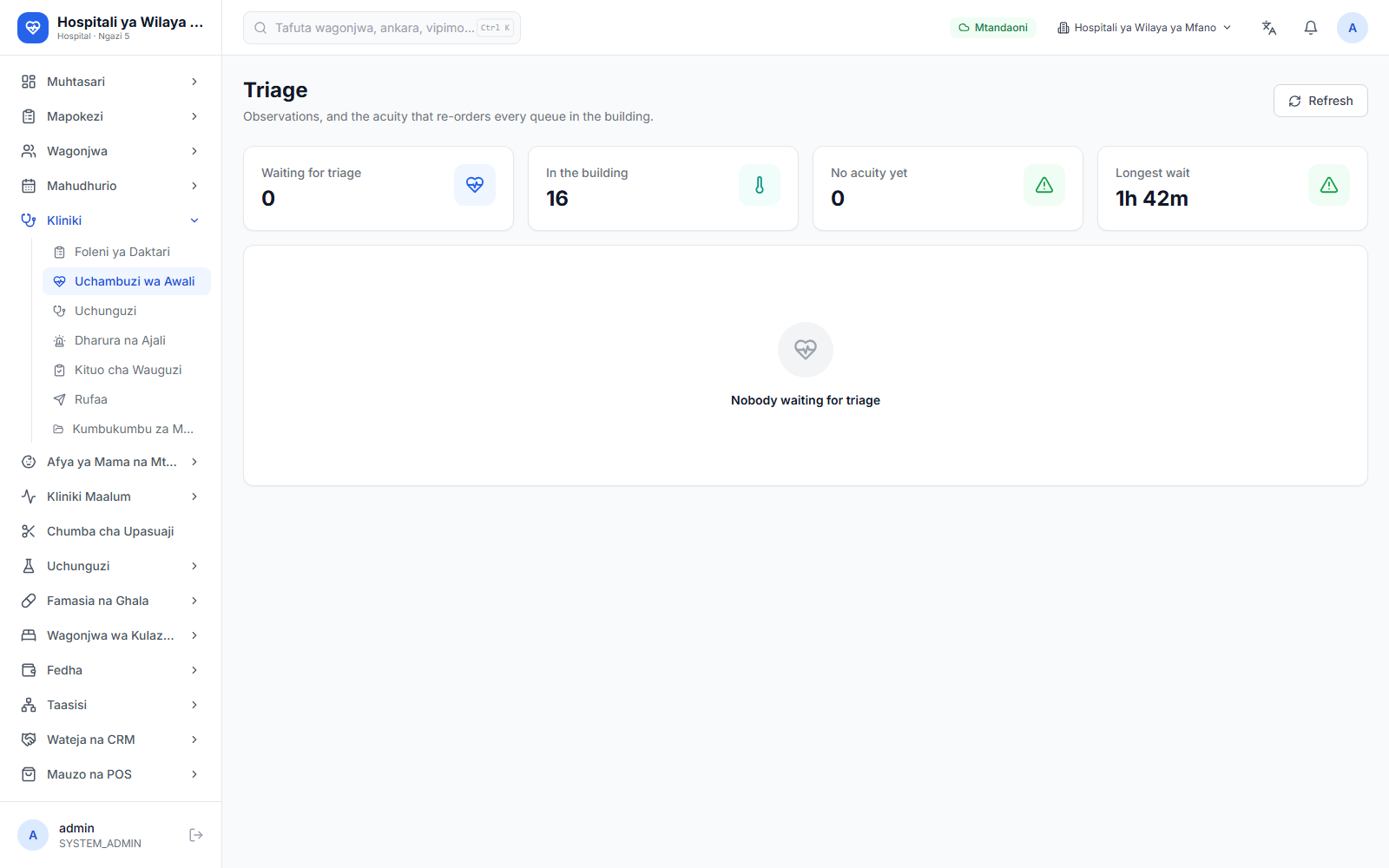
Muuguzi anapima joto, shinikizo la damu, mapigo, uzito na kiwango cha oksijeni. Vipimo hivi vinabaki kwenye faili la mgonjwa milele, na daktari anaviona kabla hajaanza. The nurse records temperature, blood pressure, pulse, weight and oxygen. The observations stay on the file for good, and the clinician sees them before starting.
Chumba cha daktariThe consulting room
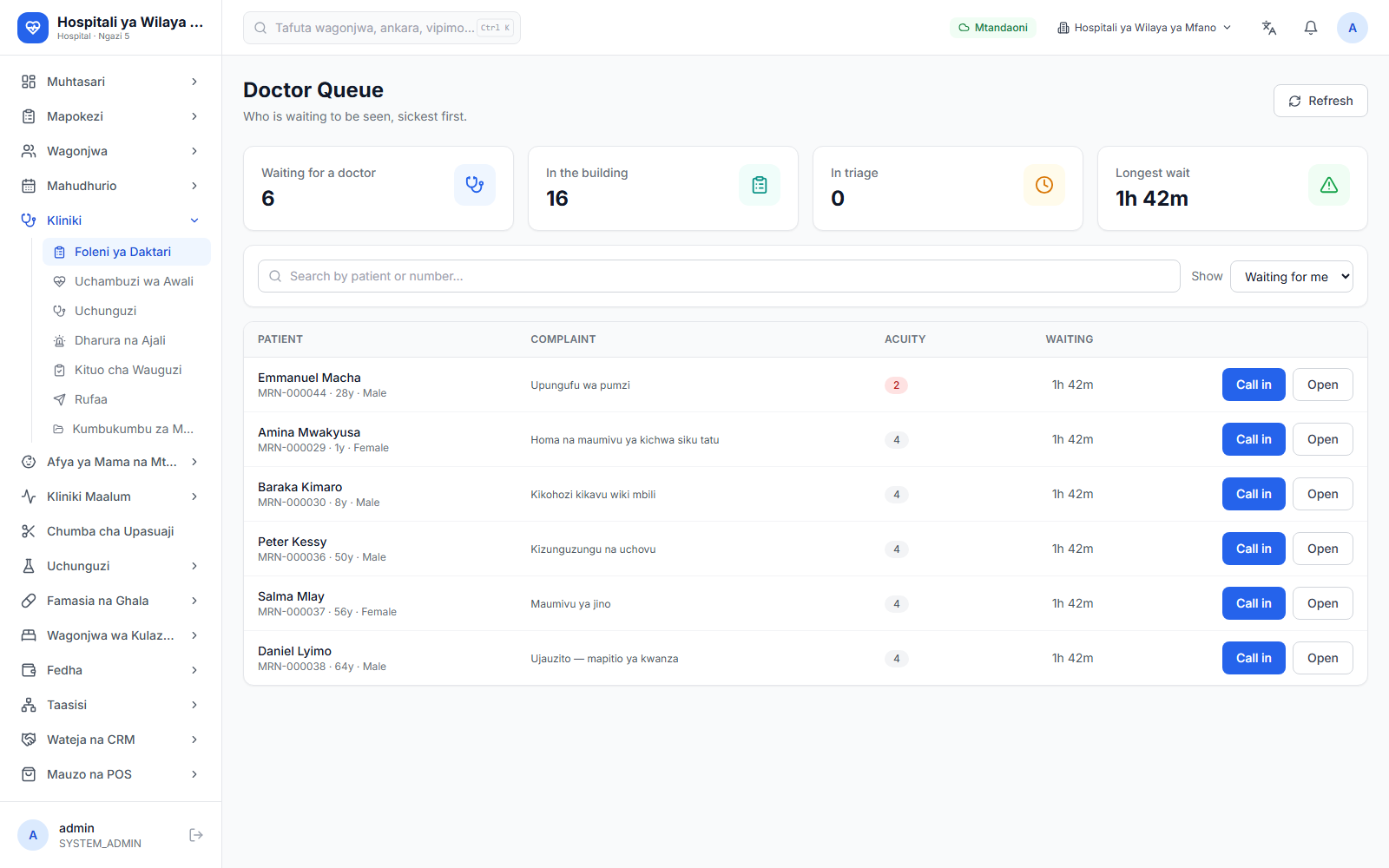
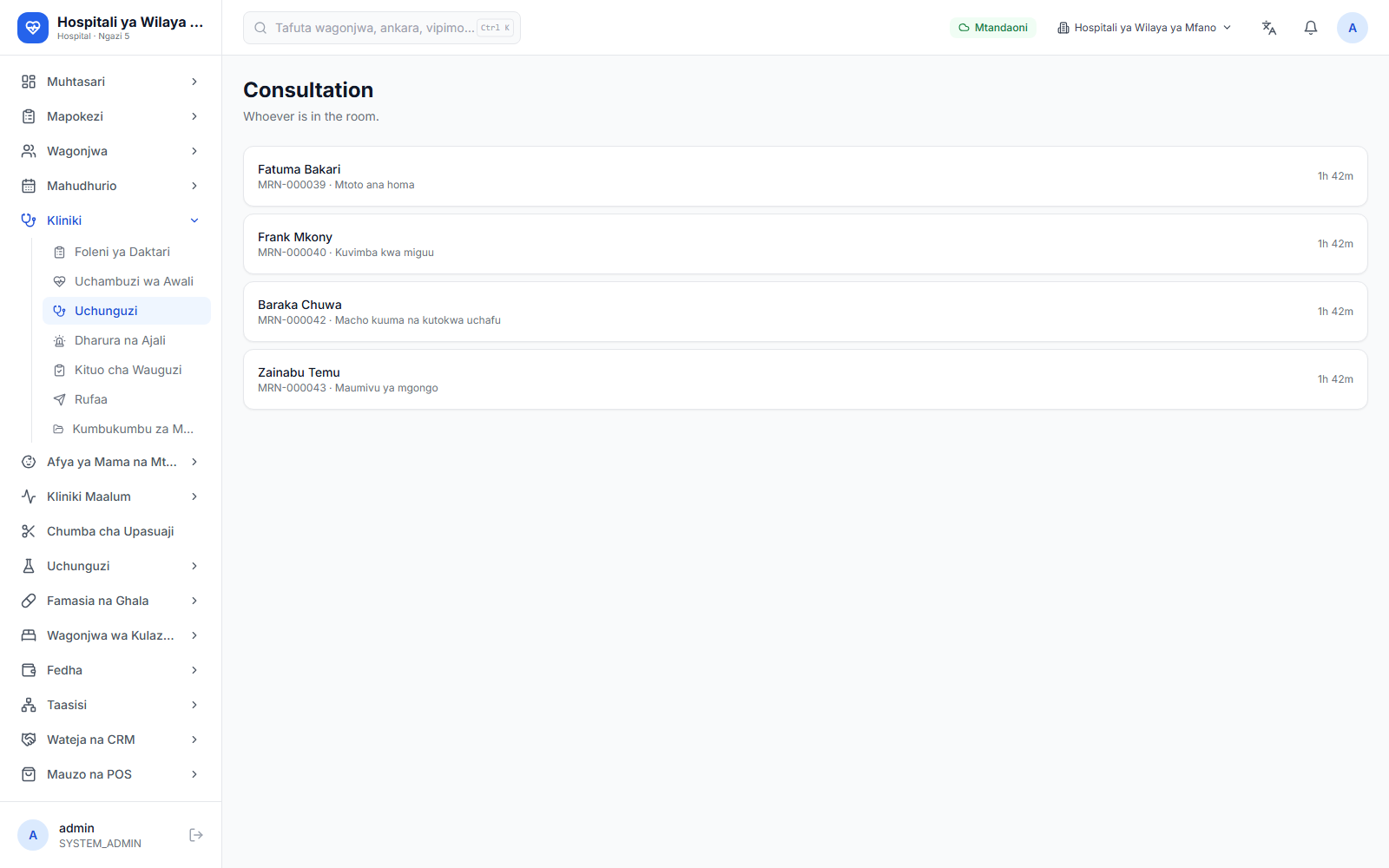
Daktari anaandika historia, uchunguzi, utambuzi na mpango wa matibabu. Kutoka skrini hiyohiyo anaagiza vipimo, anaandika dawa, anampa rufaa au anamlaza. The clinician writes the history, the examination, the diagnosis and the plan. From the same screen they order tests, prescribe, refer, or admit.
Maabara na pichaLaboratory and imaging
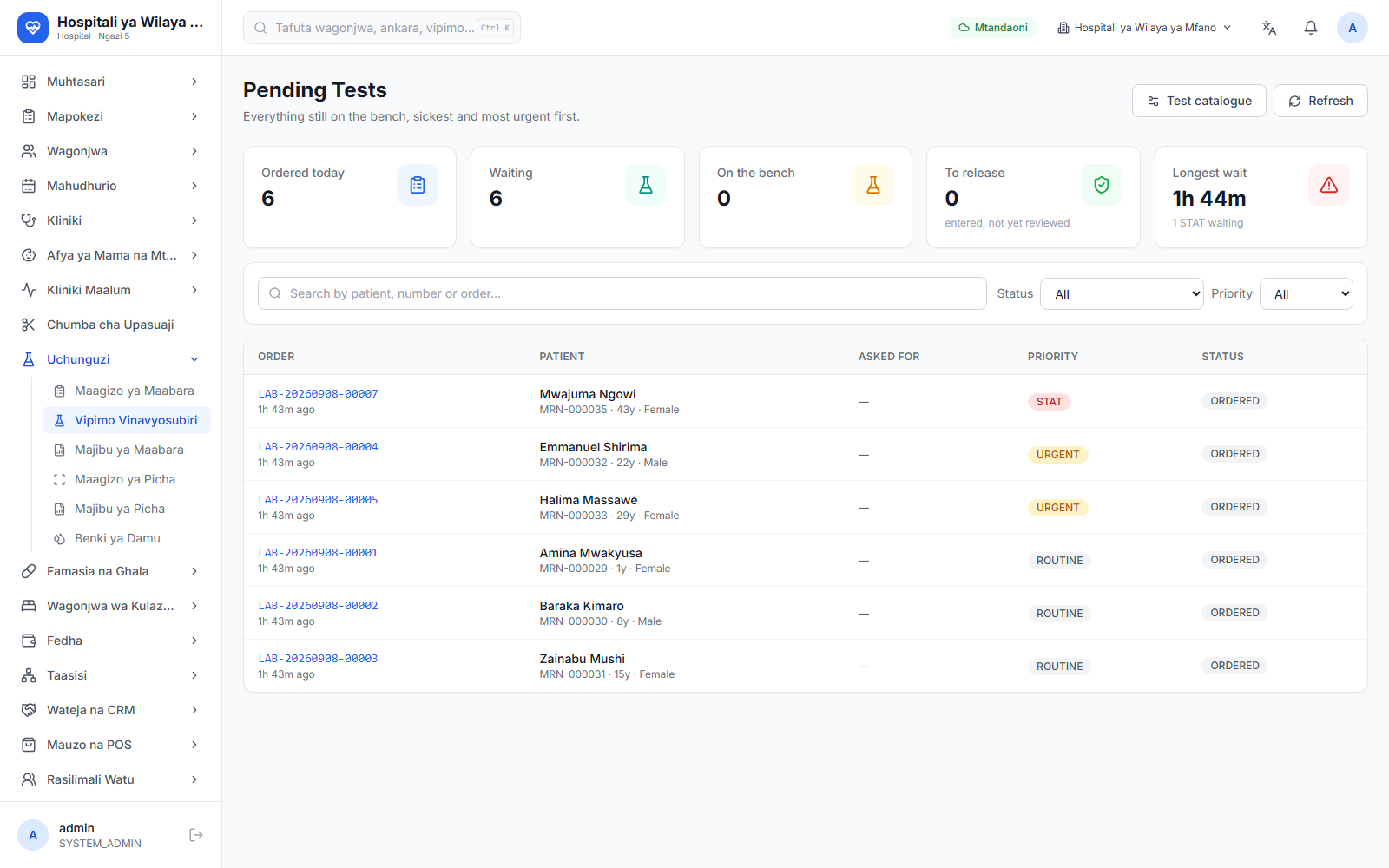
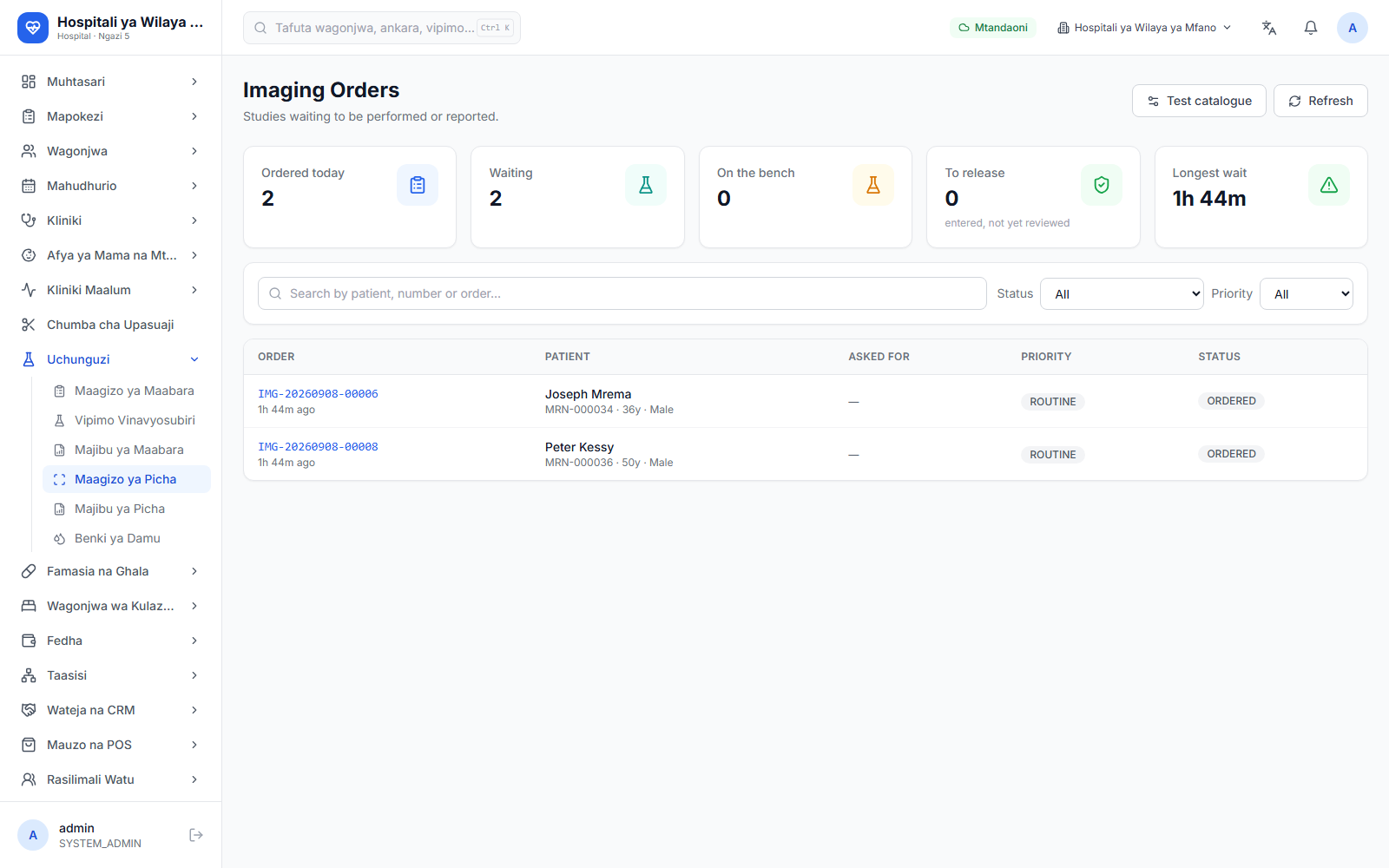
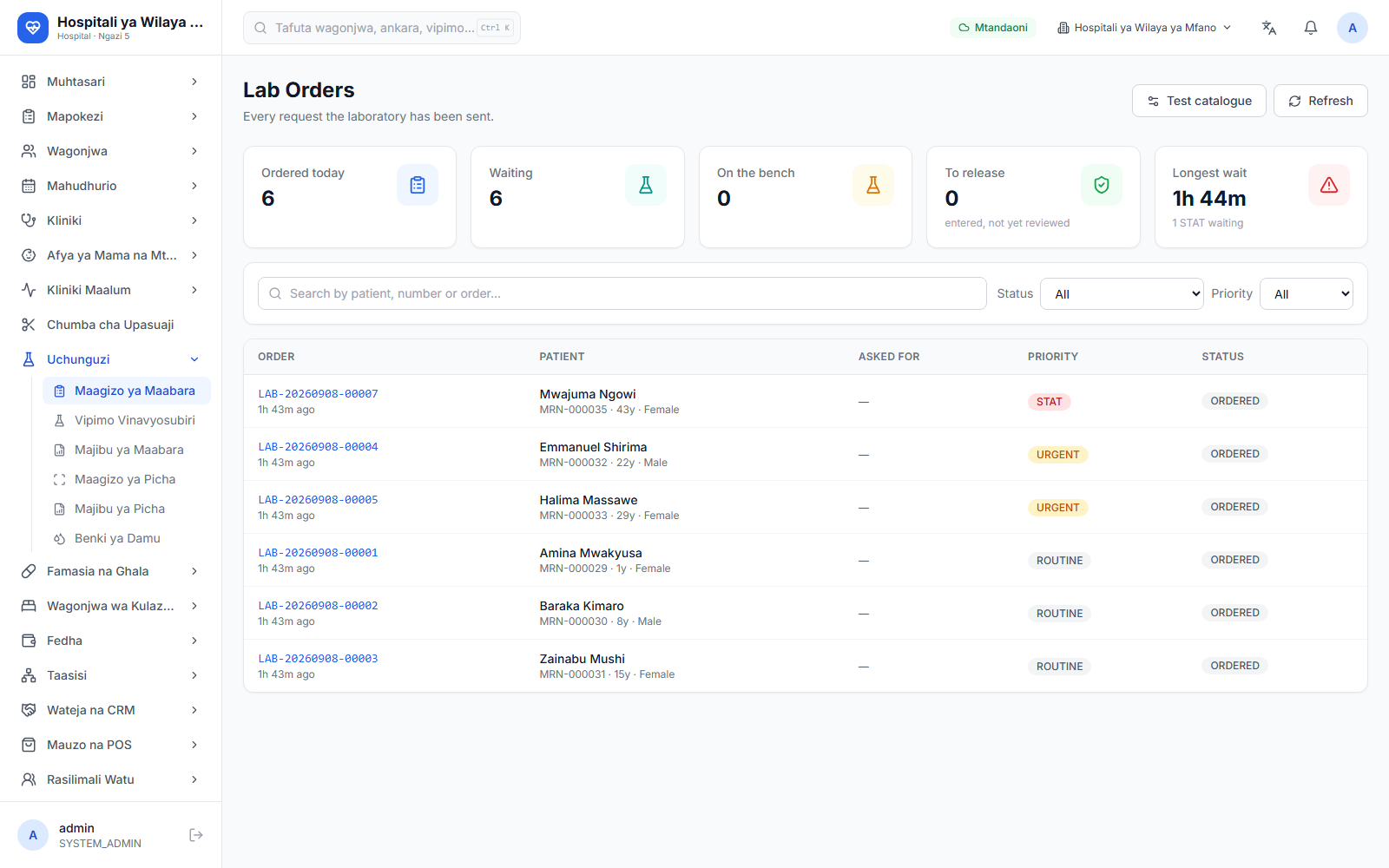
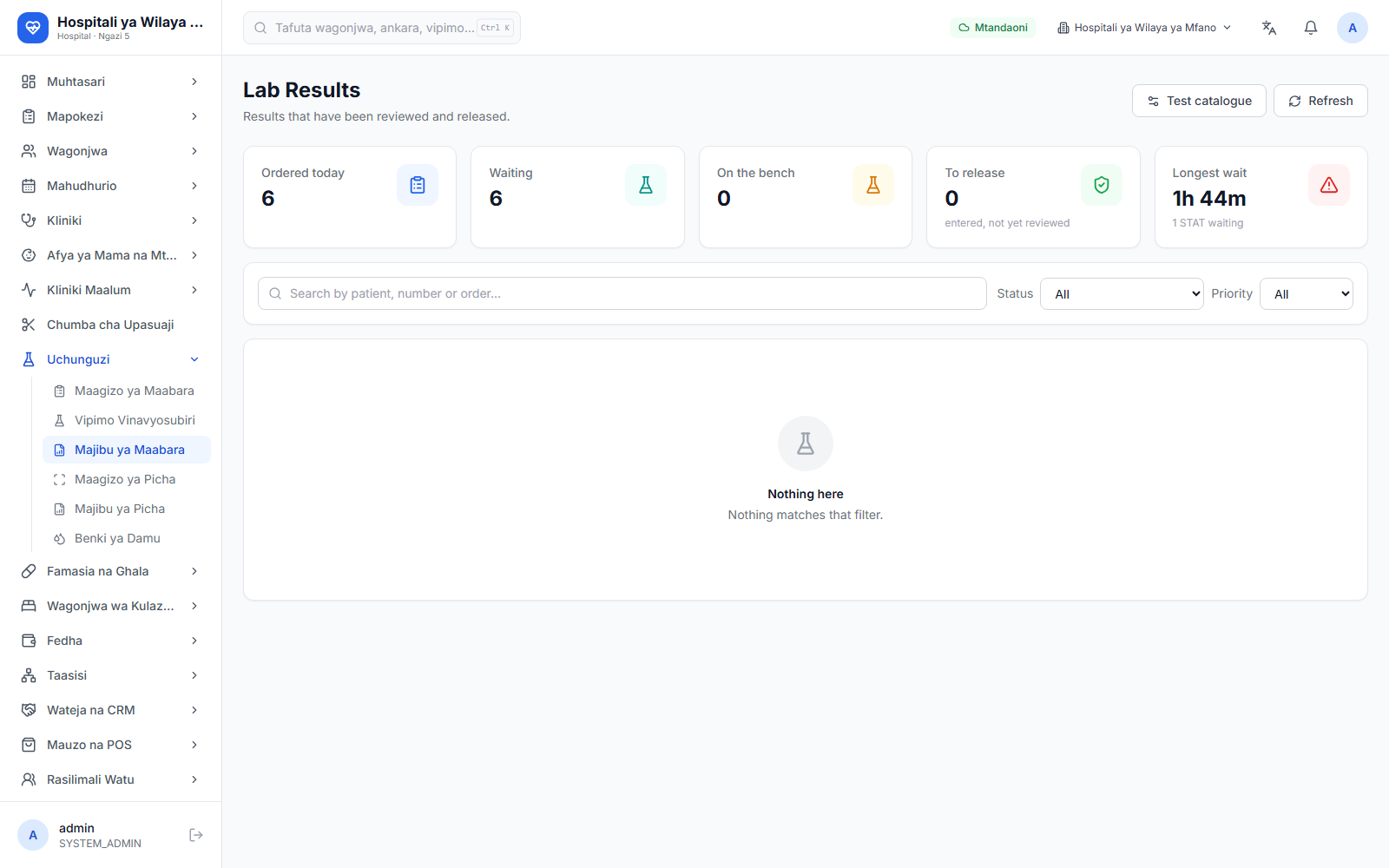
Agizo linafika maabara likiwa na jina, namba ya faili na sababu. Mtaalamu anaingiza majibu; majibu yanayovuka mipaka hatarishi yanawekwa kwenye orodha ya dharura ili mtu aone na kuthibitisha kuwa ameyaona. The order reaches the bench with the name, the file number and the reason. The technologist enters results; anything outside the critical range goes on a list somebody has to look at and acknowledge.
Famasia: dawa zinatoka kwenye rafu na kwenye hesabuPharmacy: stock leaves the shelf and the books together
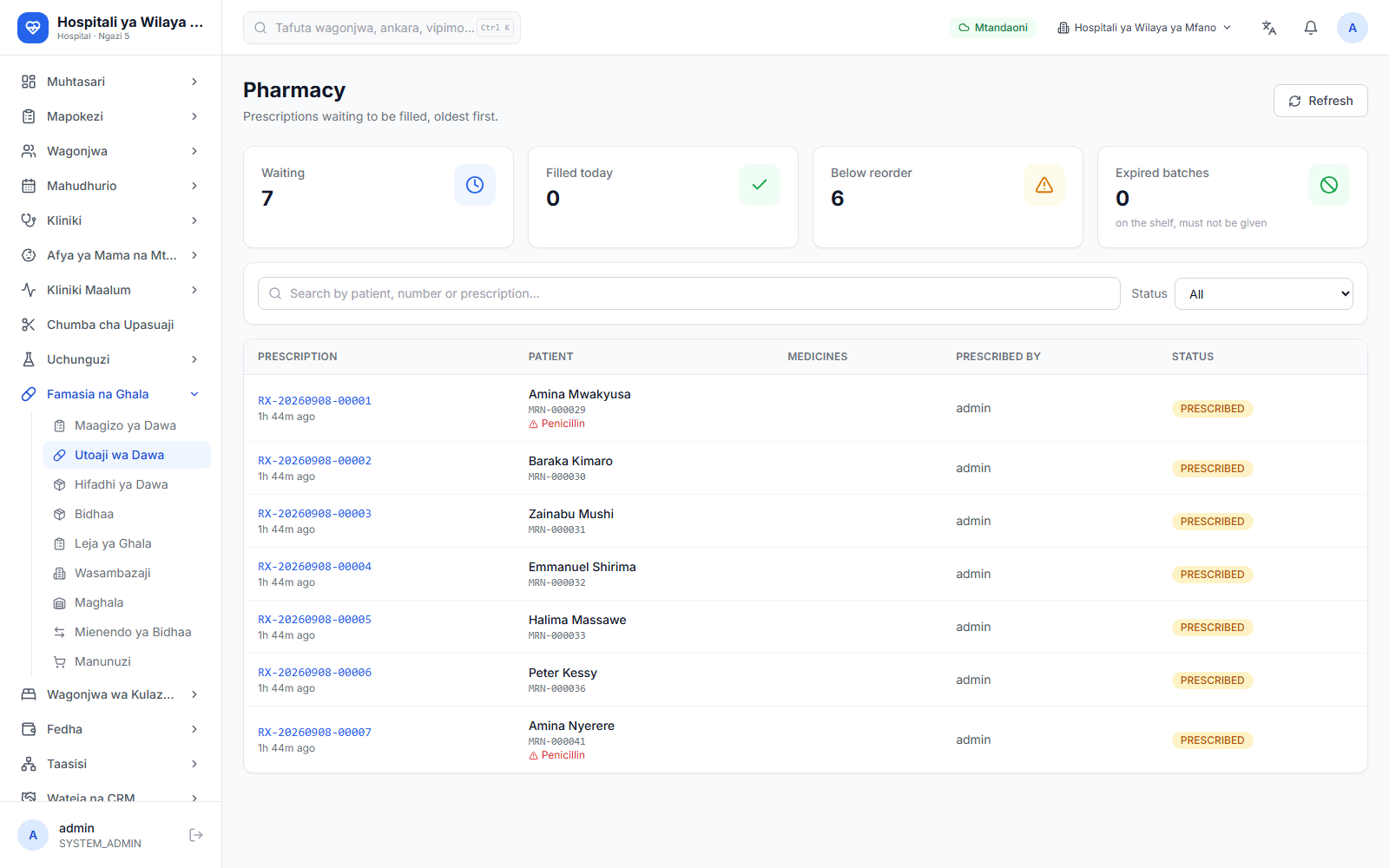
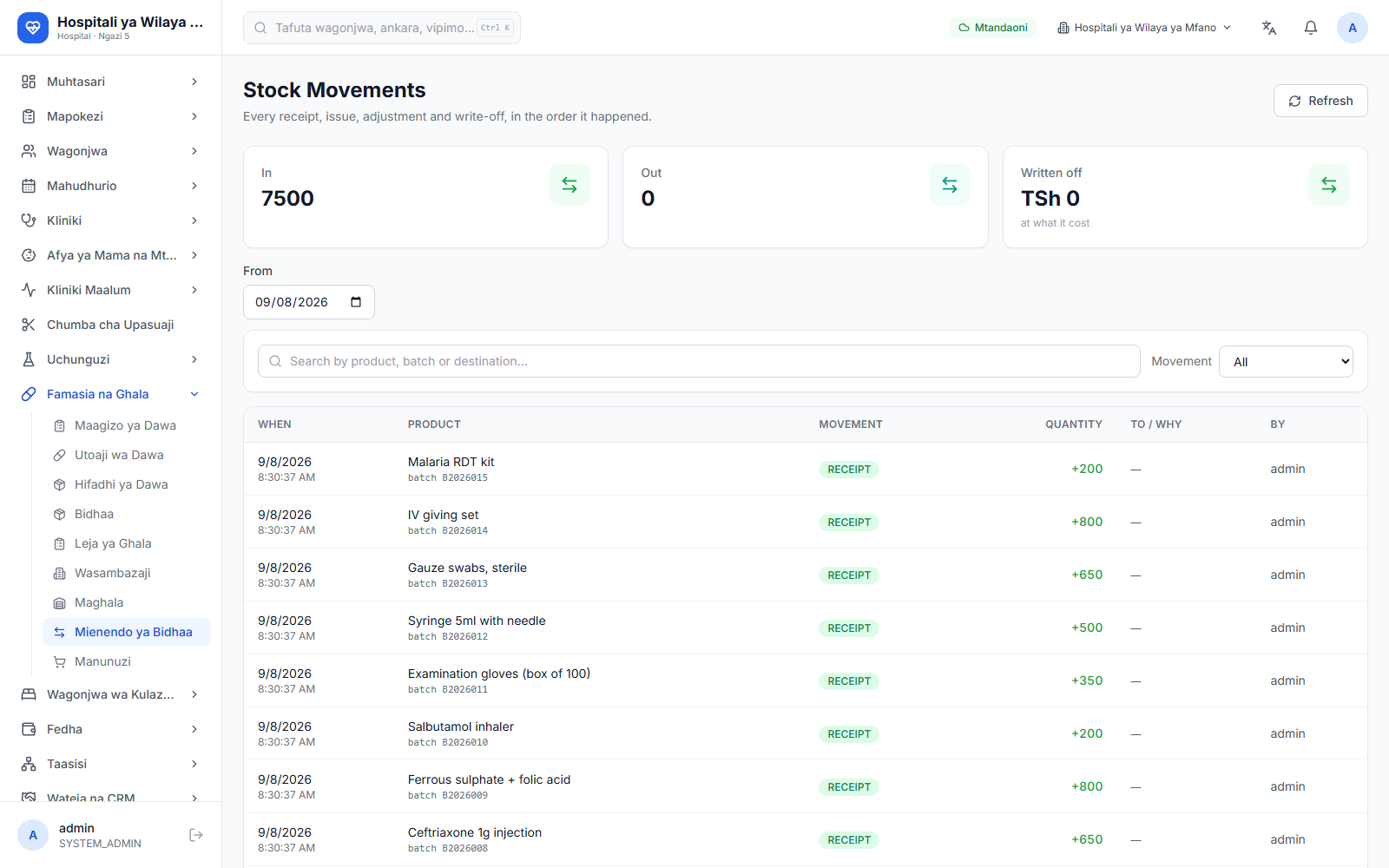
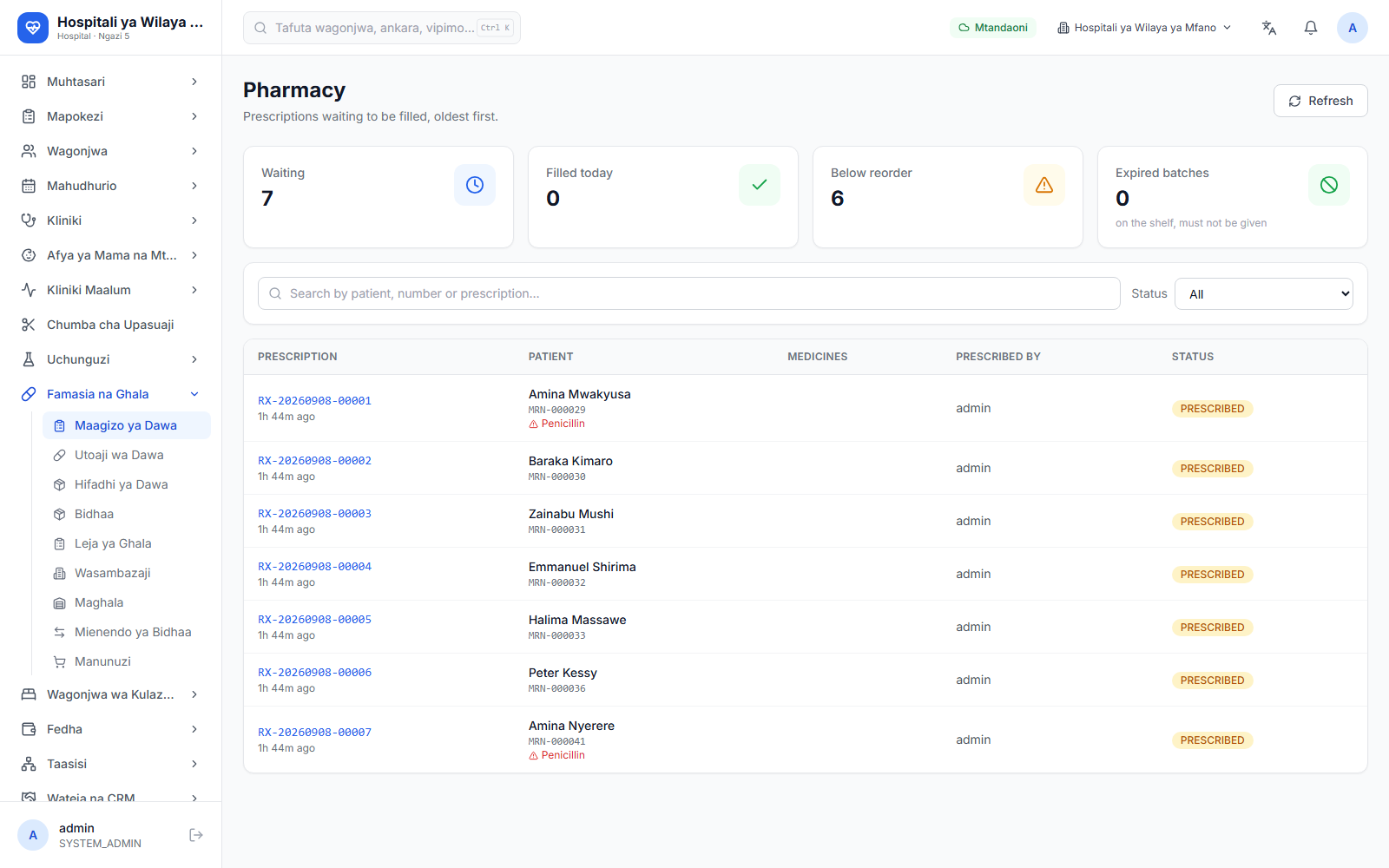
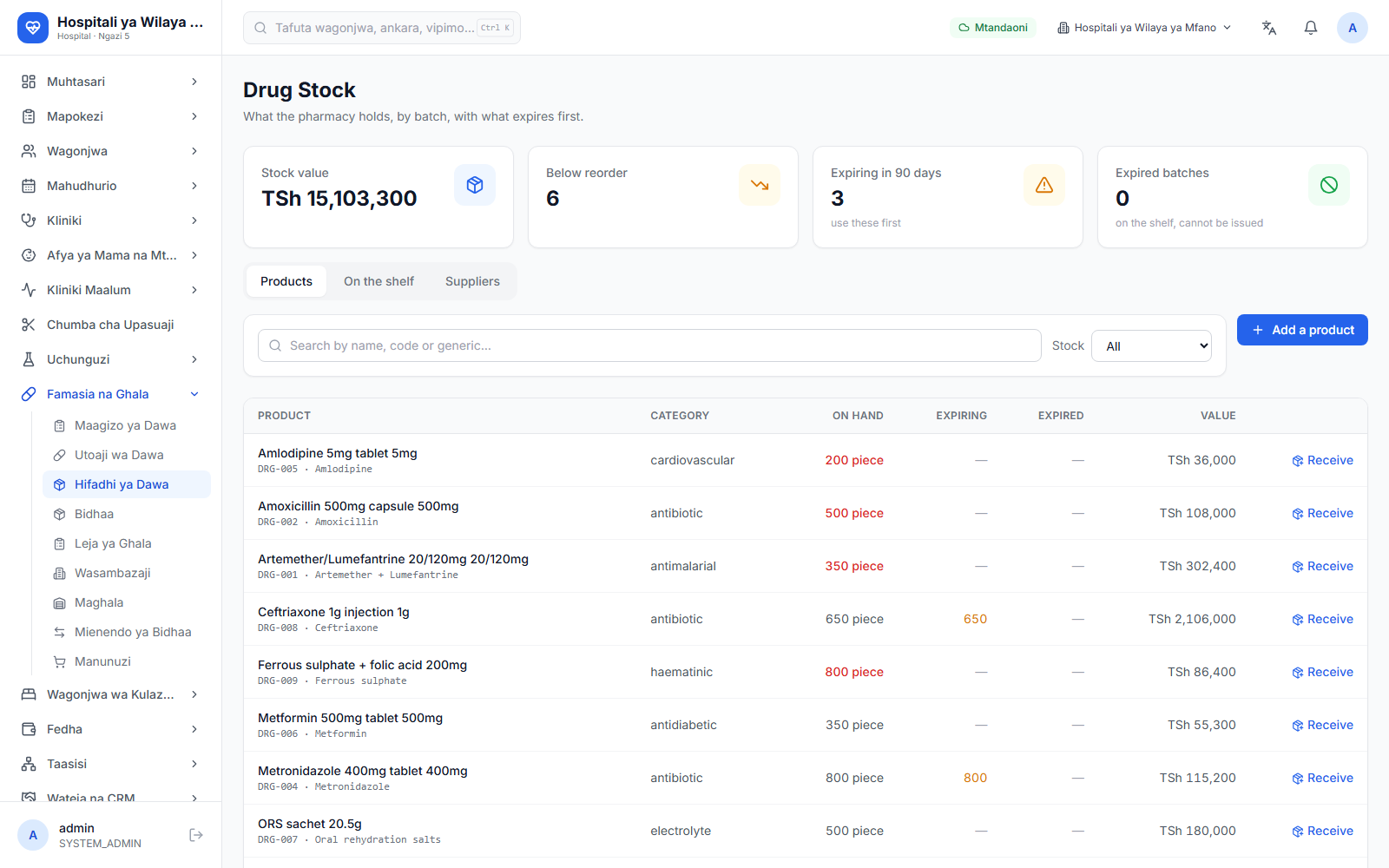
Mfamasia anaona agizo la daktari, anatoa dawa, na hifadhi inapungua kwenye mfumo wakati uleule. Betchi na tarehe ya mwisho wa matumizi vinafuatiliwa, na dawa zinazokaribia kwisha muda zinaonekana mapema. The pharmacist sees the prescription, dispenses, and the shelf count falls in the same movement. Batches and expiry dates are tracked, and what is about to expire shows up early.
Kulazwa: wodi, kitanda na chatiAdmission: ward, bed and chart
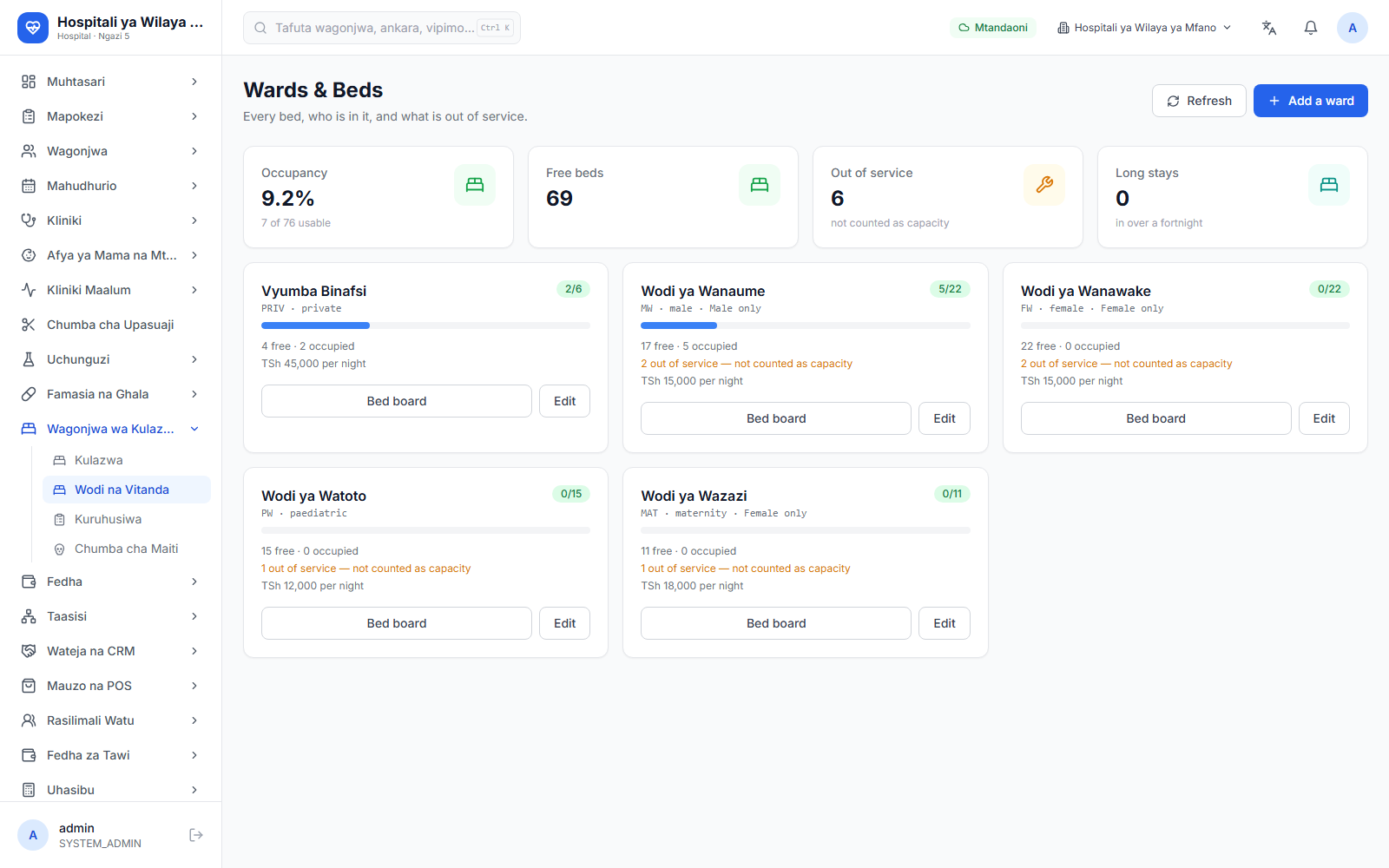
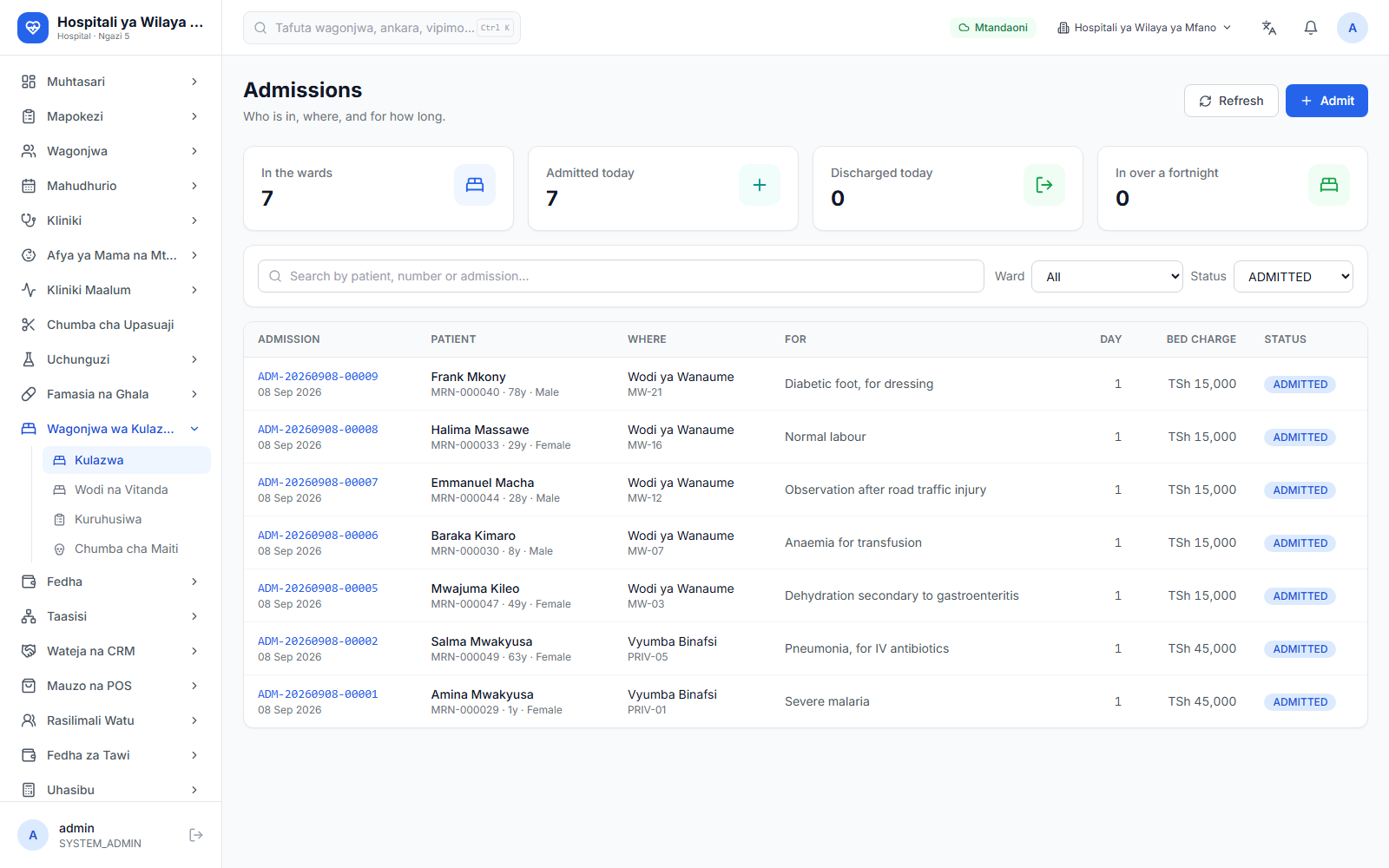
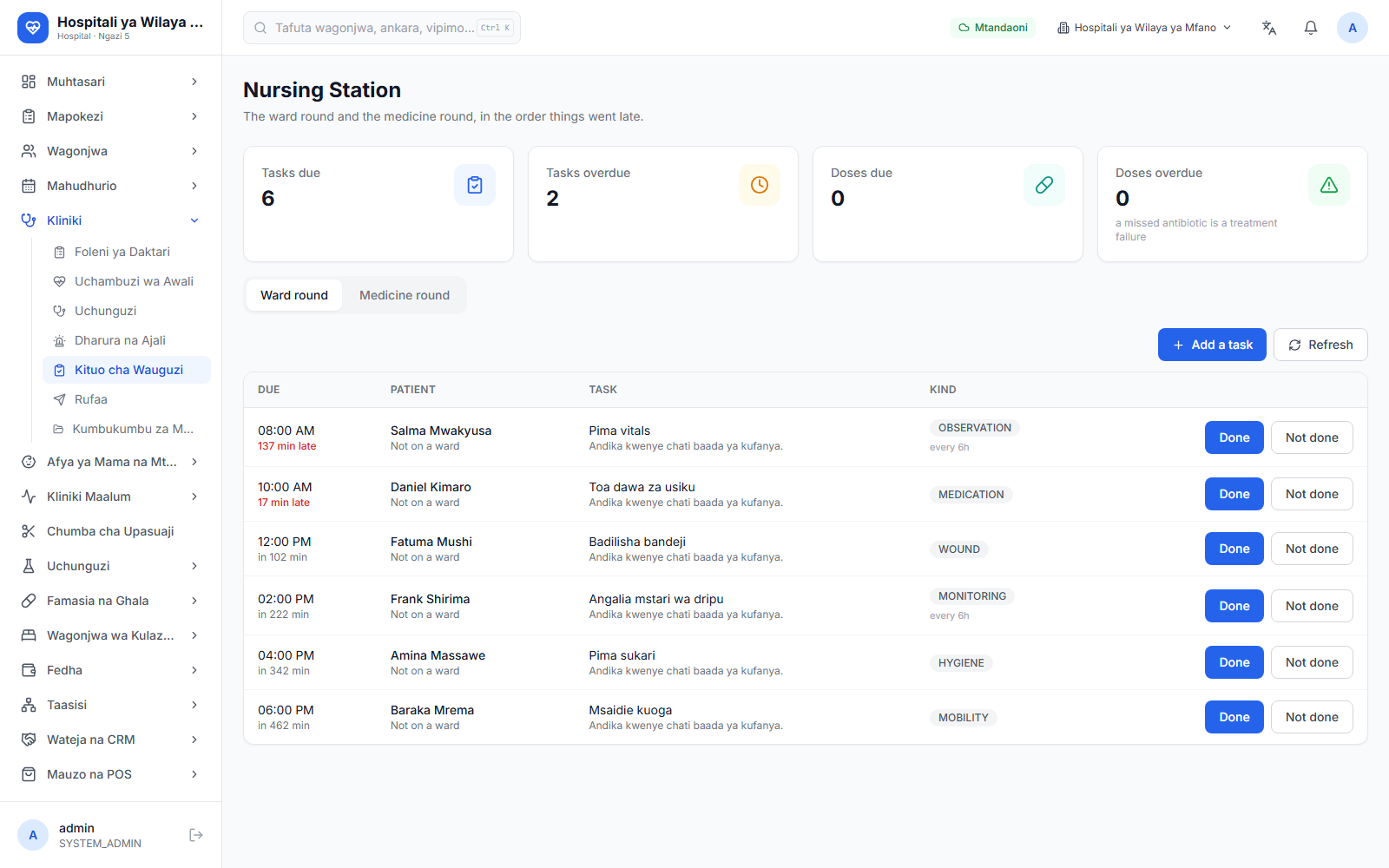
Mgonjwa anapangiwa kitanda halisi kwenye wodi halisi. Kazi za uuguzi na dozi za dawa zinapangwa kwa saa, na gharama ya kitanda inaingia kwenye ankara kila usiku bila mtu kukumbushwa. The patient is given a real bed on a real ward. Nursing tasks and drug rounds are scheduled by the hour, and the bed charge reaches the bill every night without anybody having to remember.
Ankara, risiti na bimaThe bill, the receipt and the claim
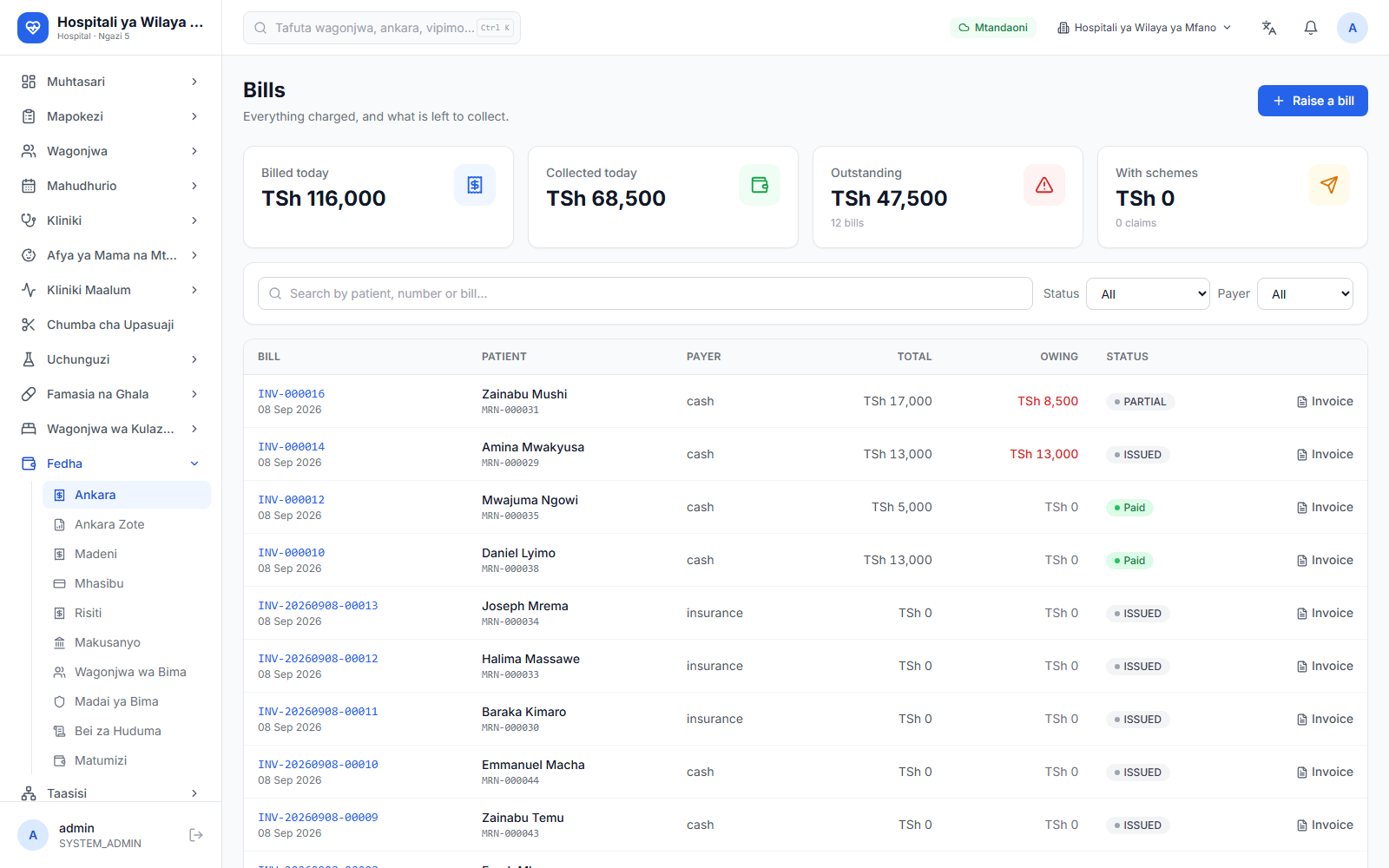
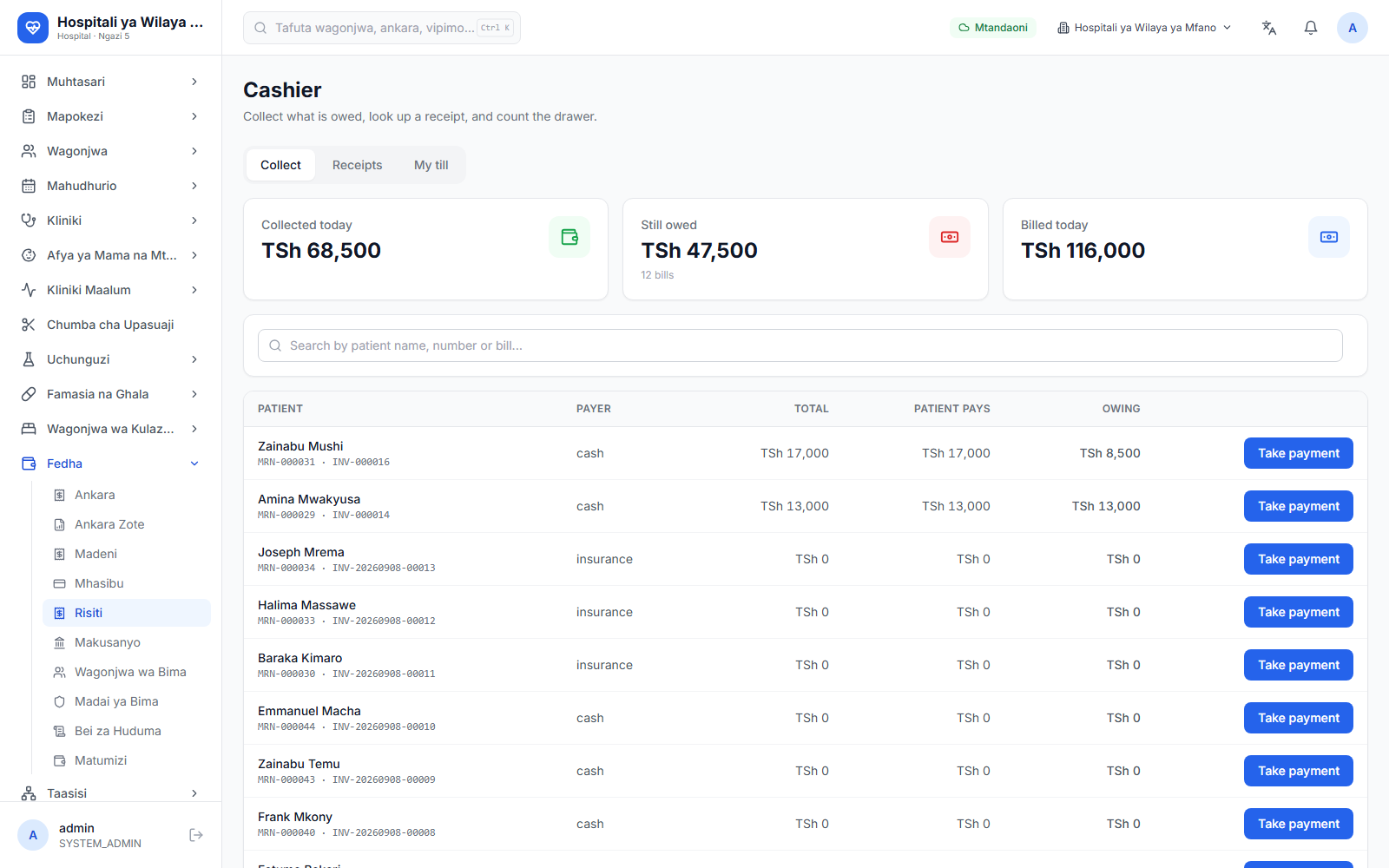
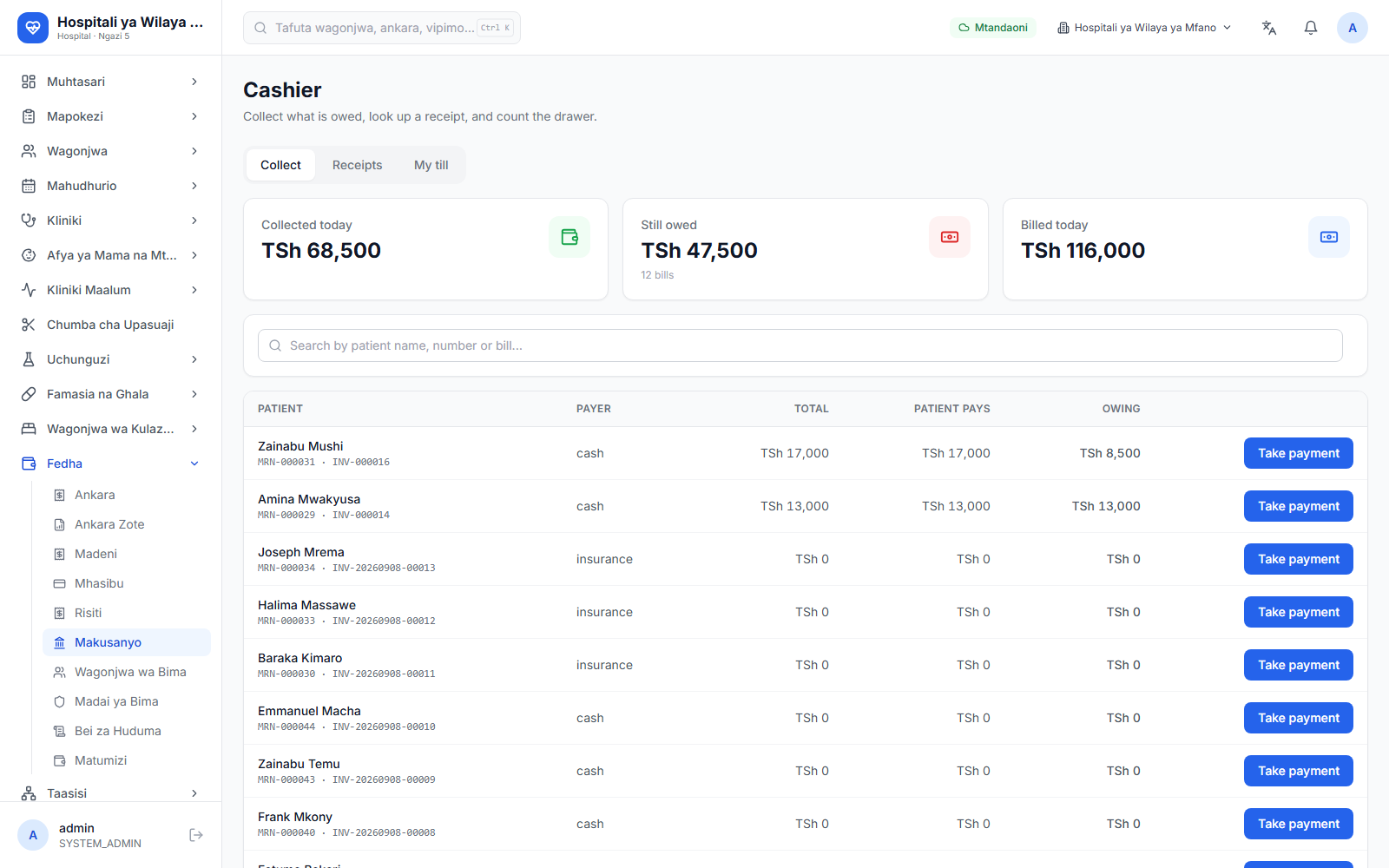
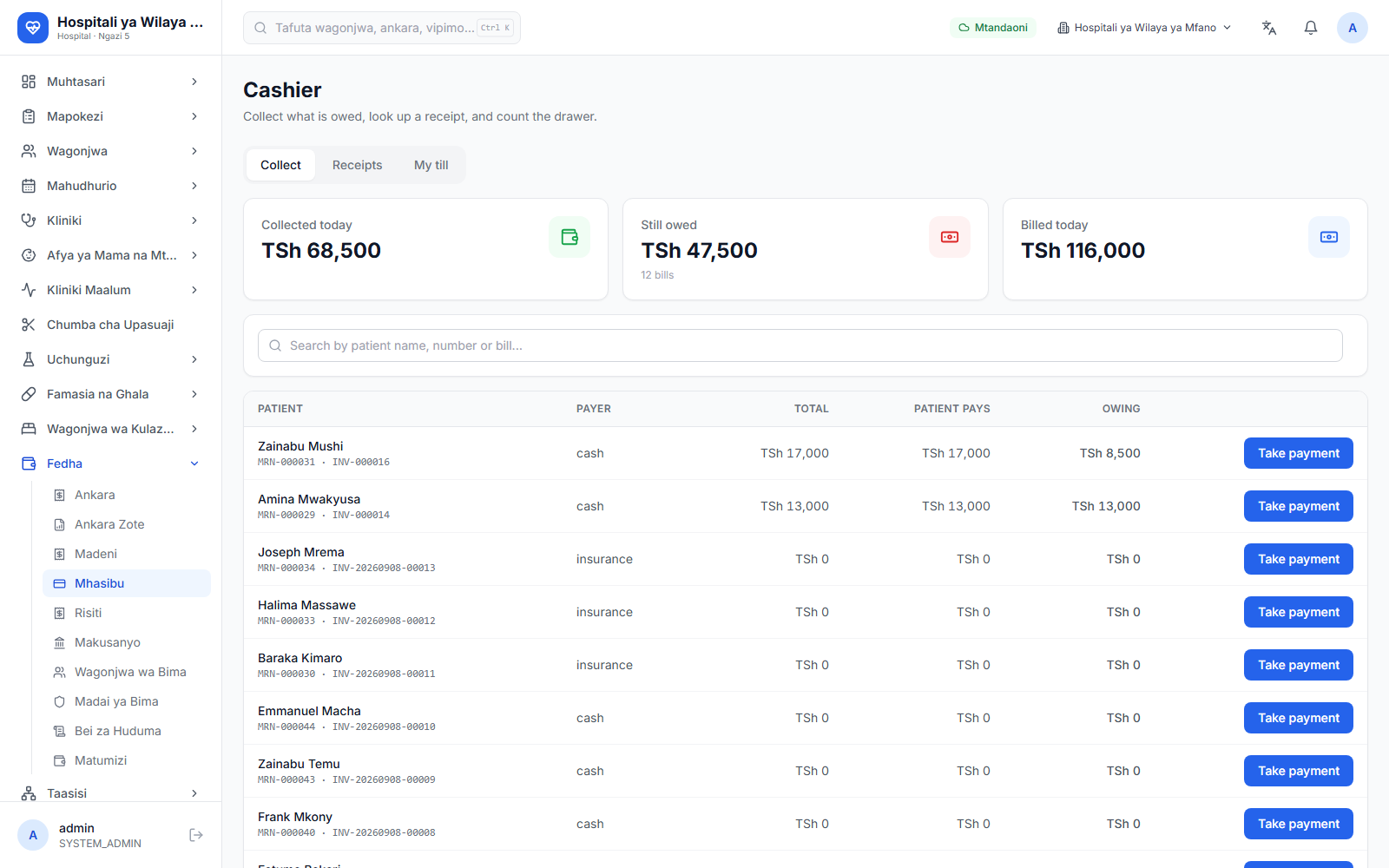
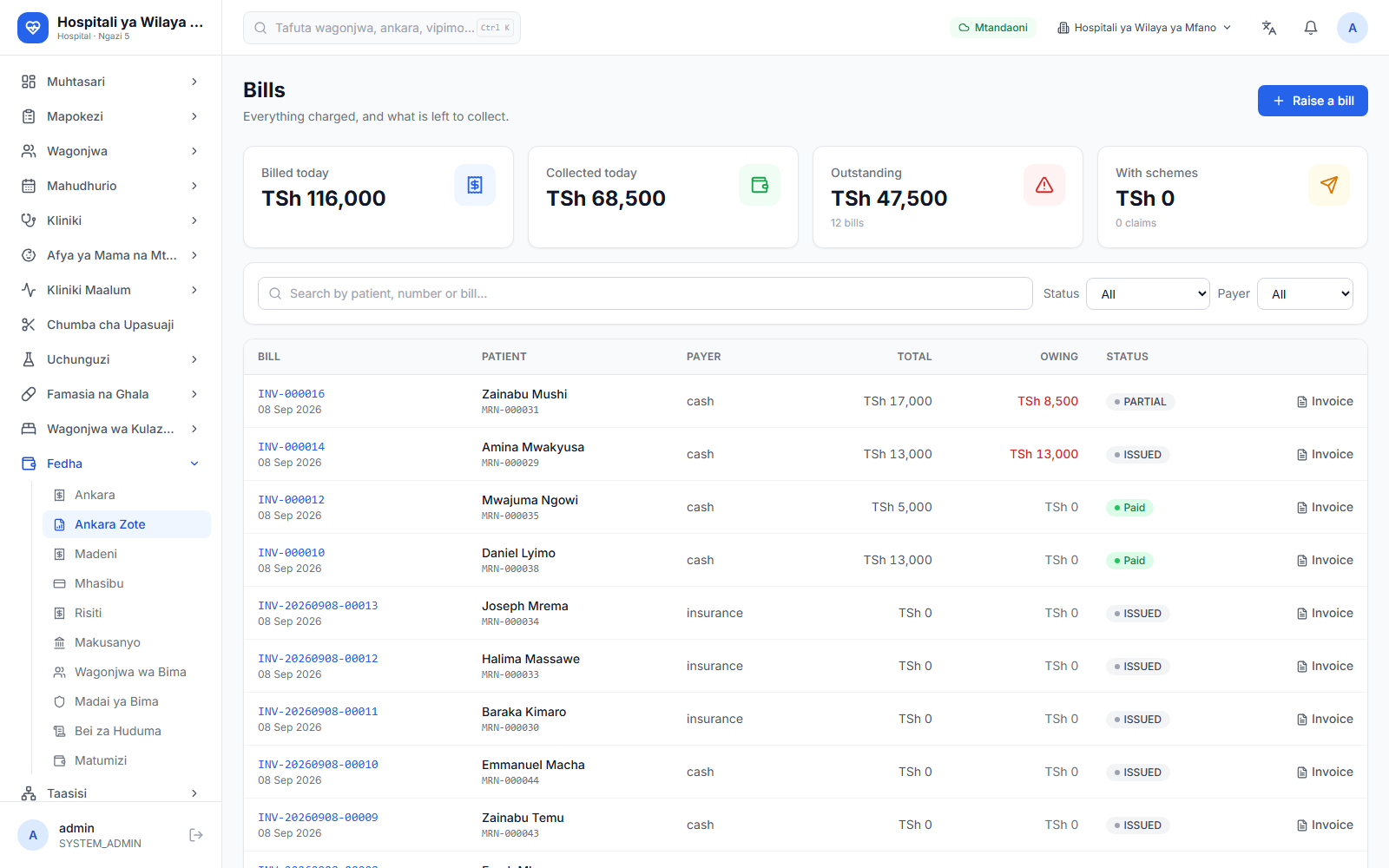
Kila huduma iliyotolewa inaingia kwenye ankara moja ya mgonjwa. Mhasibu anapokea fedha — taslimu, simu au kadi — na risiti inachapishwa. Kwa mwenye bima, dai linaandaliwa kwa mfuko wake pamoja na asilimia inayogharamiwa. Every service given lands on one bill. The cashier takes the money — cash, mobile money or card — and the receipt prints. For an insured patient a claim is prepared for the scheme, with the covered percentage on it.
Kufunga faili na kutoa ripotiClosing the record, and the return
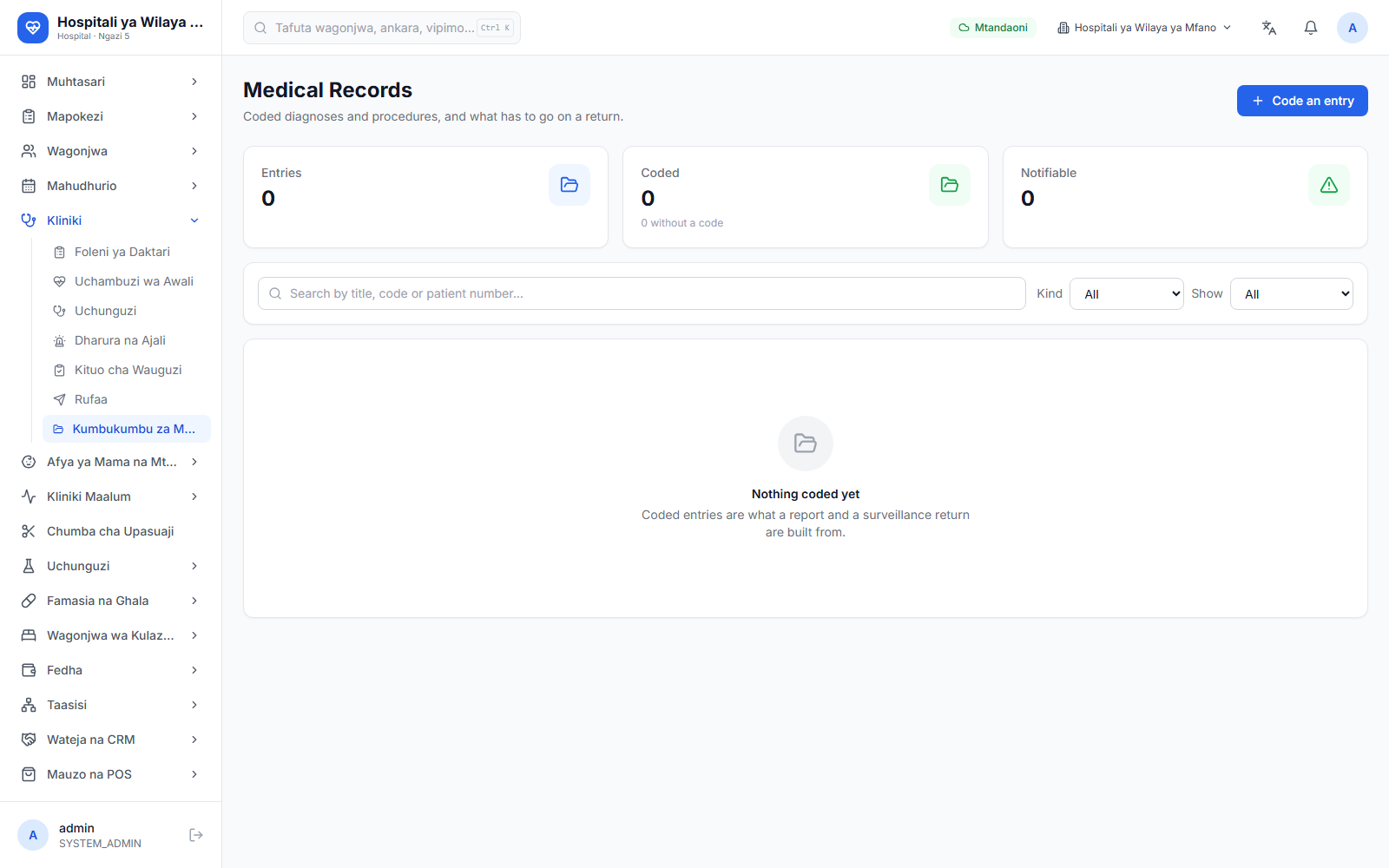
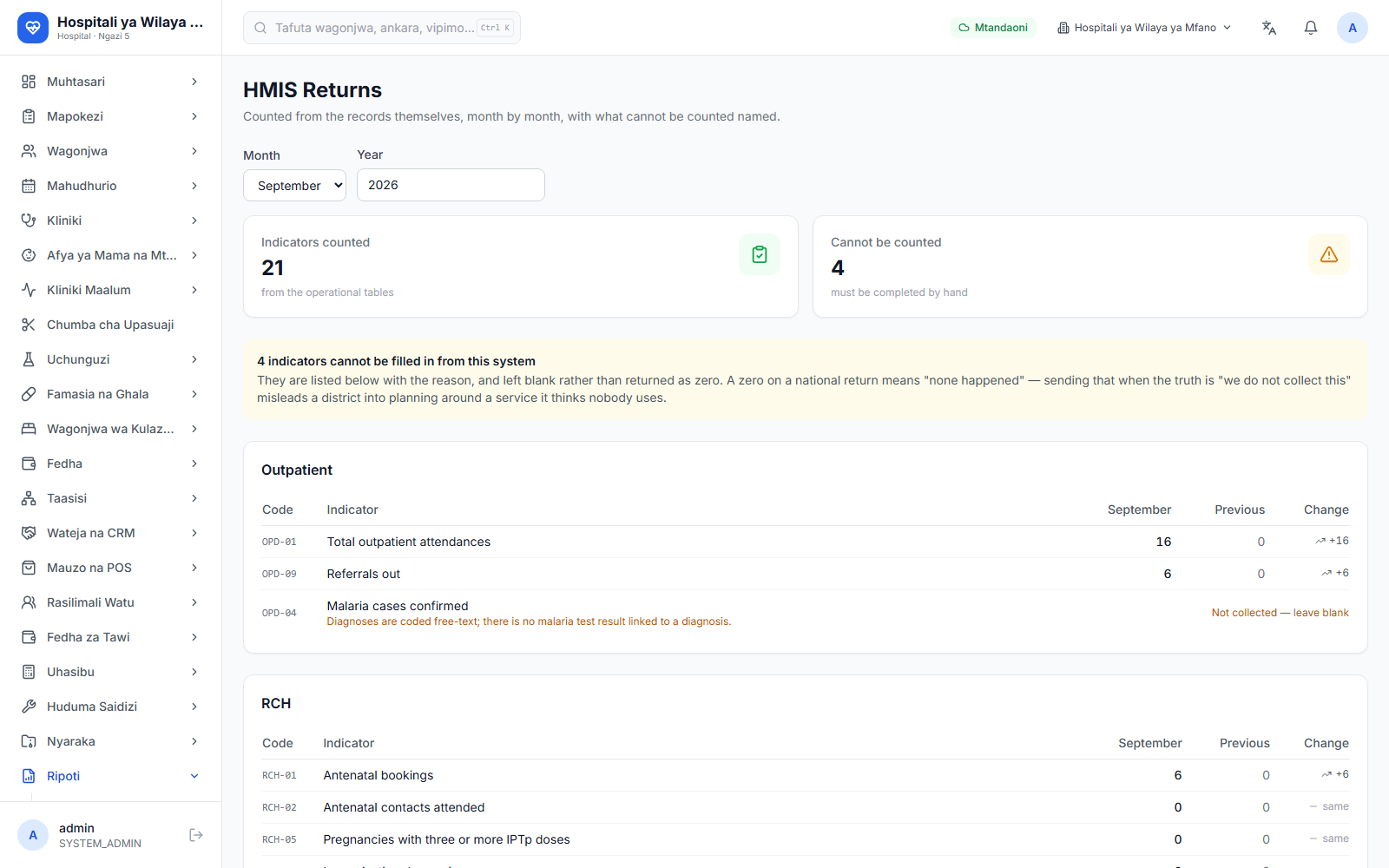
Mahudhurio yanafungwa yakiwa na utambuzi na matokeo. Kumbukumbu za matibabu zinapangwa kwa msimbo, na takwimu za HMIS zinajijenga kutoka kwenye kazi iliyofanyika — siyo kutoka kwenye kuhesabu madaftari mwisho wa mwezi. The attendance is closed with a diagnosis and an outcome. Records are coded, and the HMIS figures build themselves from the work that was done — not from counting registers at month end.
04Idara kwa idaraDepartment by department
Zaidi ya safari ya mgonjwa, mfumo unashika kila kitengo kinachoendesha hospitali. Hapa ni muhtasari; skrini zote 141 zipo kwenye kiambatisho mwishoni. Beyond the patient journey, the system holds every unit that keeps a hospital running. This is the summary; all 141 screens are in the appendix at the end.
Dharura na ajaliEmergency and casualty
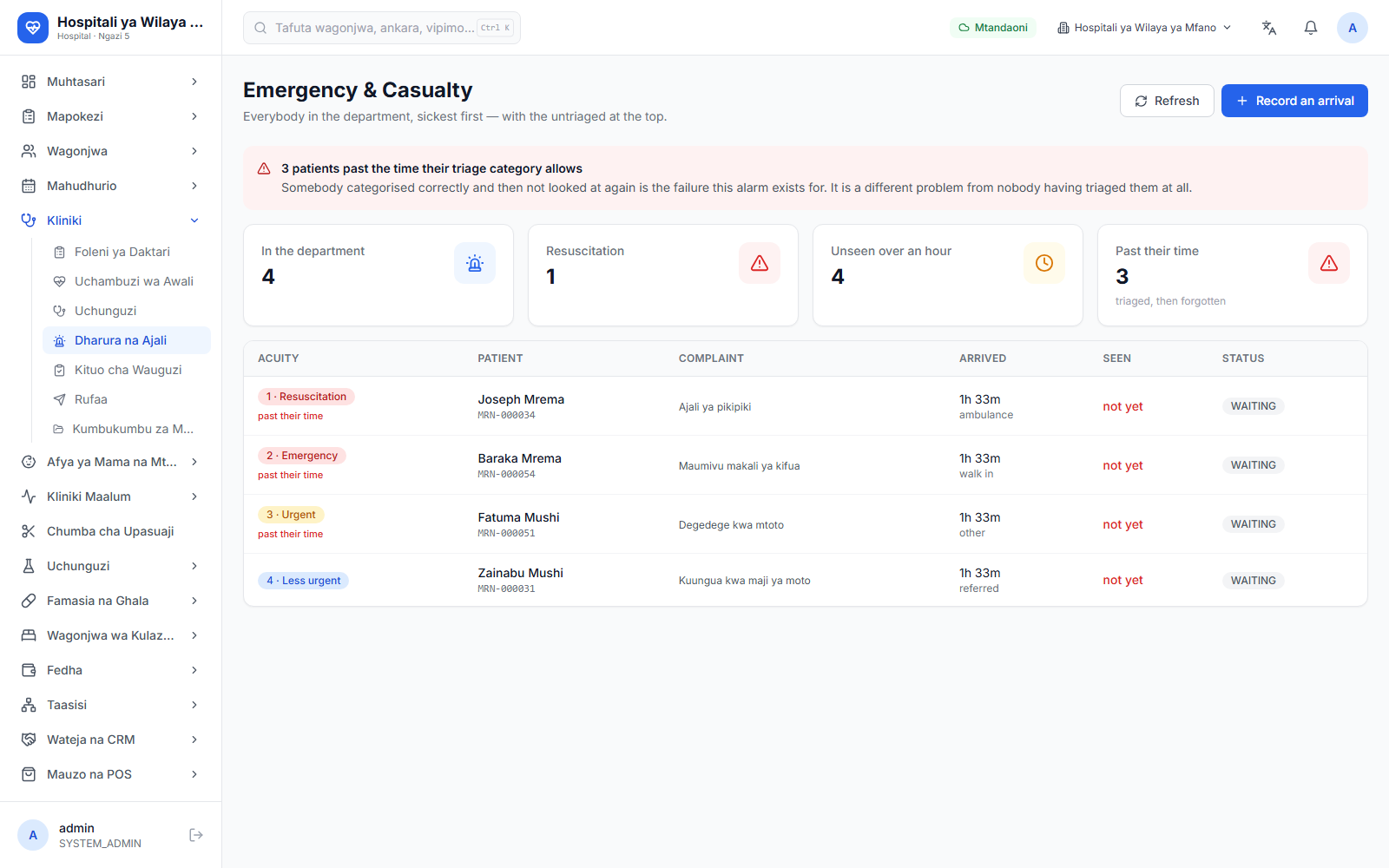
Waliofika kwa dharura wanaandikwa hata kama hawajulikani kwa jina, wanapangwa madaraja matano ya uzito, na bodi inaonyesha nani anahitaji kuonwa sasa hivi. Arrivals are recorded even when nobody knows their name, sorted into five triage categories, and the board shows who must be seen now.
Afya ya mama na mtotoReproductive and child health
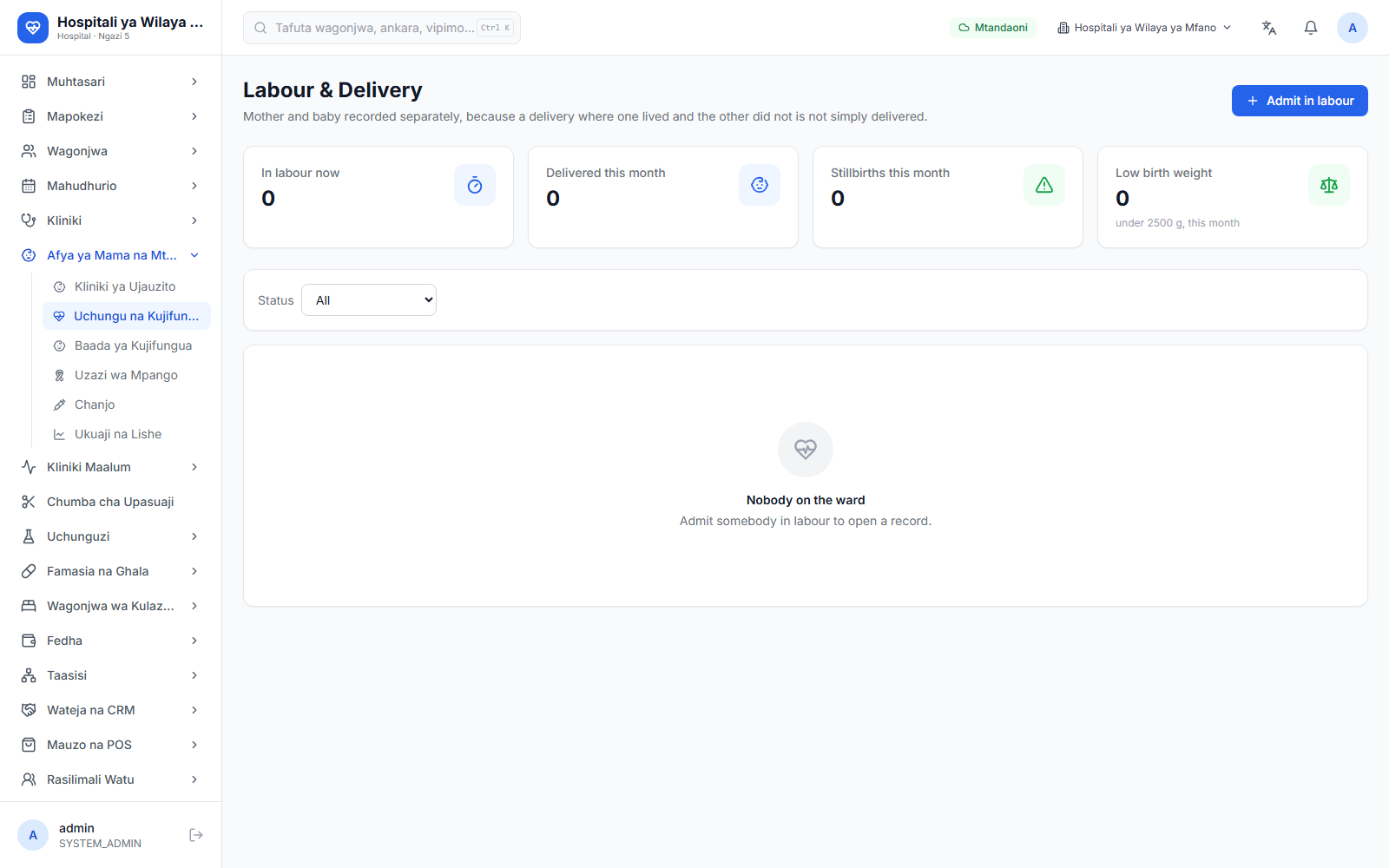
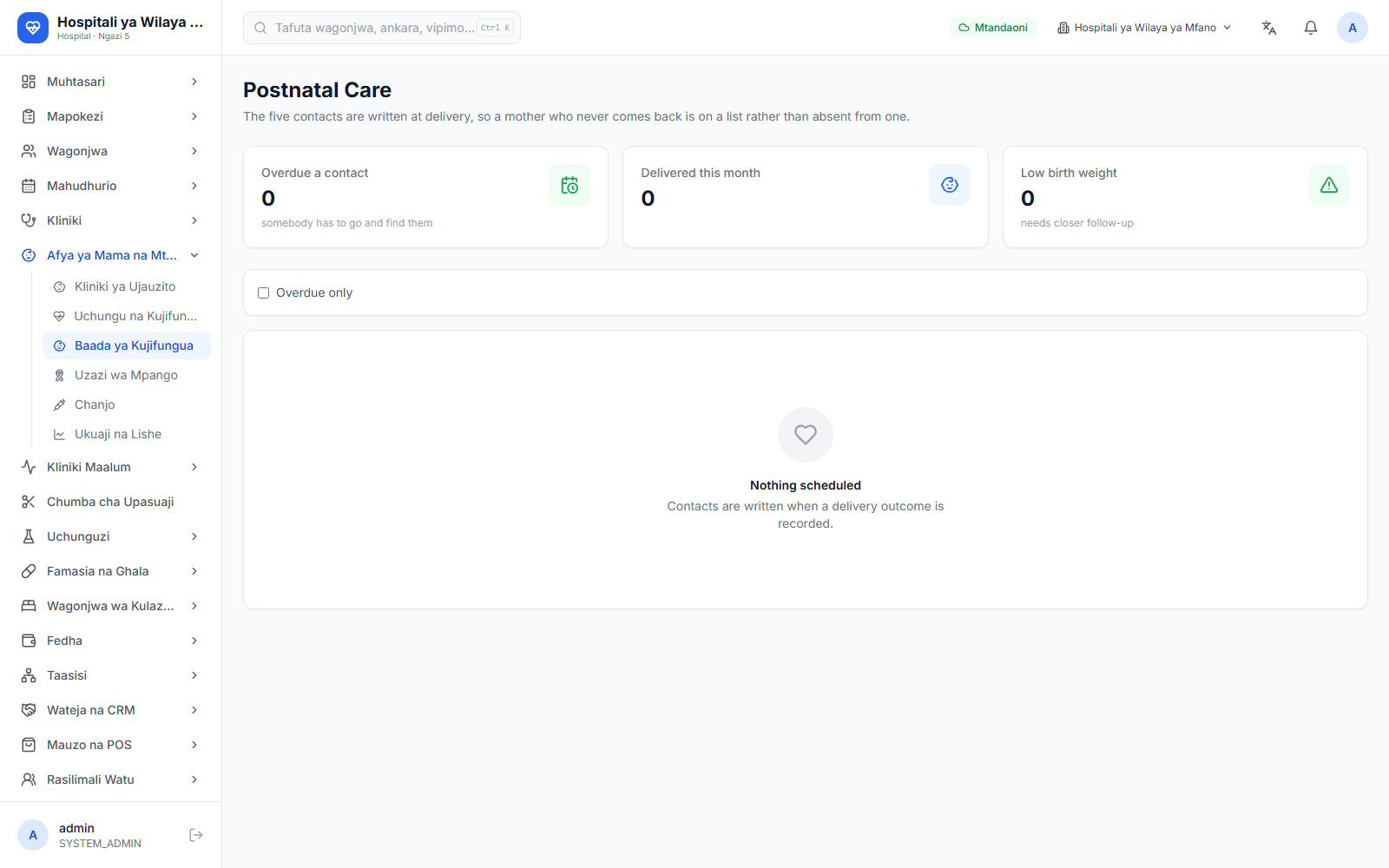
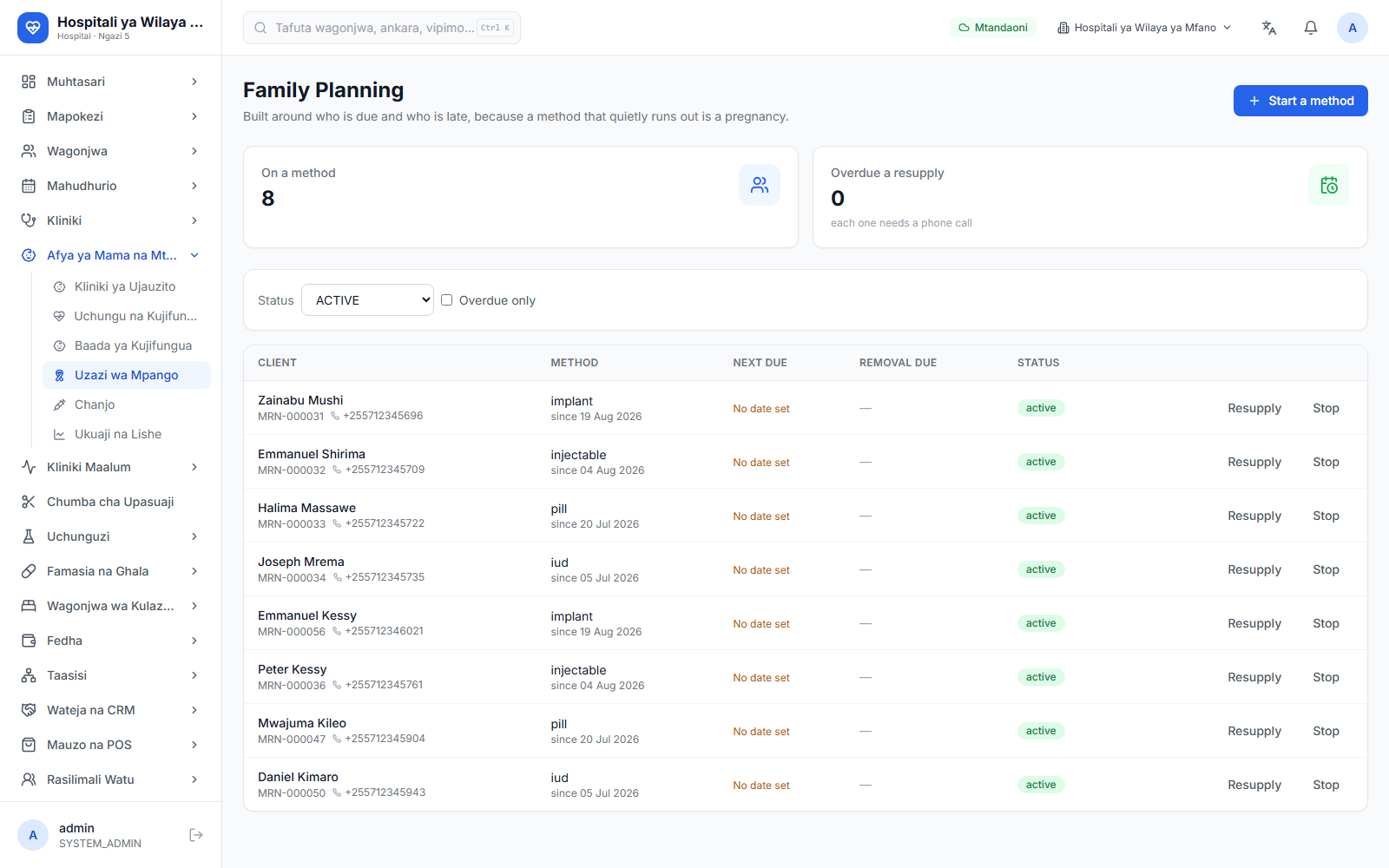
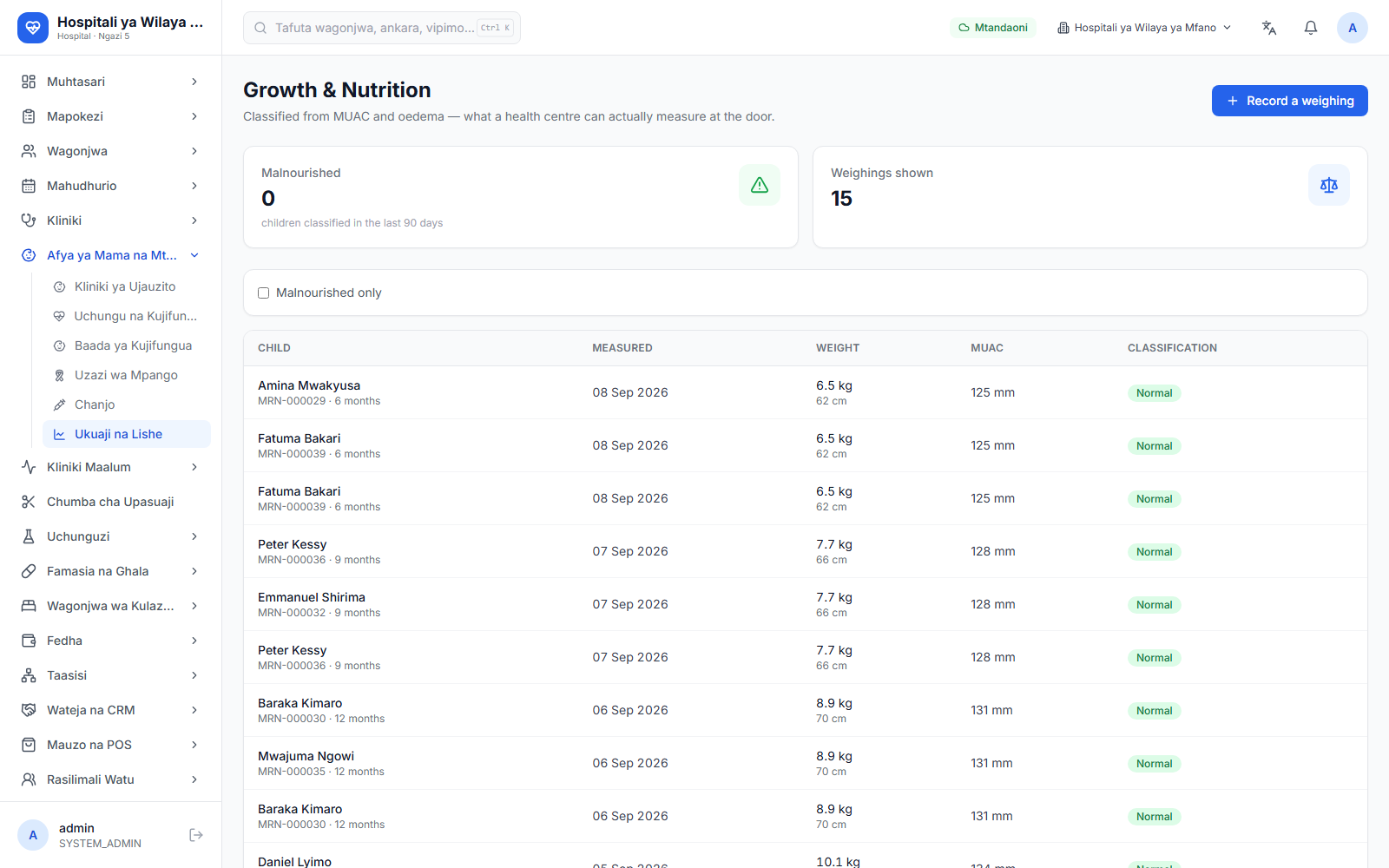
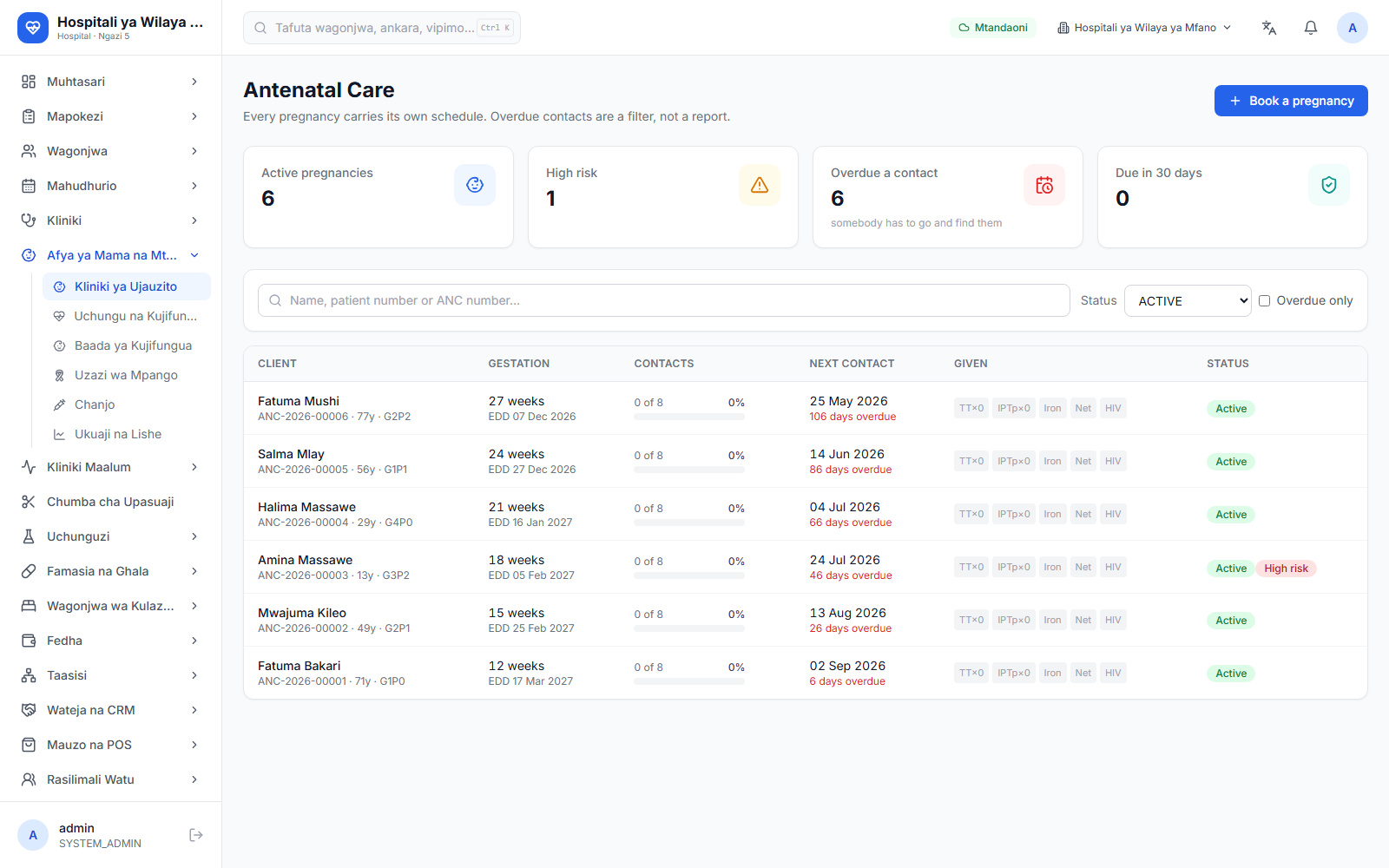
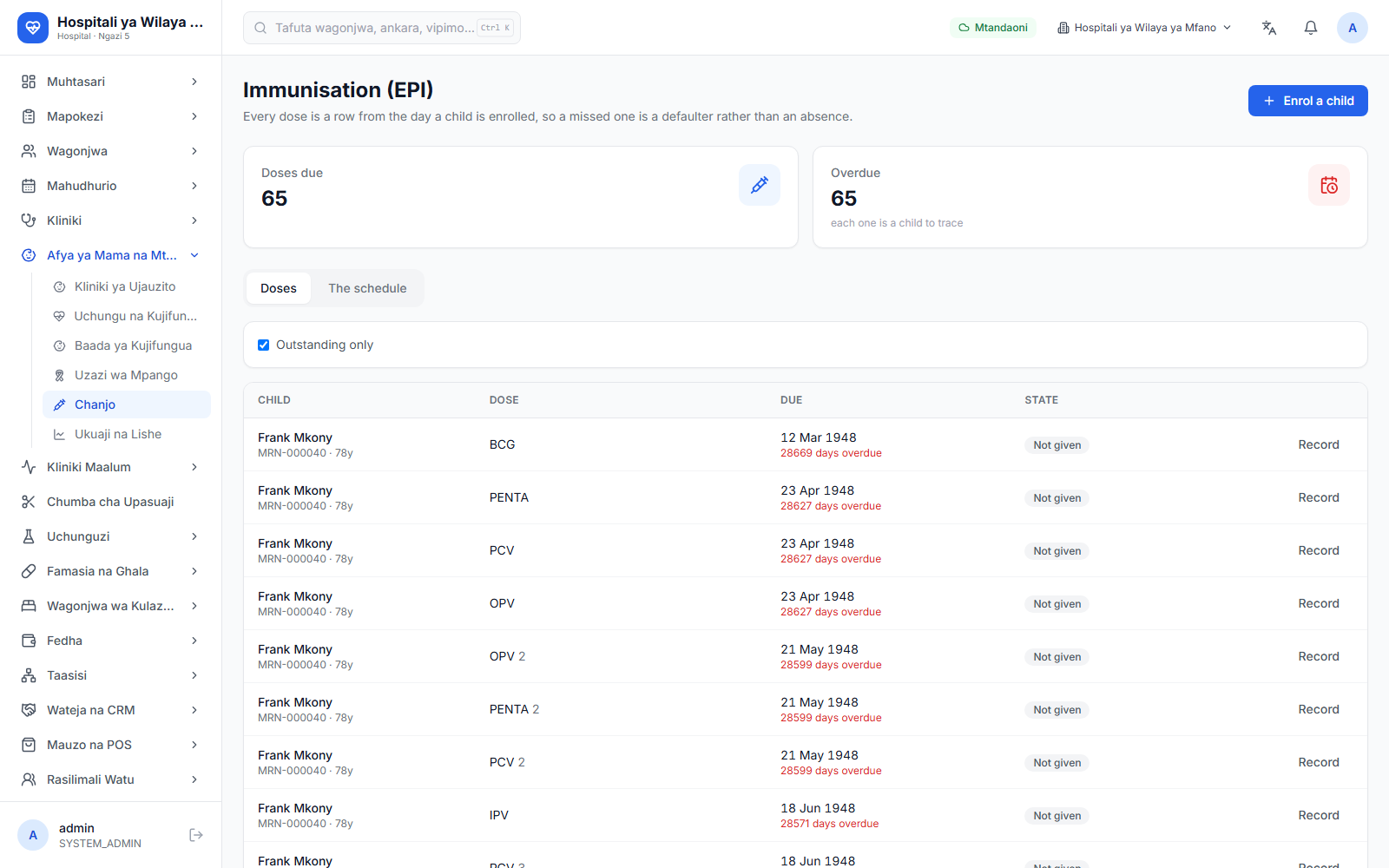
Kliniki ya ujauzito, uchungu na kujifungua, huduma baada ya kujifungua, uzazi wa mpango, chanjo na ufuatiliaji wa ukuaji. Kila huduma hapa ni ratiba ambayo mtu anaweza kuikosa — hivyo kila orodha ina kichujio cha "waliochelewa". Antenatal, labour and delivery, postnatal, family planning, immunisation and growth monitoring. Every service here is a schedule somebody can fall off, so every list has an "overdue" filter.
Kliniki za programuProgramme clinics
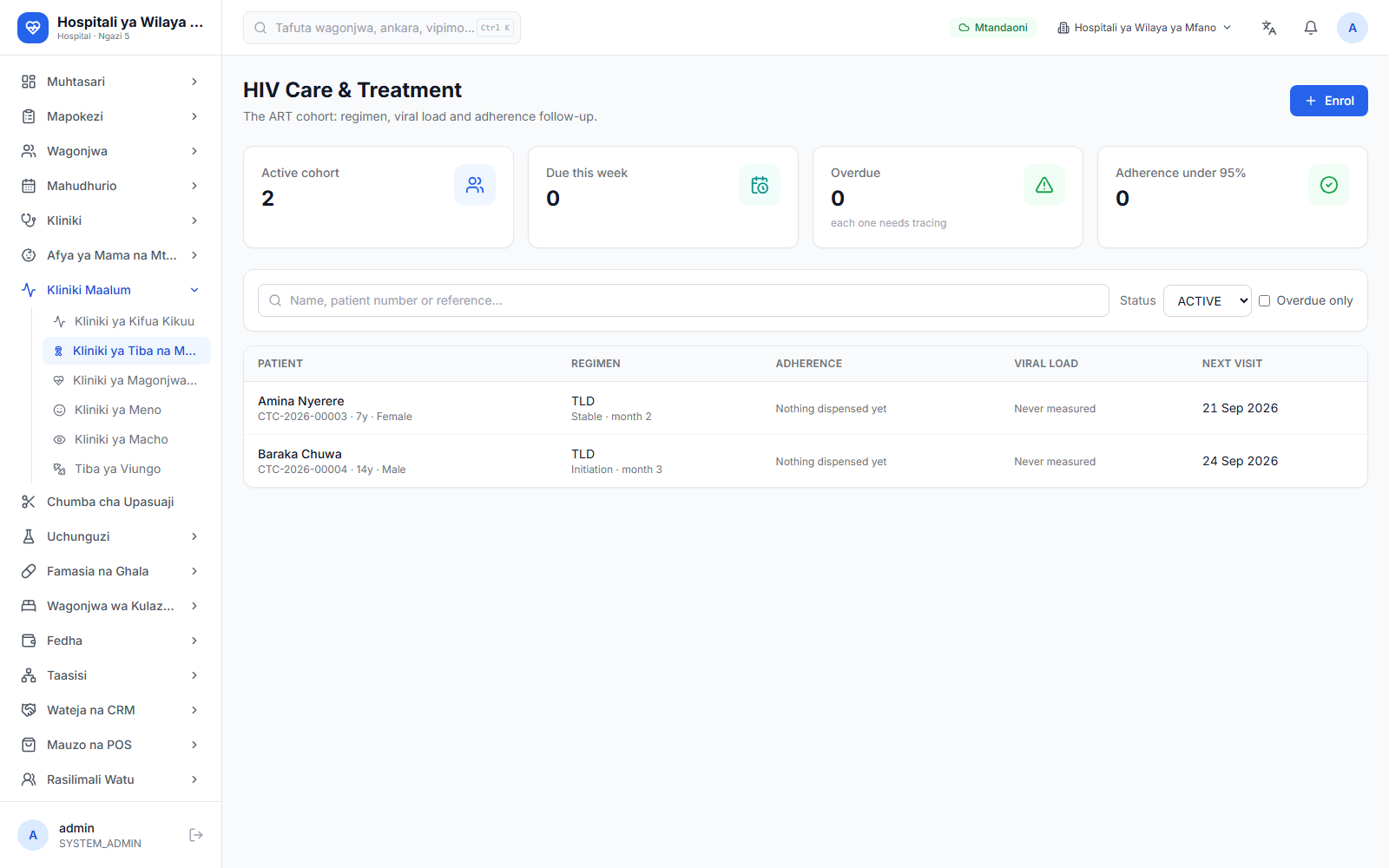
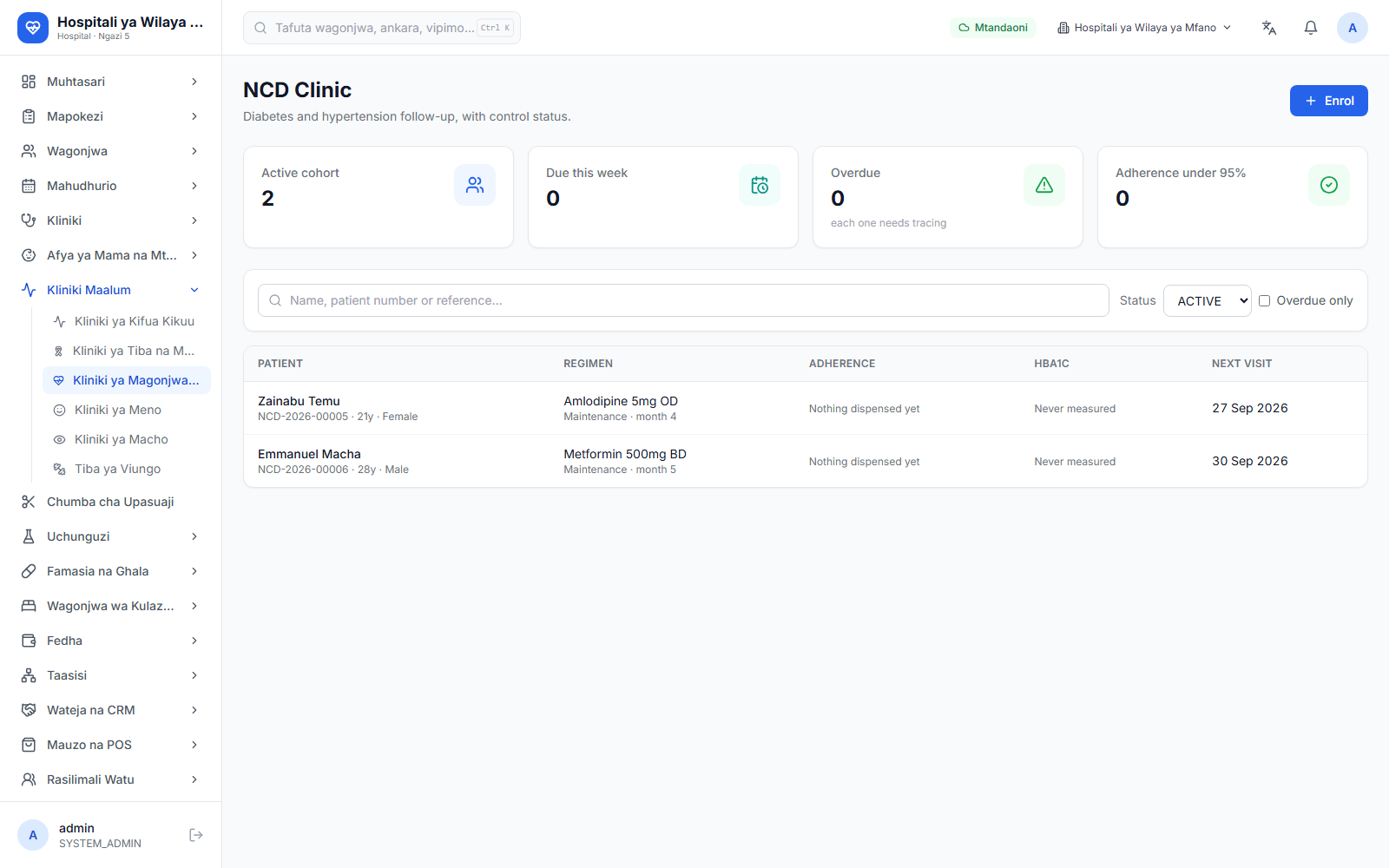
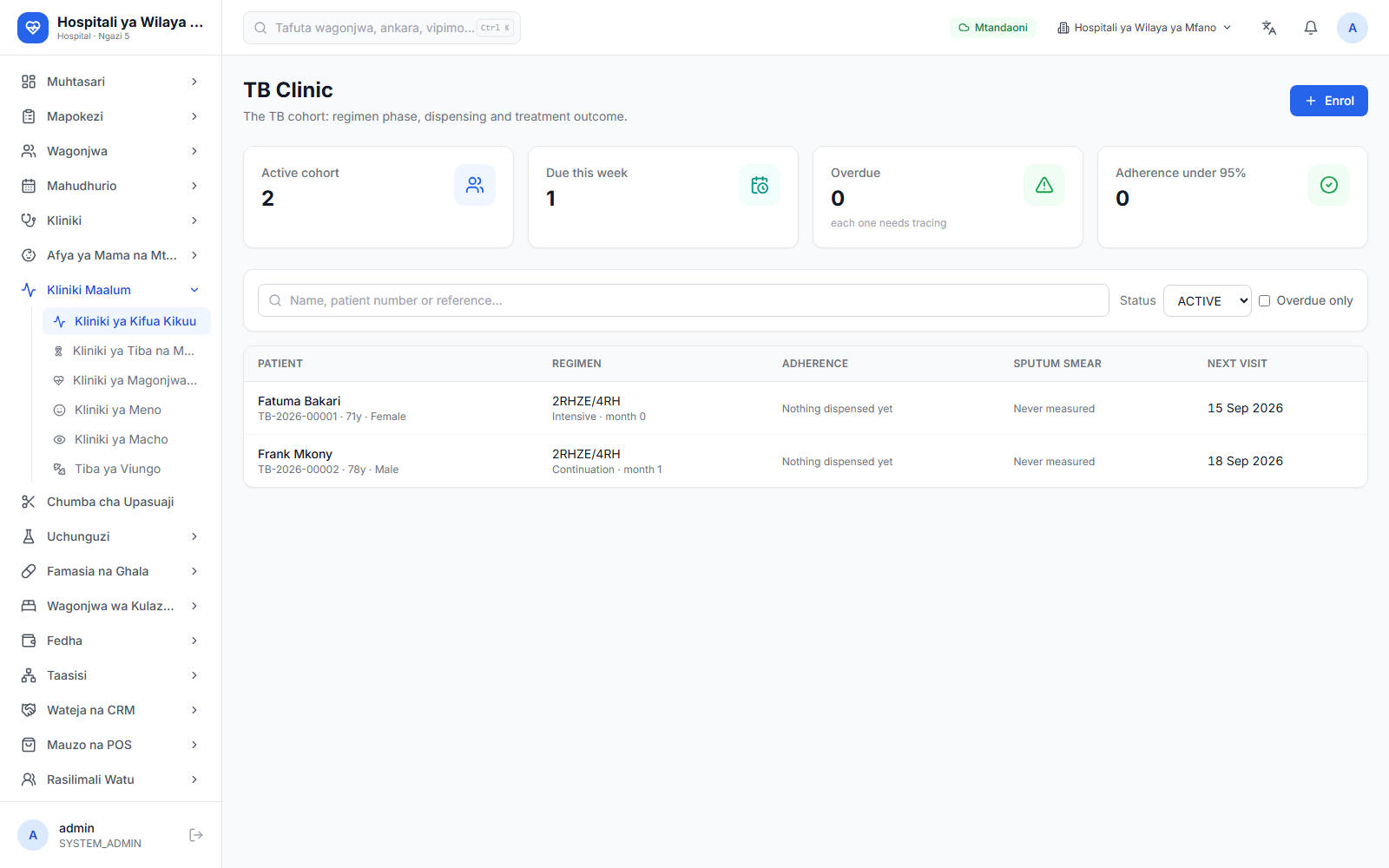
Kifua kikuu, tiba na matunzo ya VVU, na magonjwa sugu yasiyoambukiza. Kila mgonjwa ana kundi, hatua ya matibabu, na tarehe ya kurudi — na wasiorudi wanaonekana kwenye orodha moja badala ya ripoti mtu anayopaswa kukumbuka kuiendesha. TB, HIV care and treatment, and non-communicable disease. Each patient has a cohort, a treatment phase and a return date — and defaulters appear on one list instead of a report somebody has to remember to run.
Chumba cha upasuajiOperating theatre
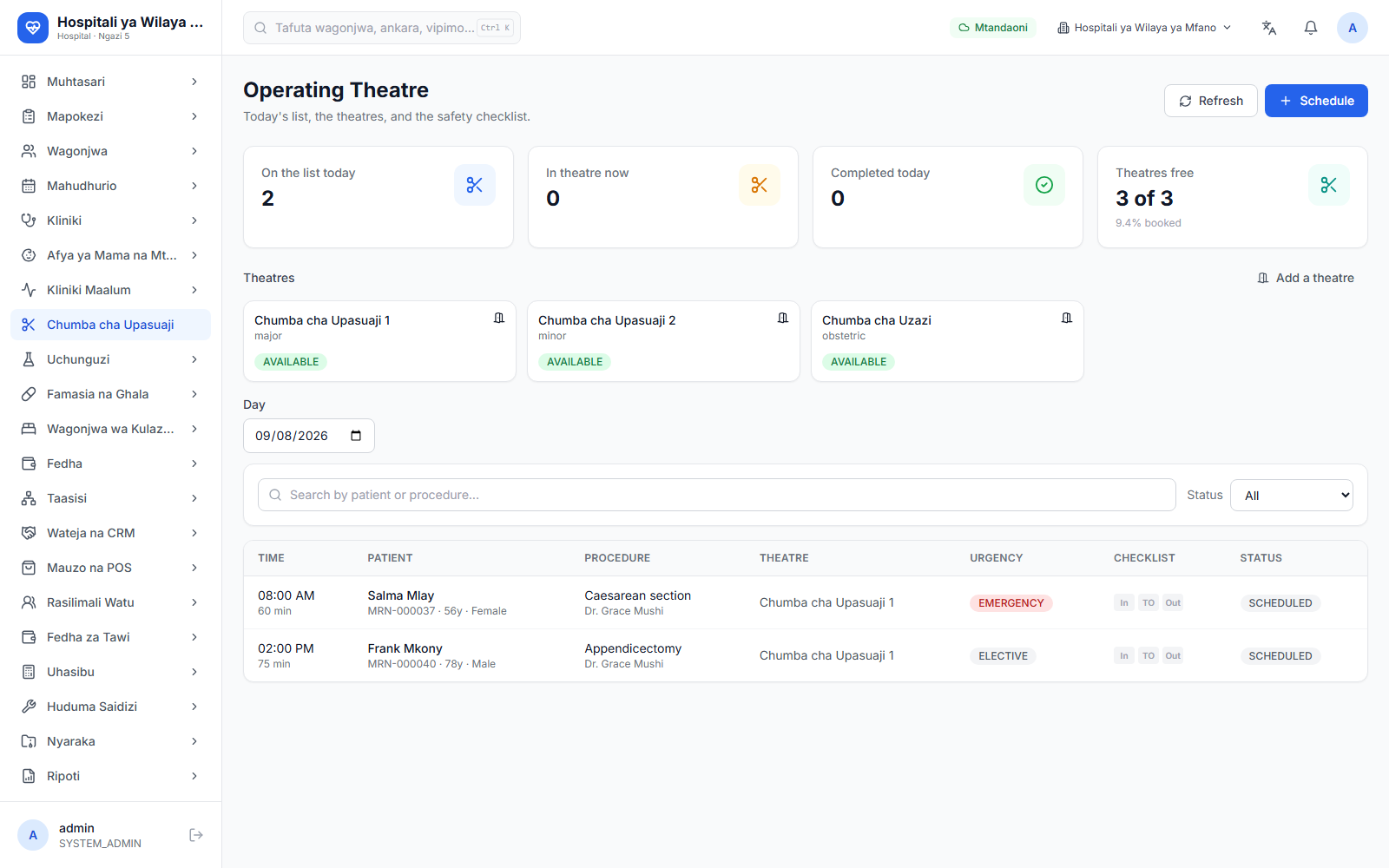
Ratiba ya vyumba, timu ya upasuaji, orodha ya ukaguzi wa usalama, na hesabu ya vifaa vilivyoingia na kutoka. Upasuaji haufungwi kama hesabu hazilingani — na hilo si suala la cheo cha mtu, ni kanuni ya mfumo. Room scheduling, the surgical team, the safety checklist, and the count of instruments in and out. An operation cannot be closed while the counts do not balance — and that is not a matter of anybody's seniority.
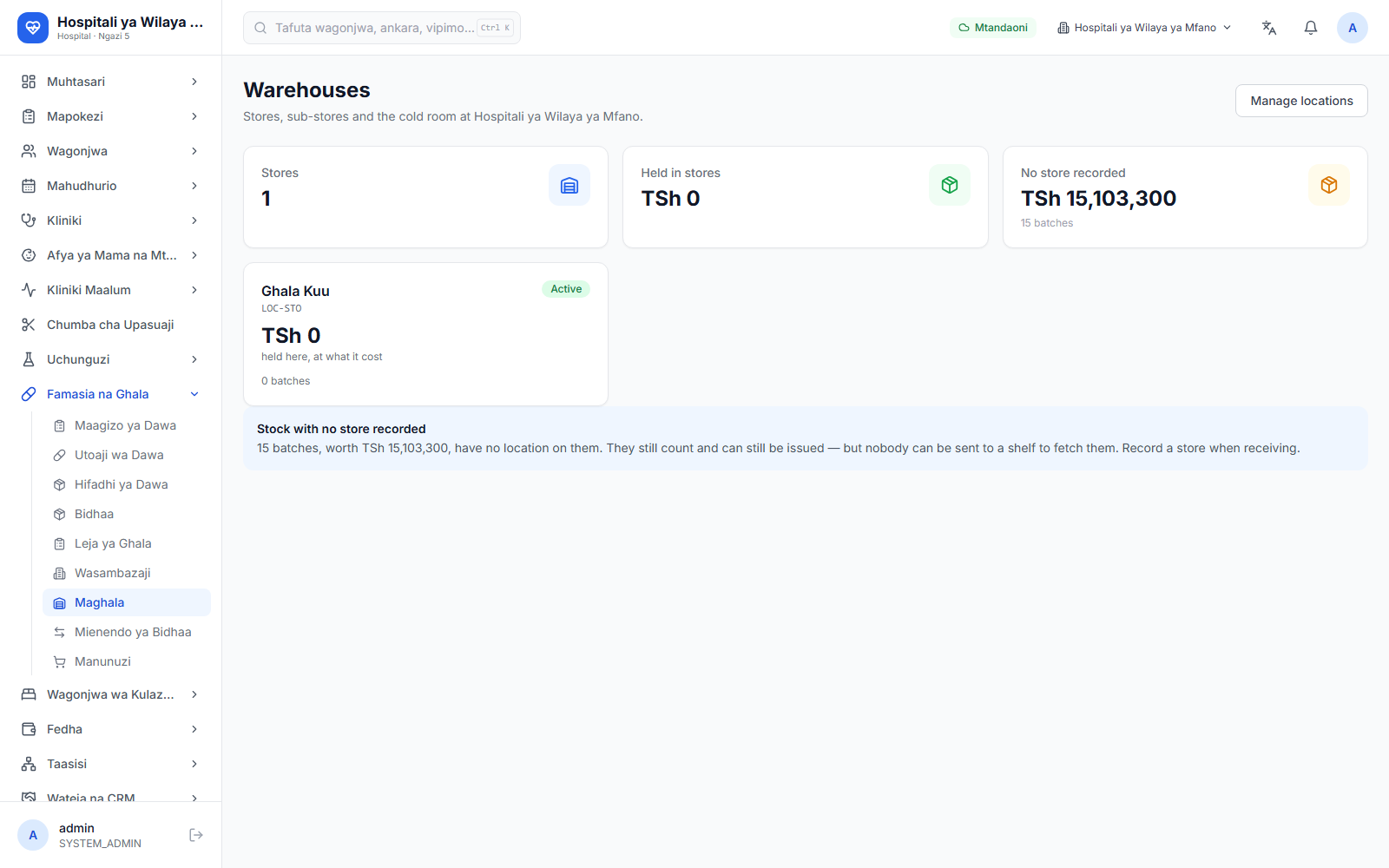
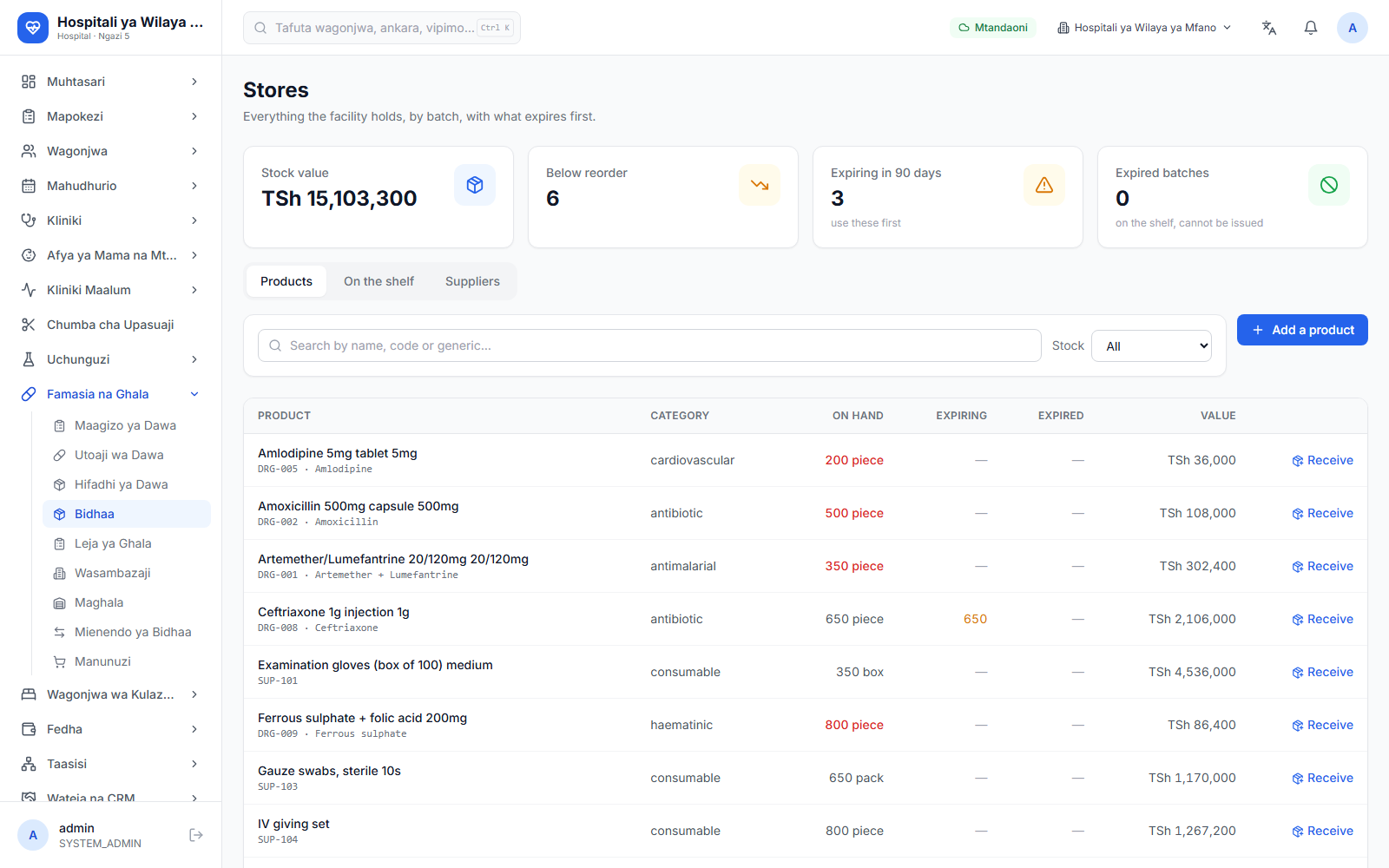
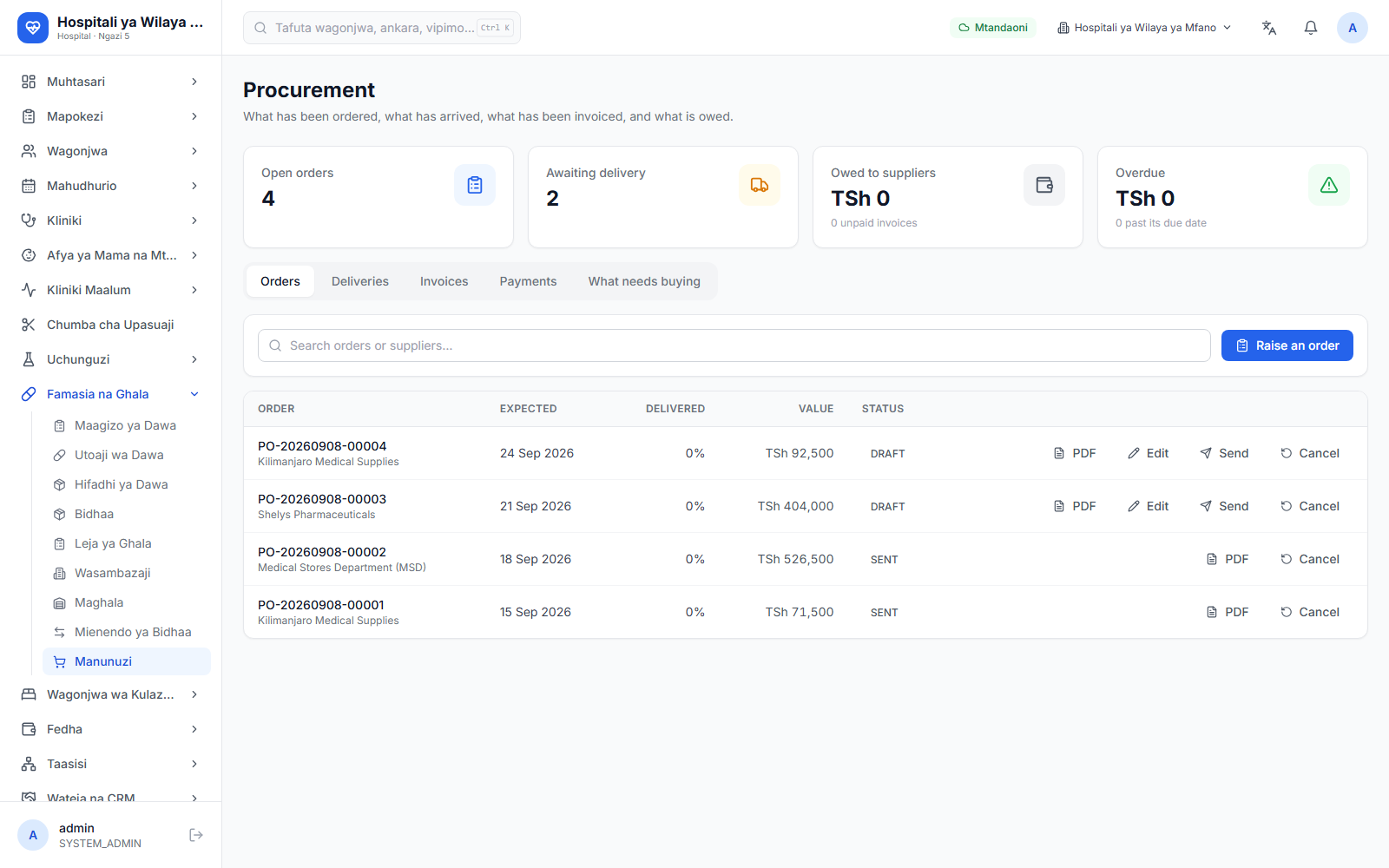
Ghala, manunuzi na wasambazajiStores, procurement and suppliers
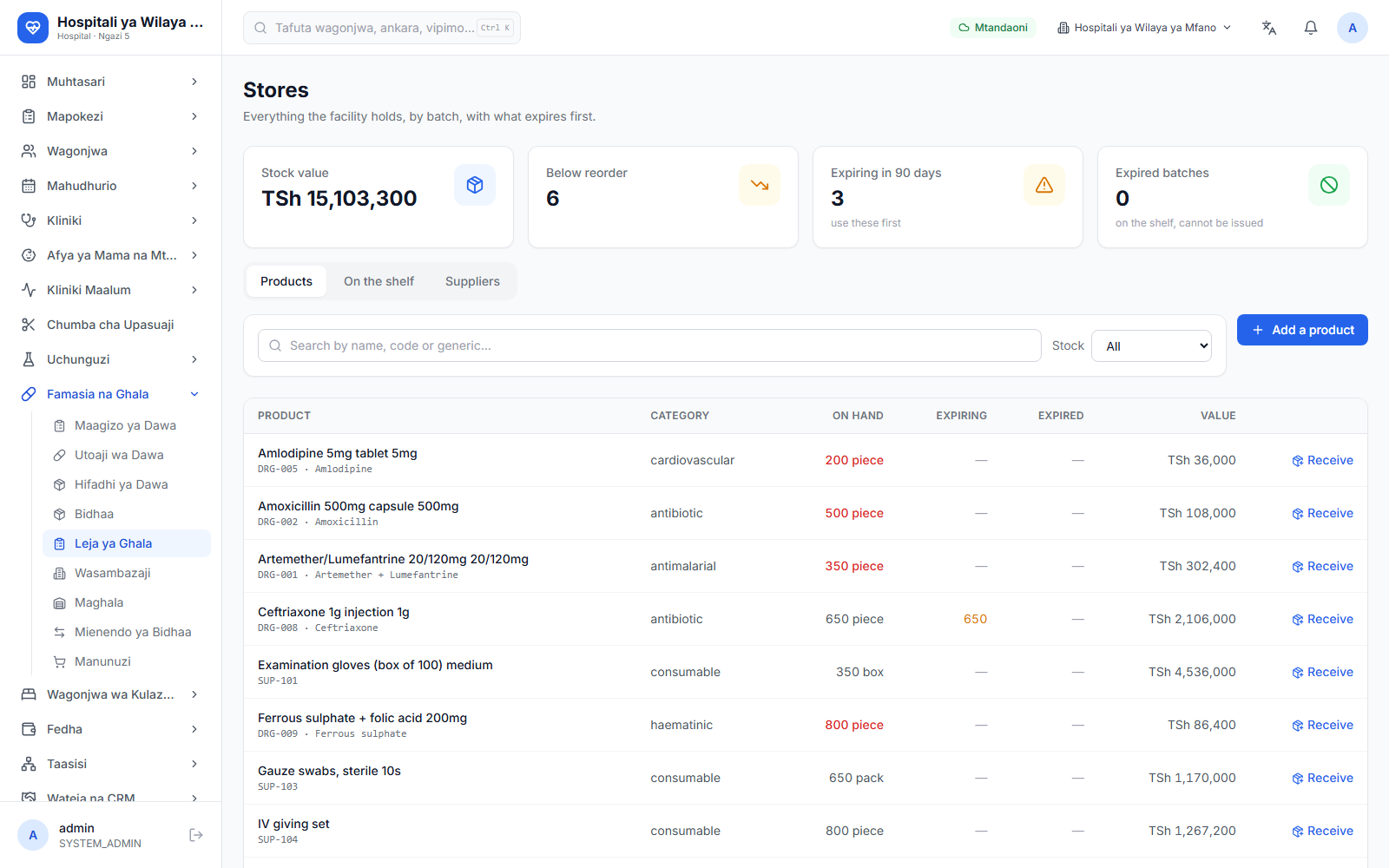
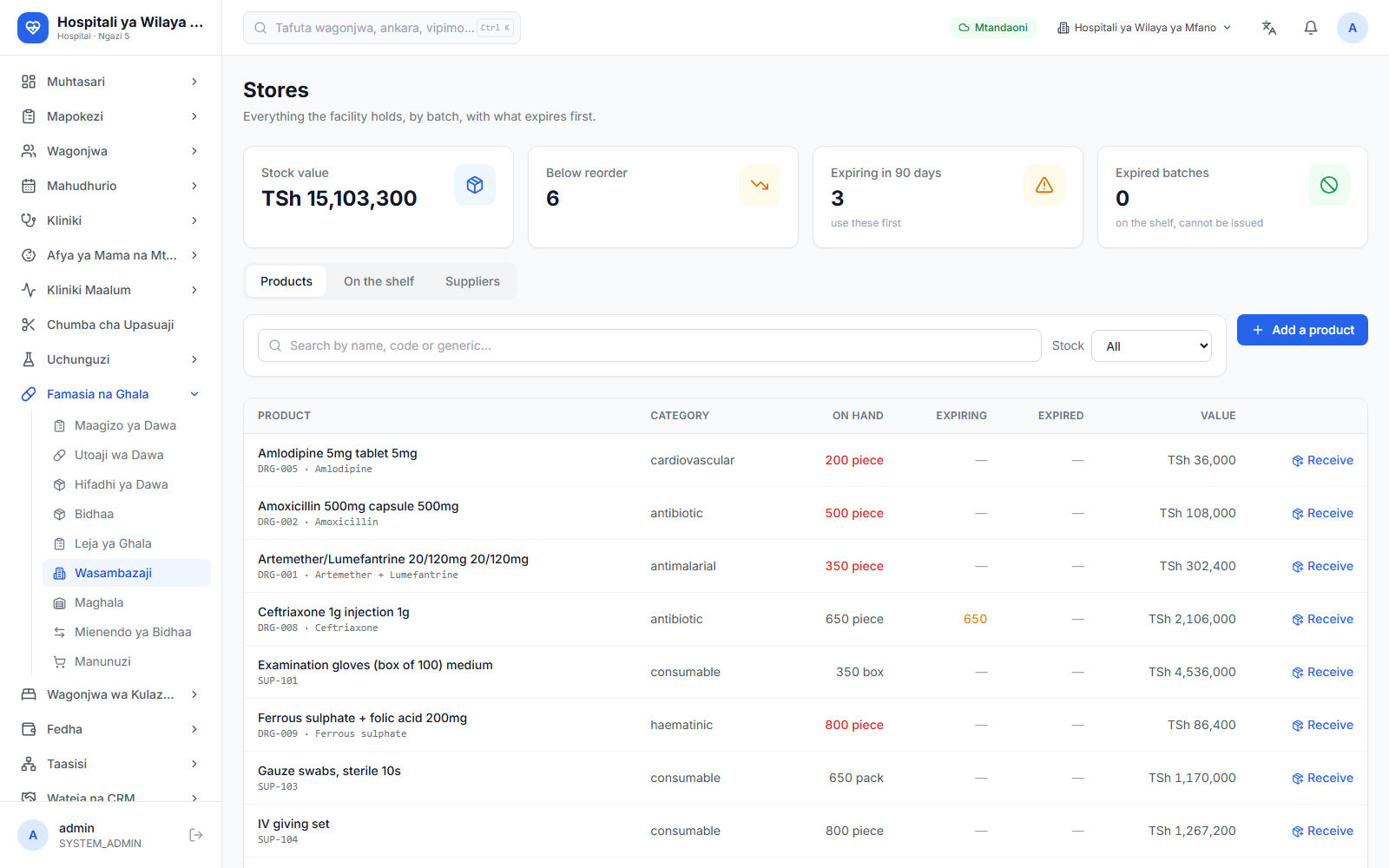
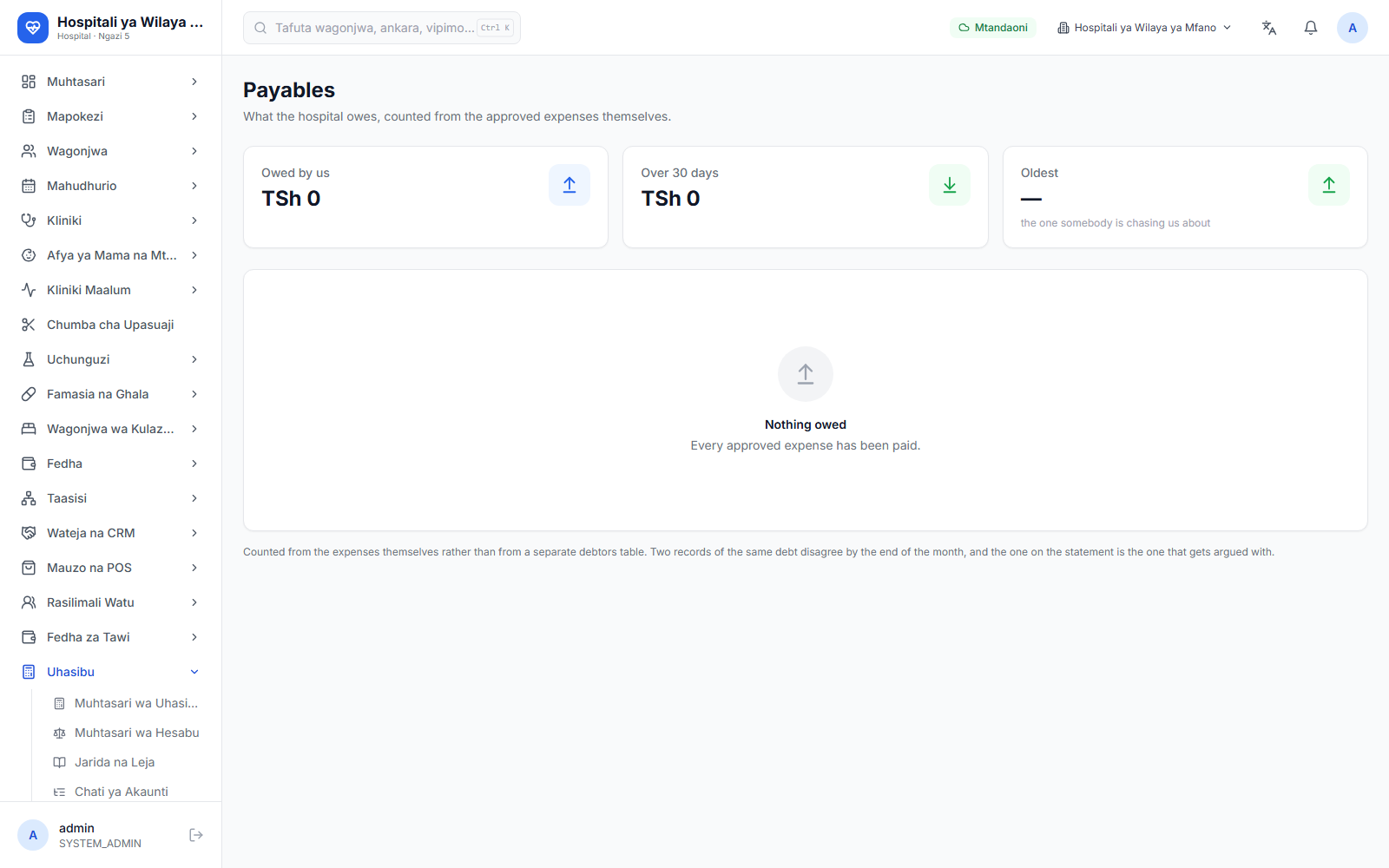
Kutoka oda ya manunuzi, hadi kupokea mzigo, hadi ankara ya msambazaji, hadi malipo. Hatua nne, watu tofauti — ndiyo maana msambazaji hawezi kulipwa kwa mzigo ambao haujawahi kufika. From the purchase order, to the delivery, to the supplier's invoice, to the payment. Four steps and different people — which is why a supplier cannot be paid for goods that never arrived.
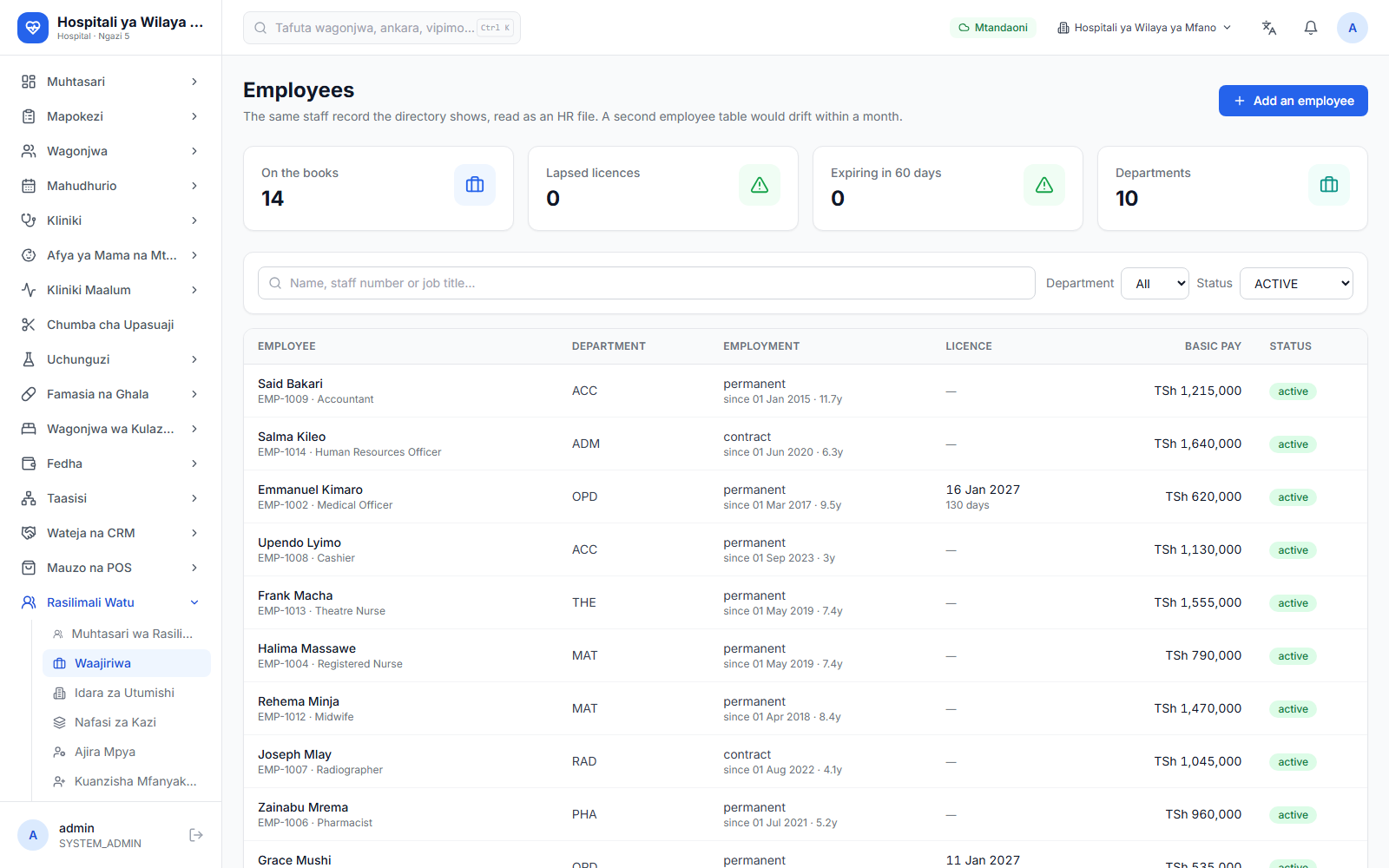
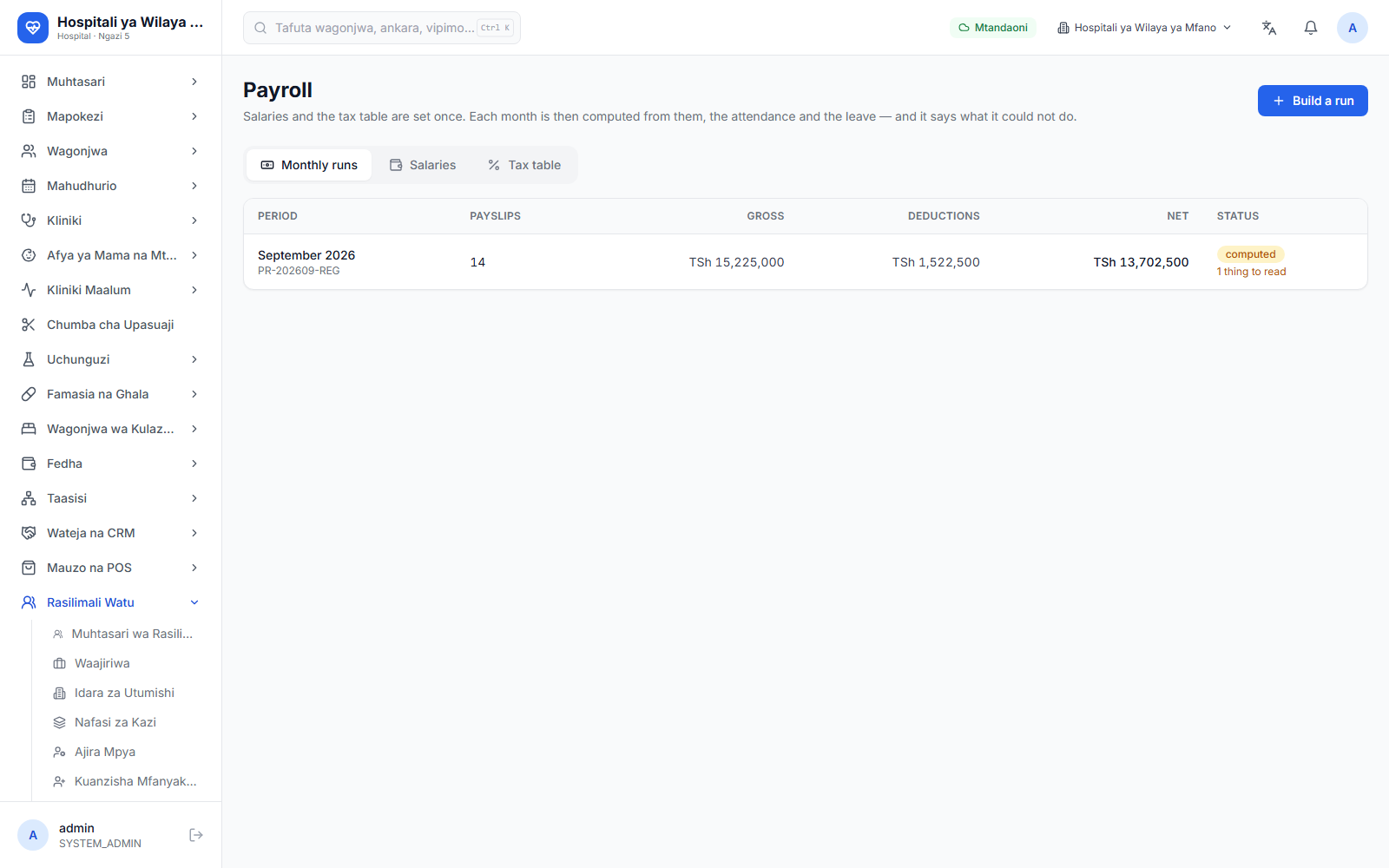
Rasilimali watu na mishaharaHuman resources and payroll
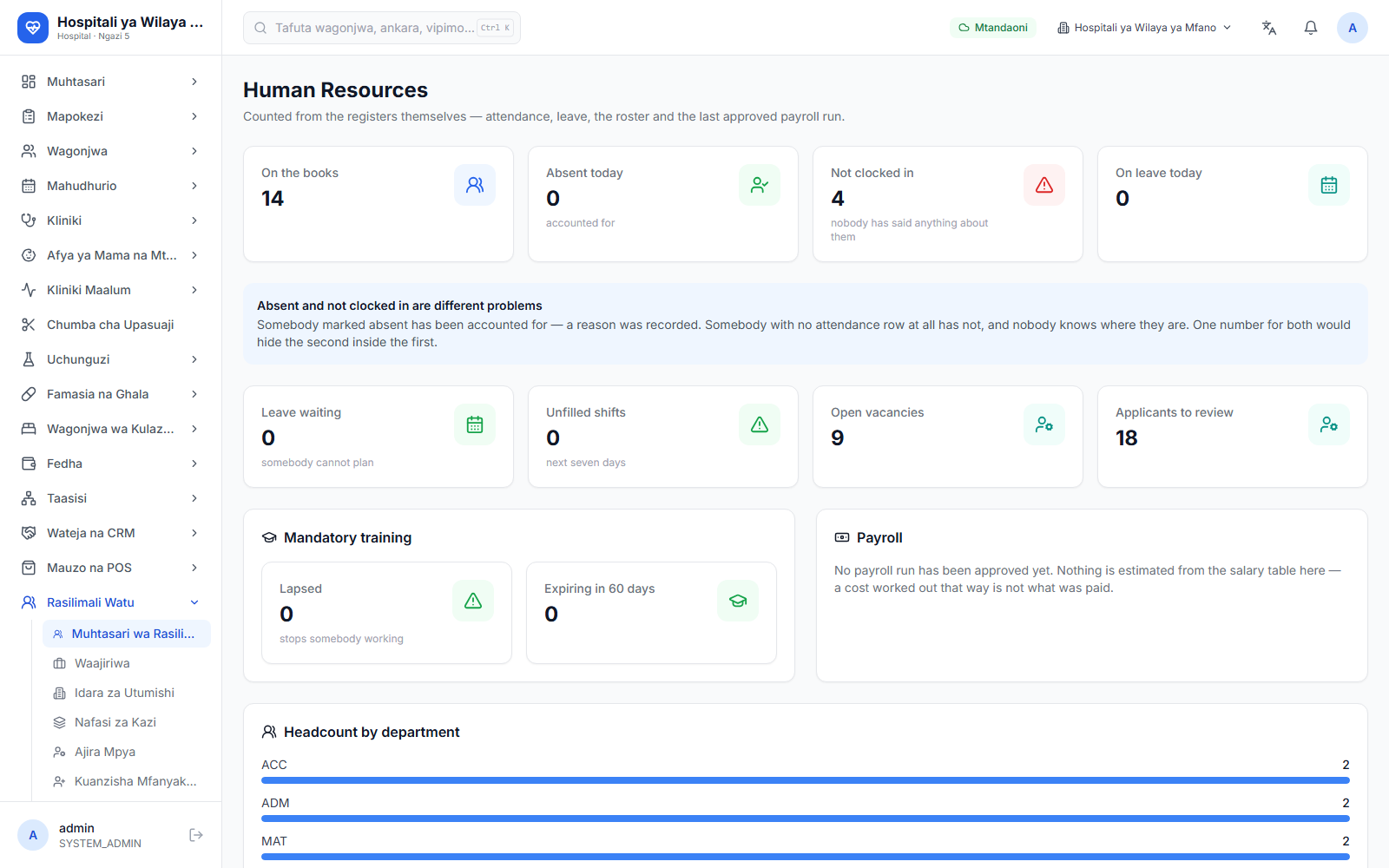
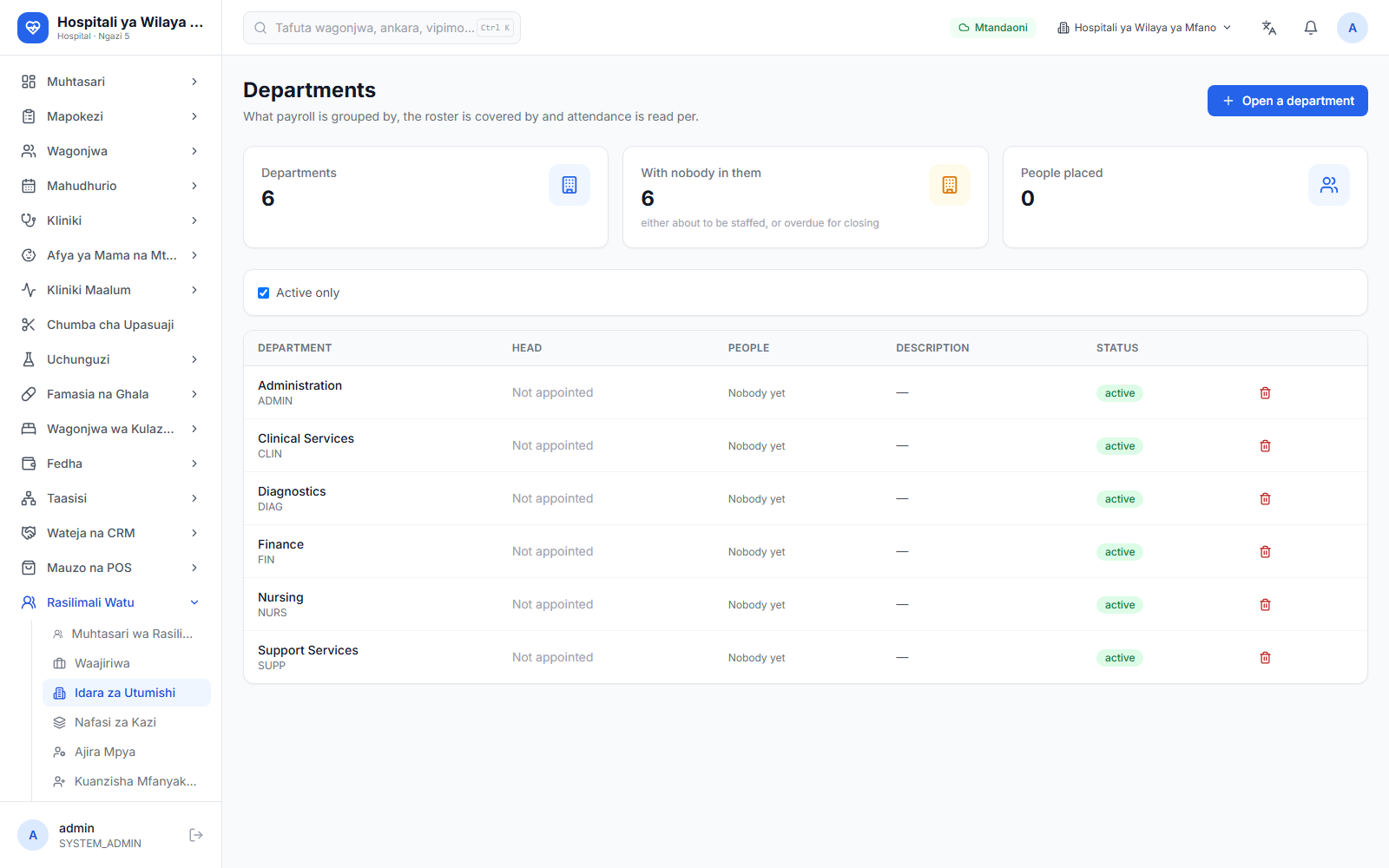
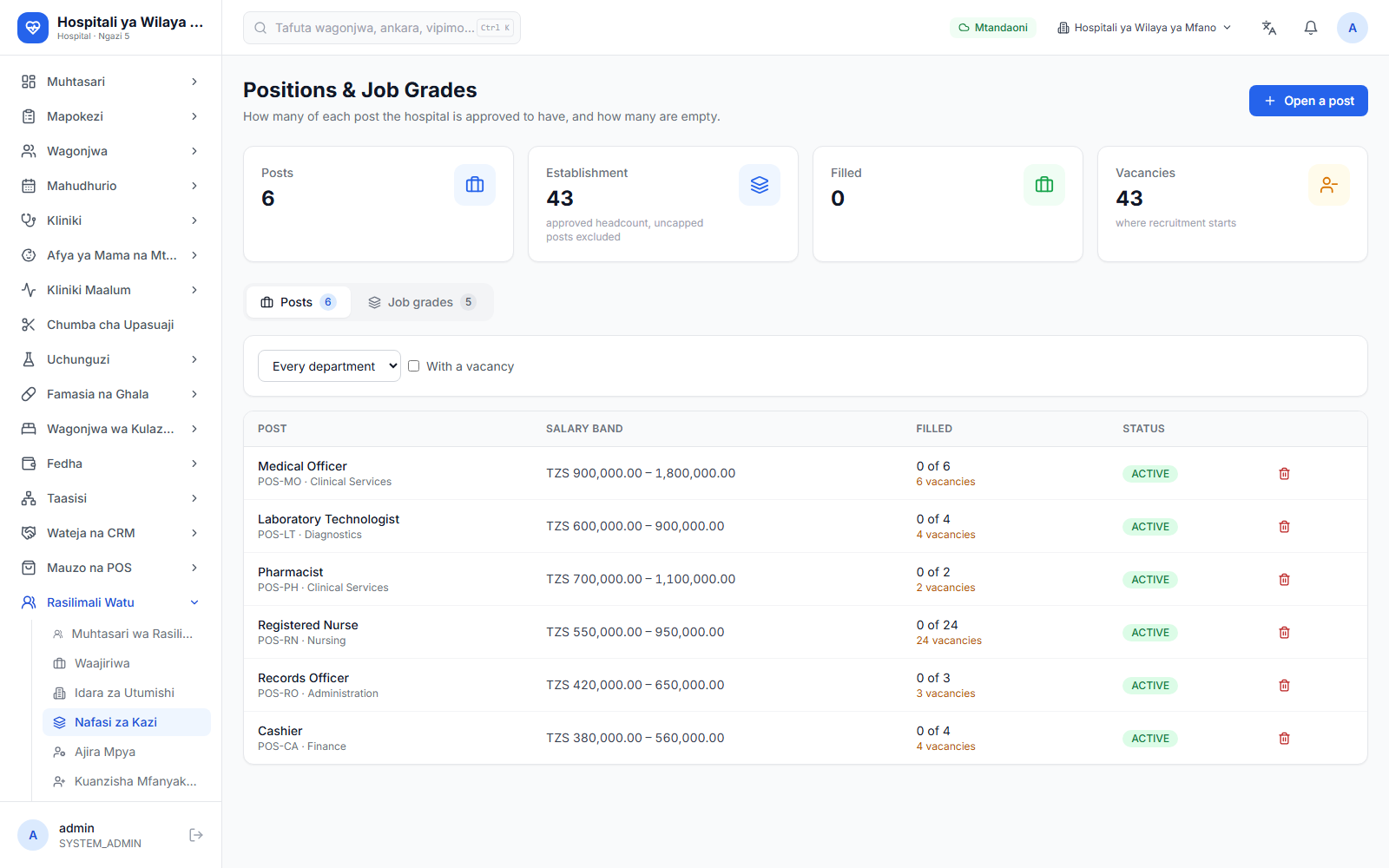
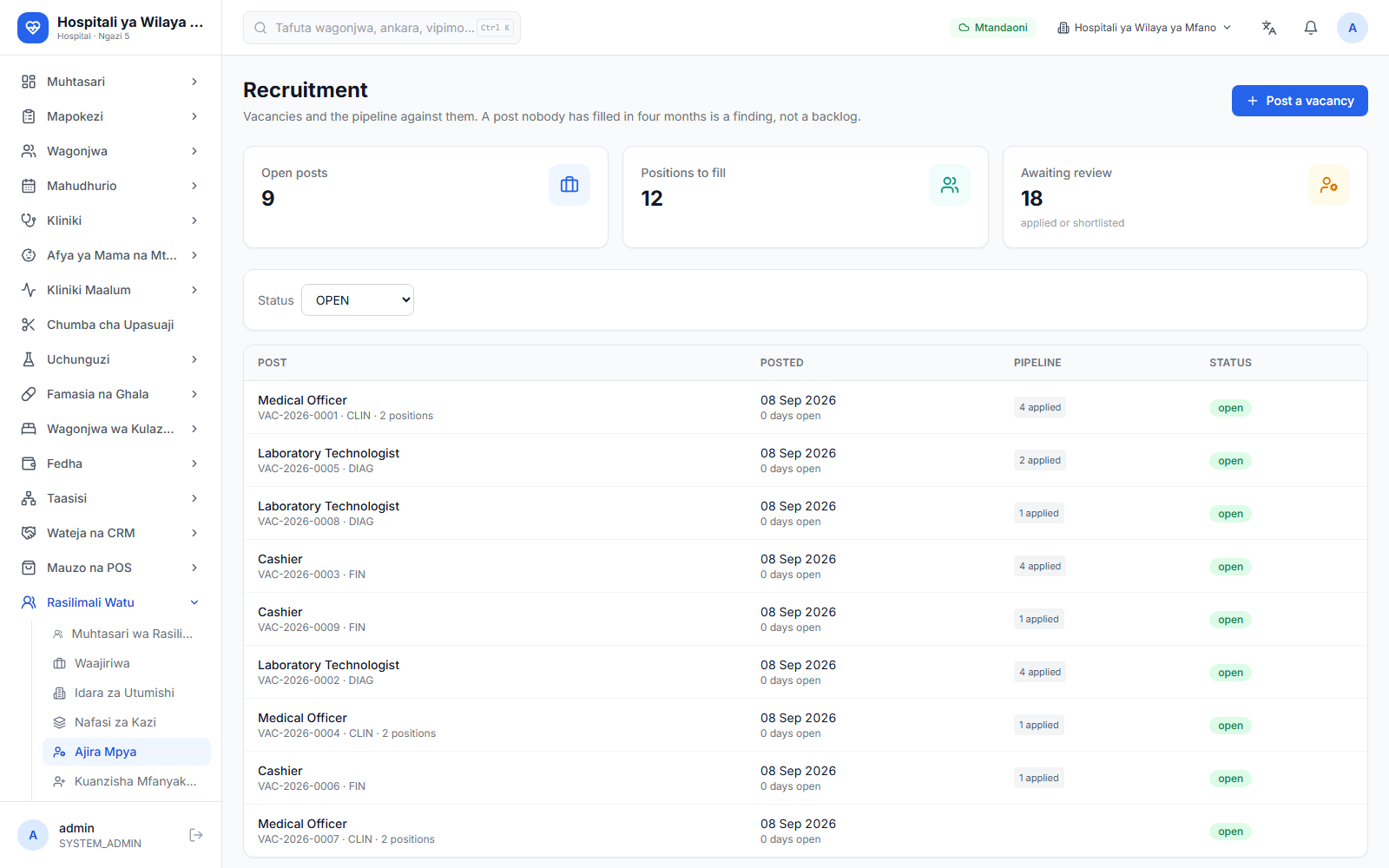
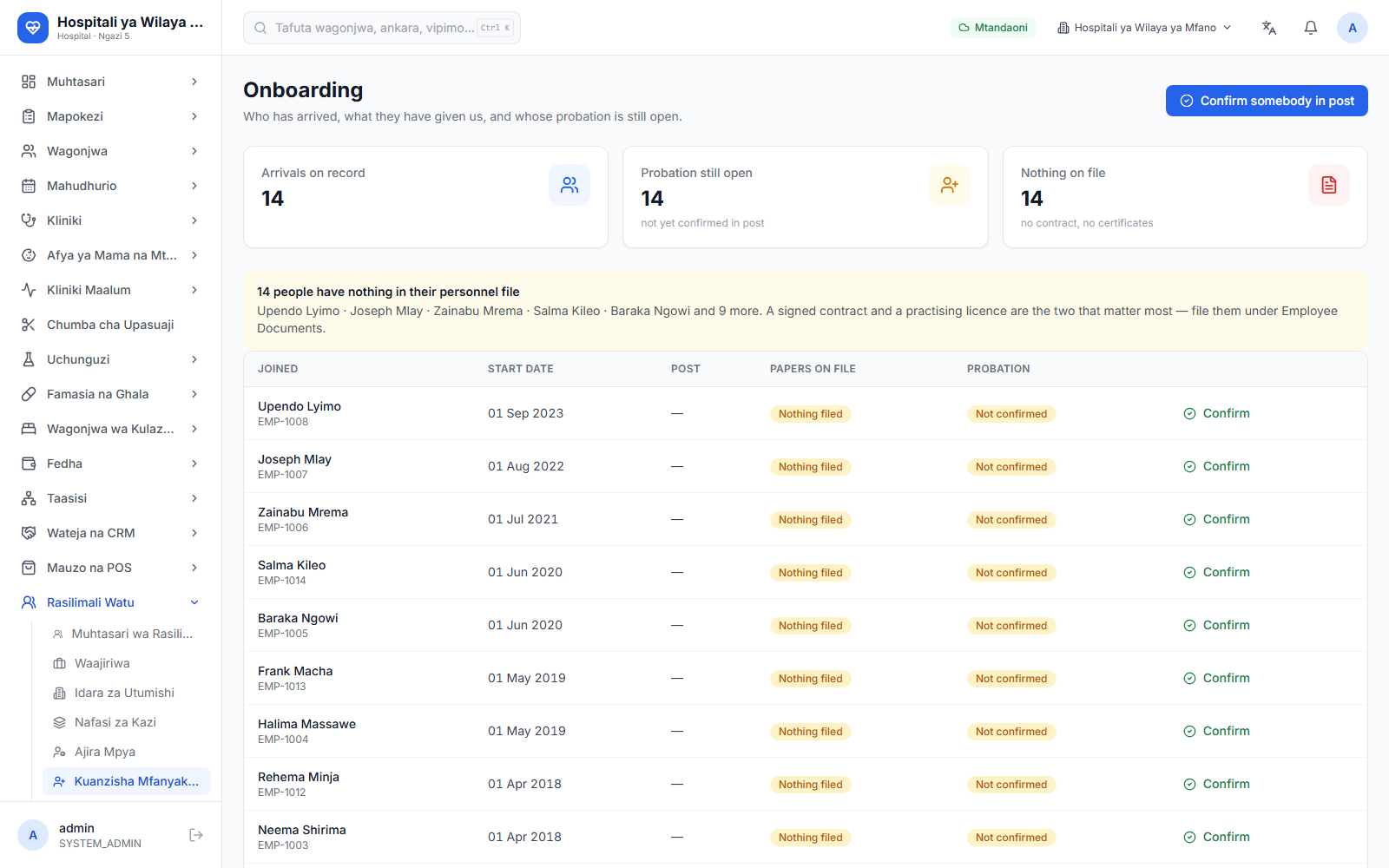
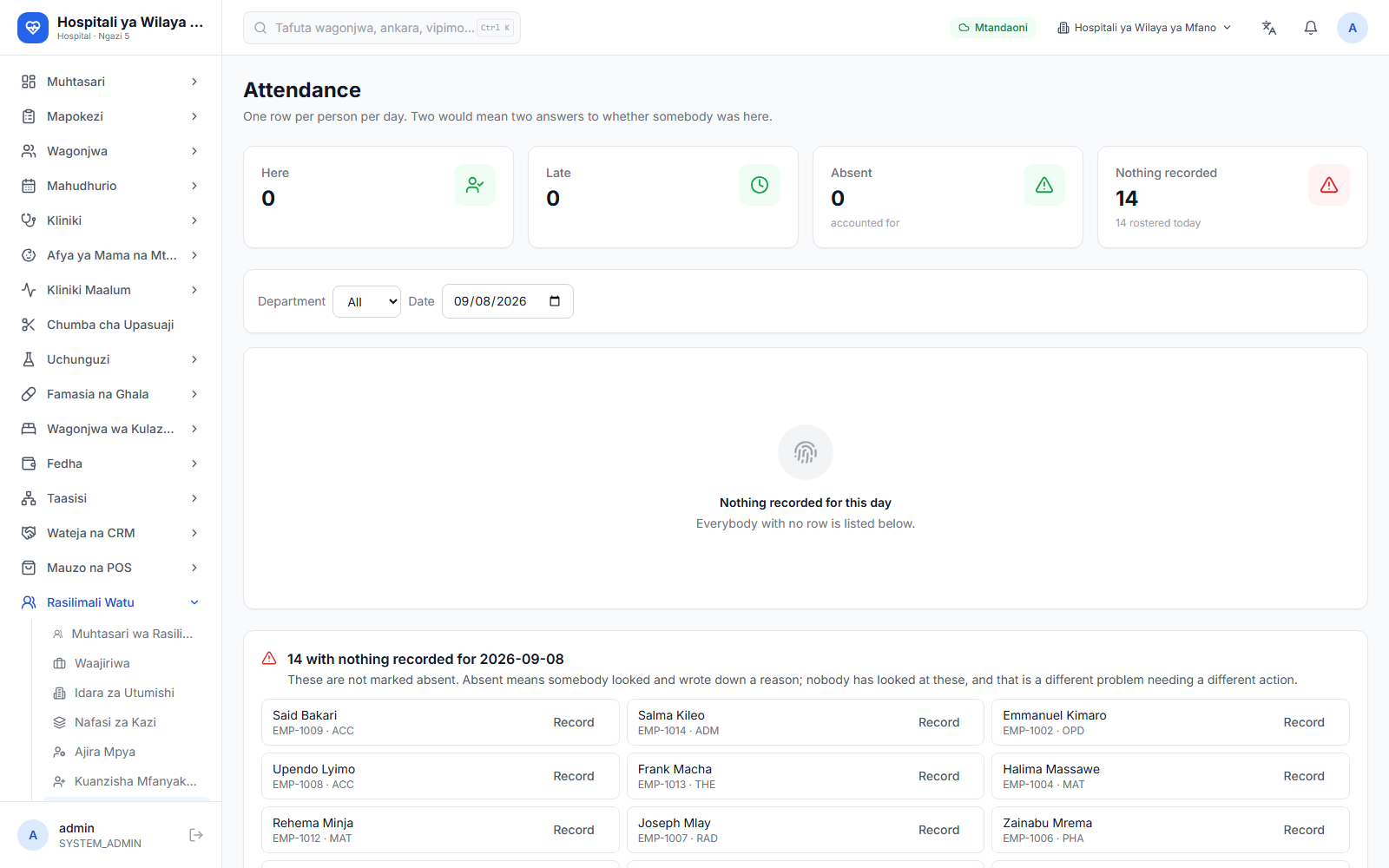
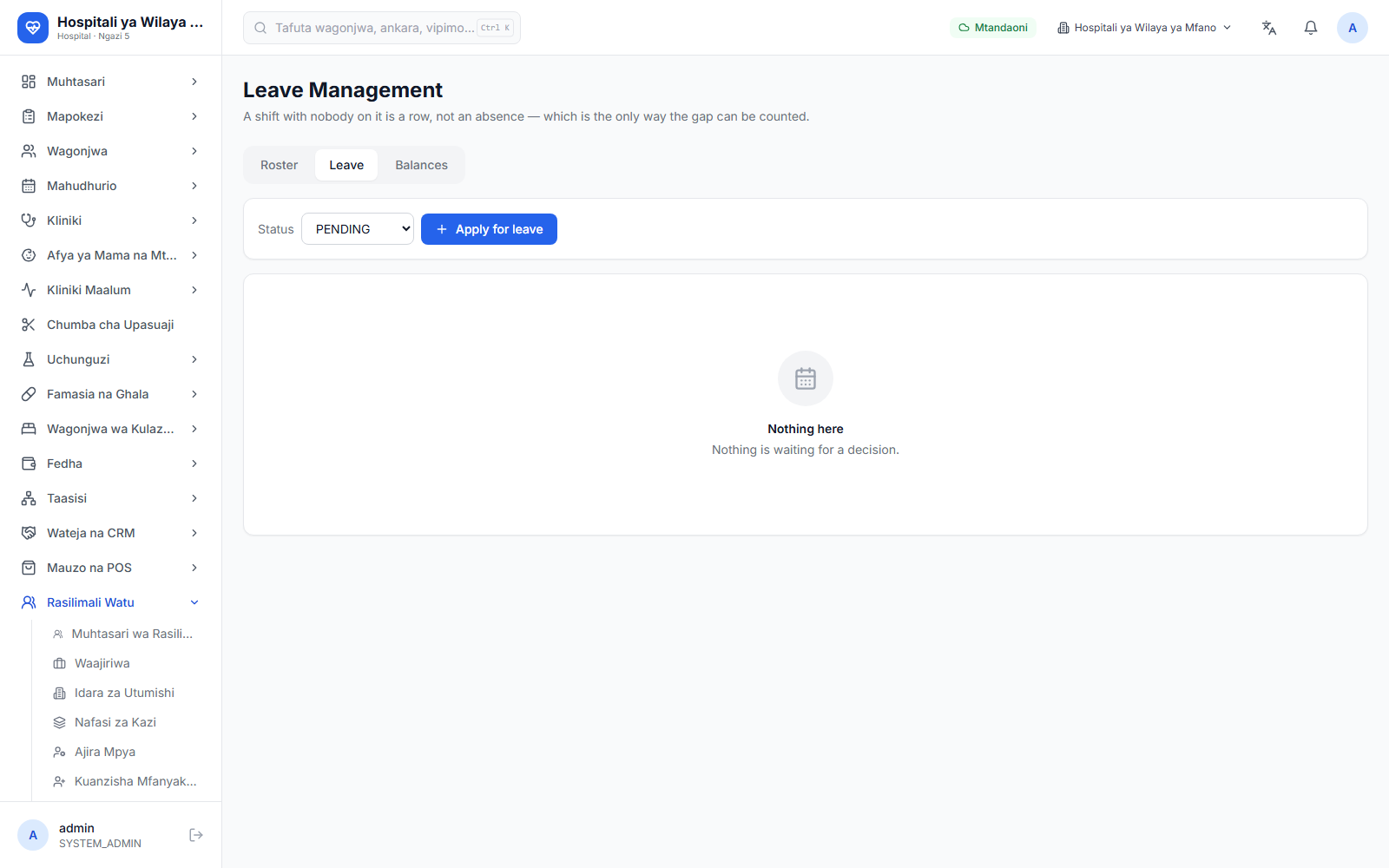
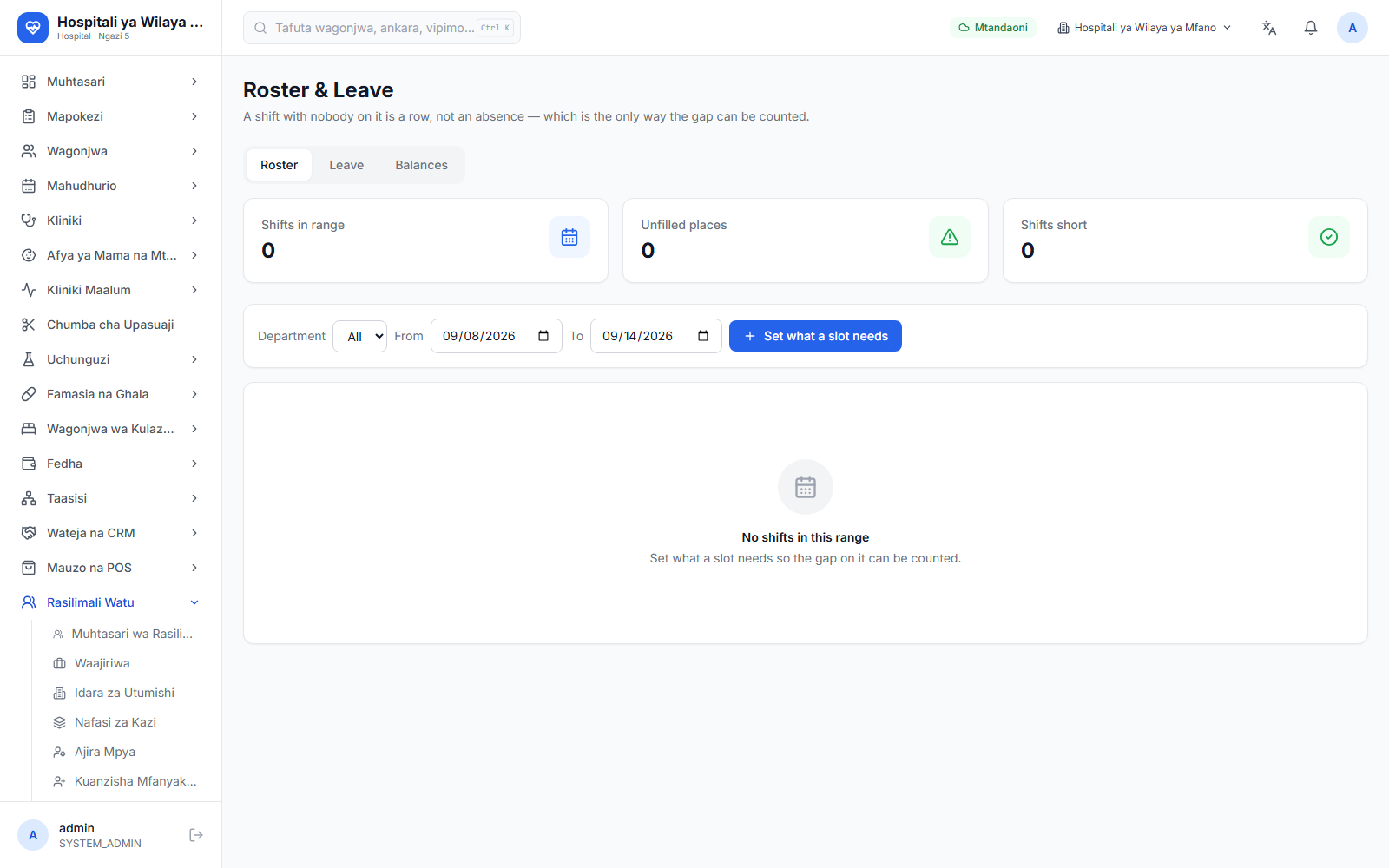
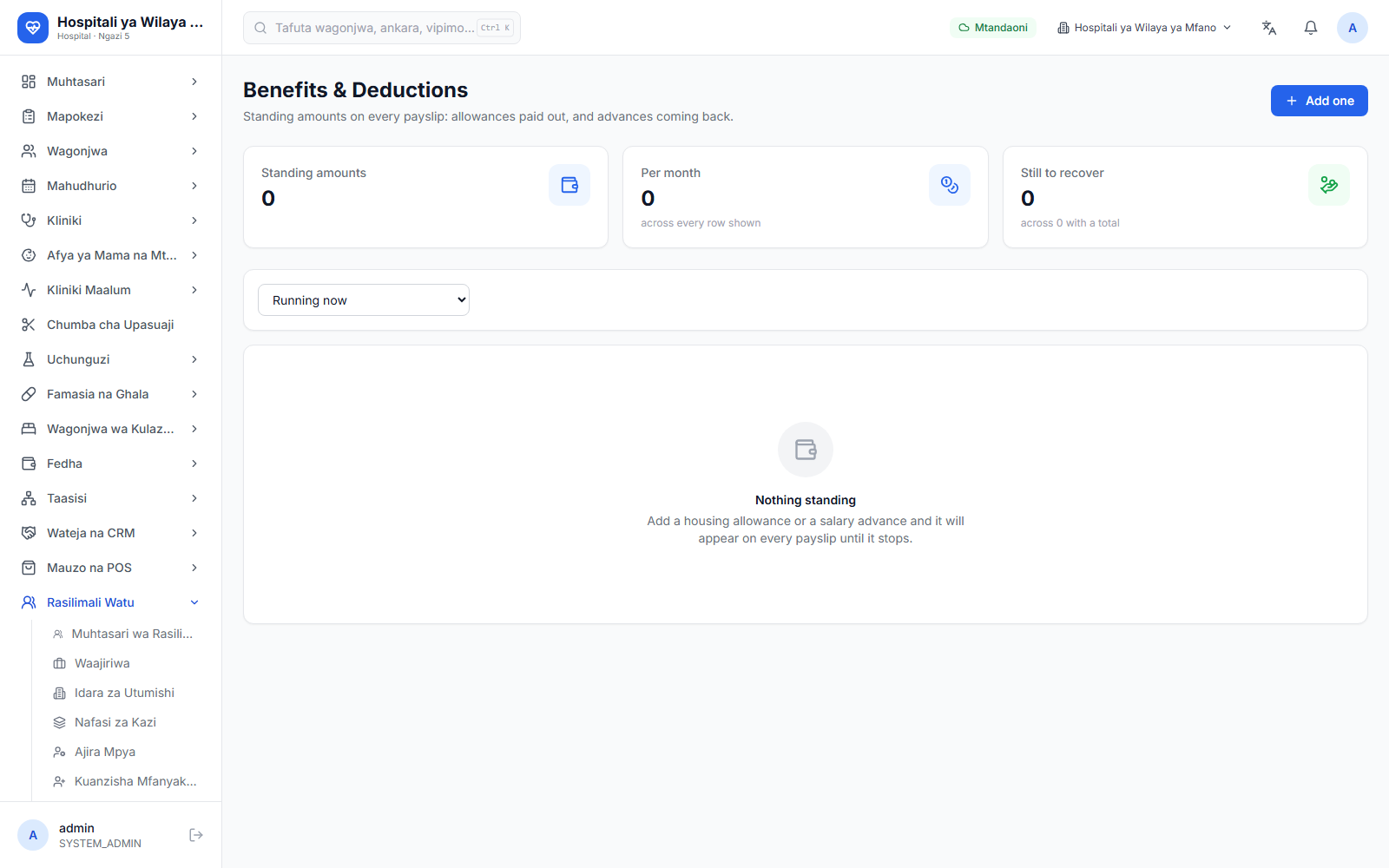
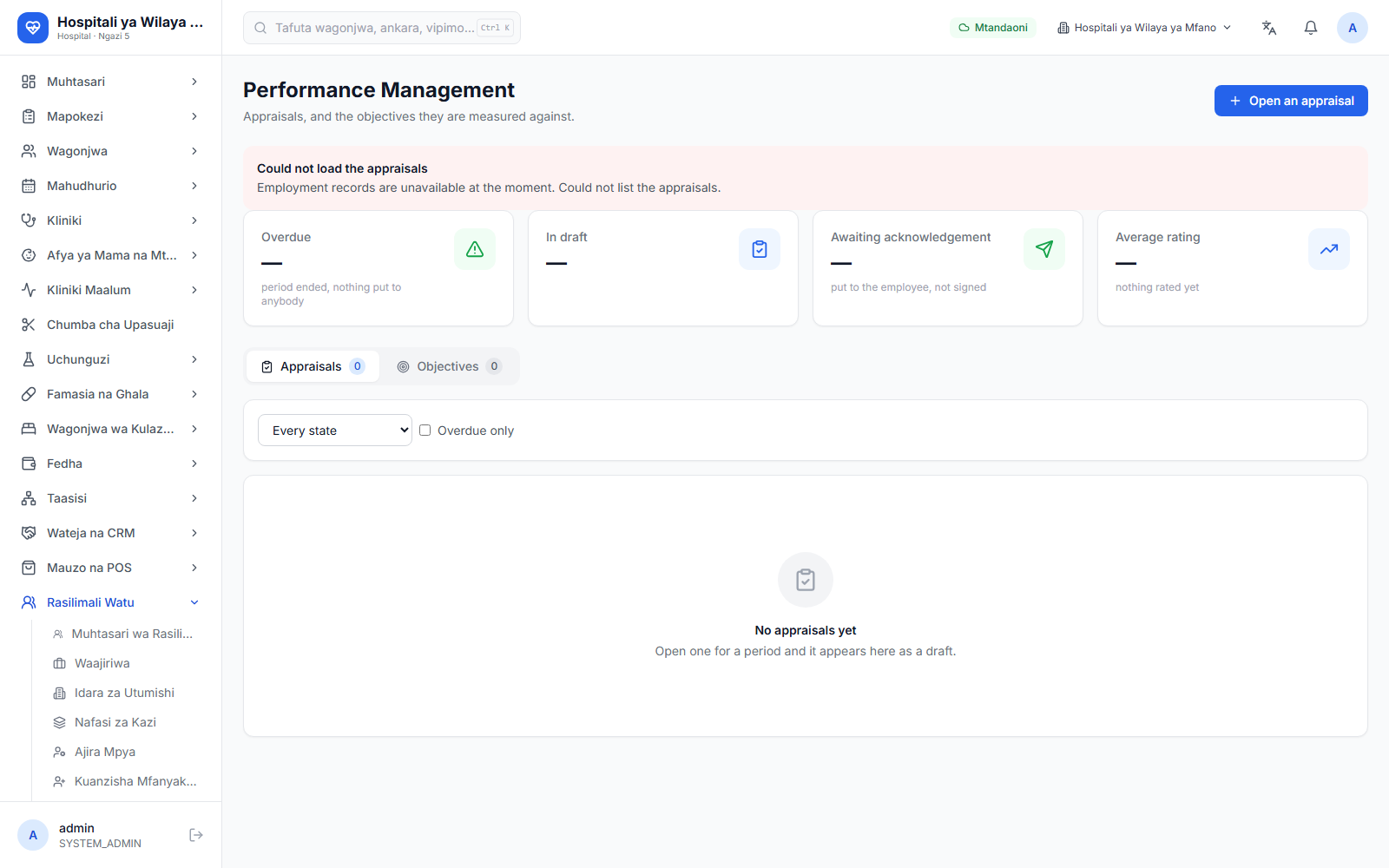
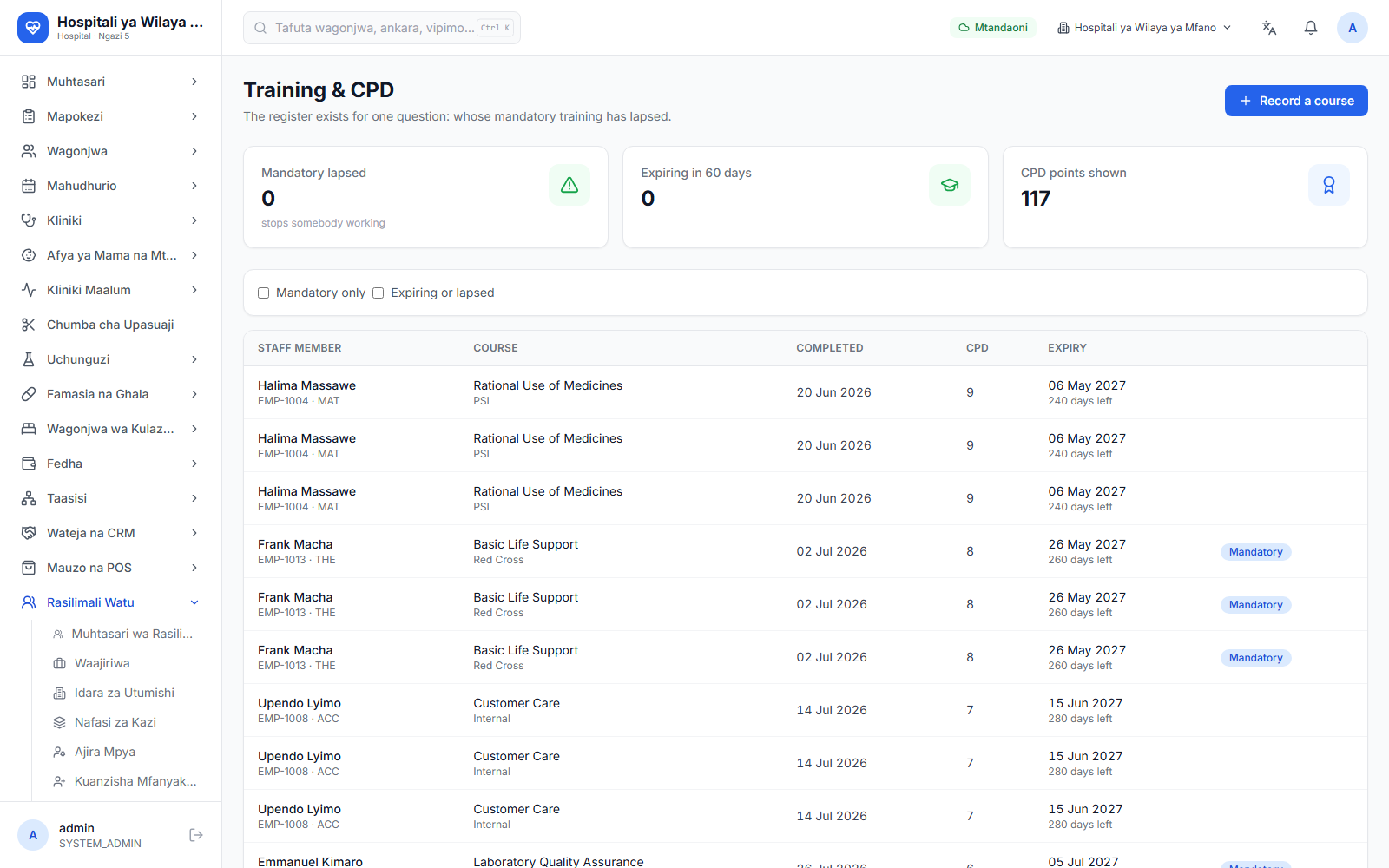
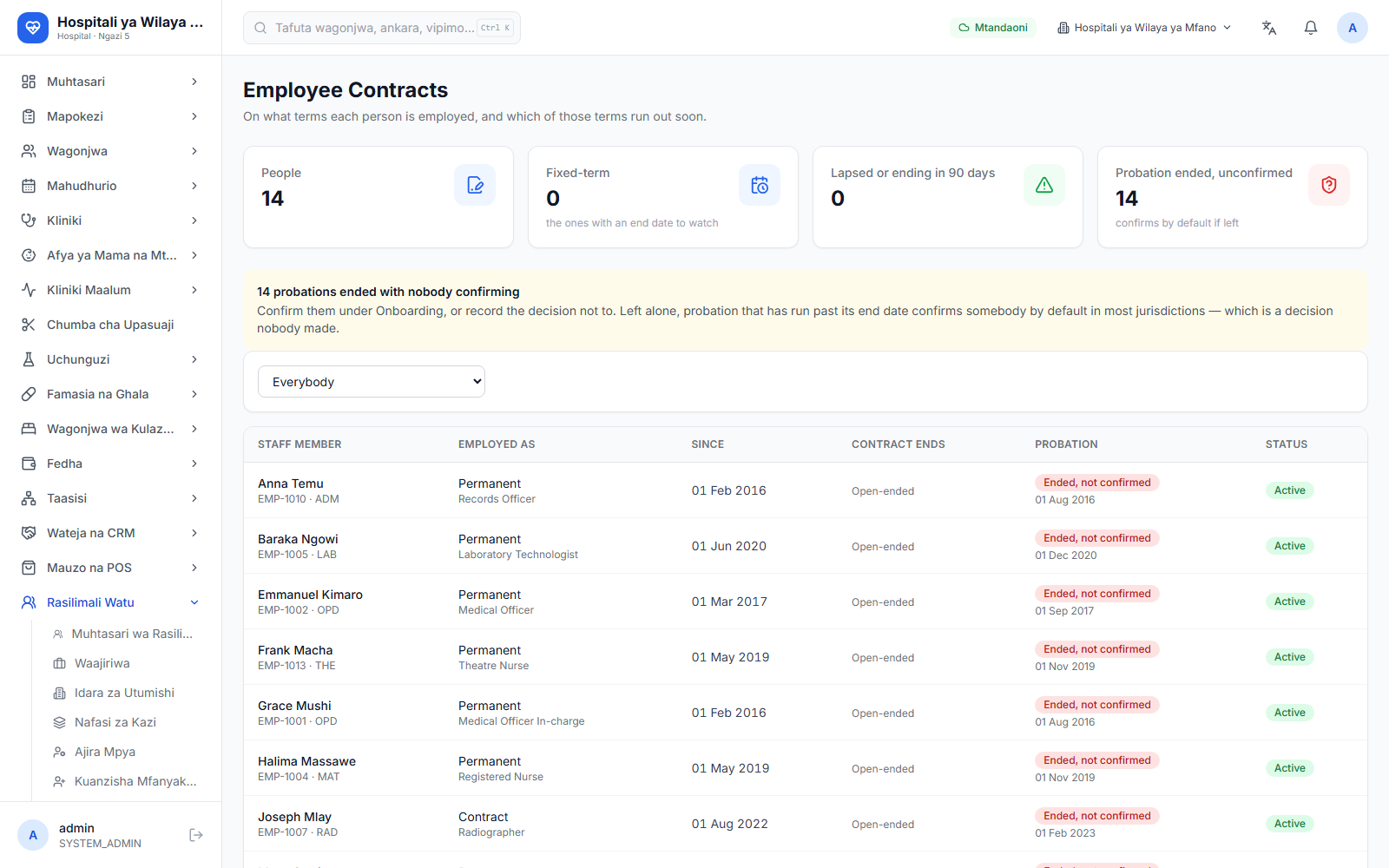
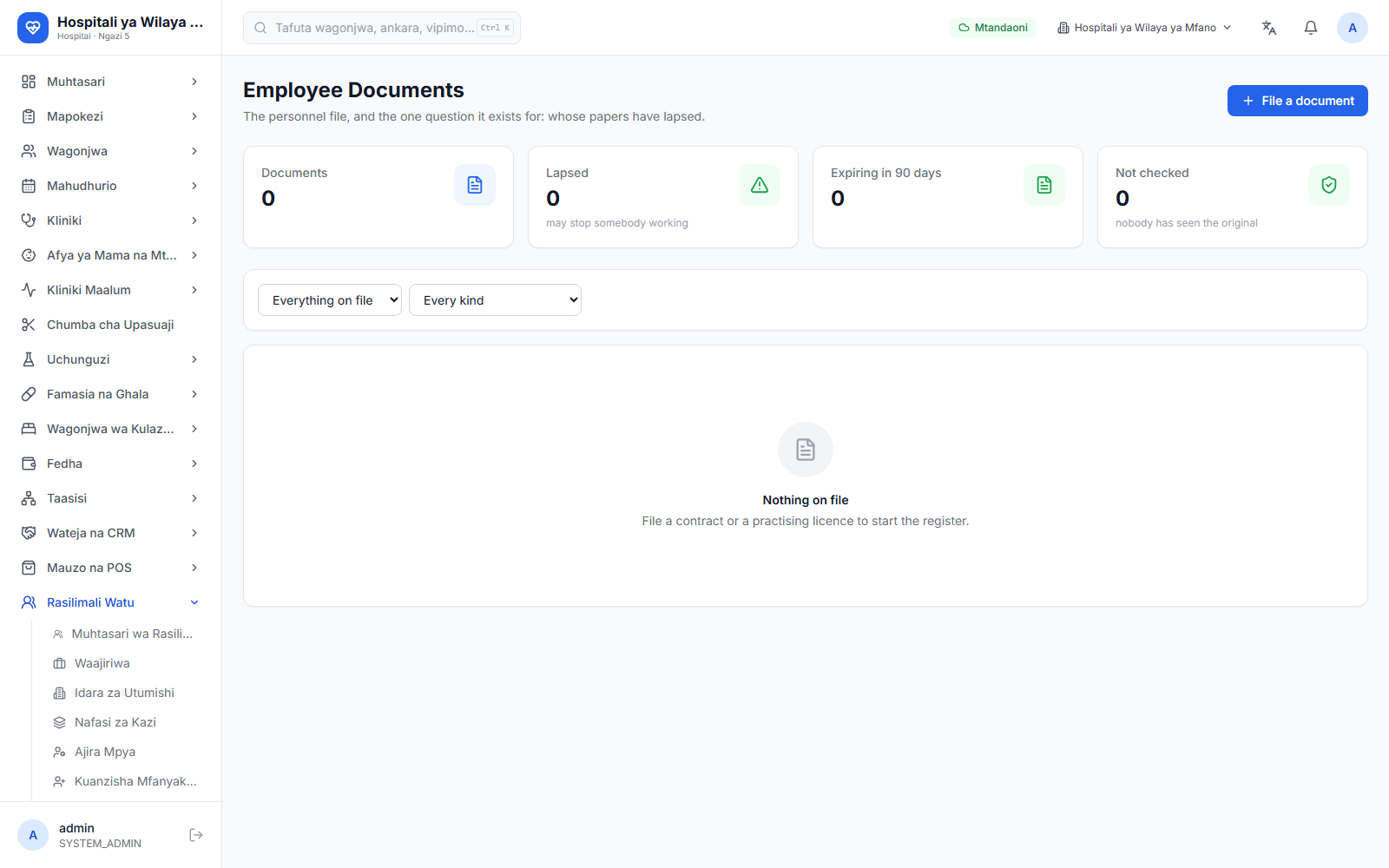
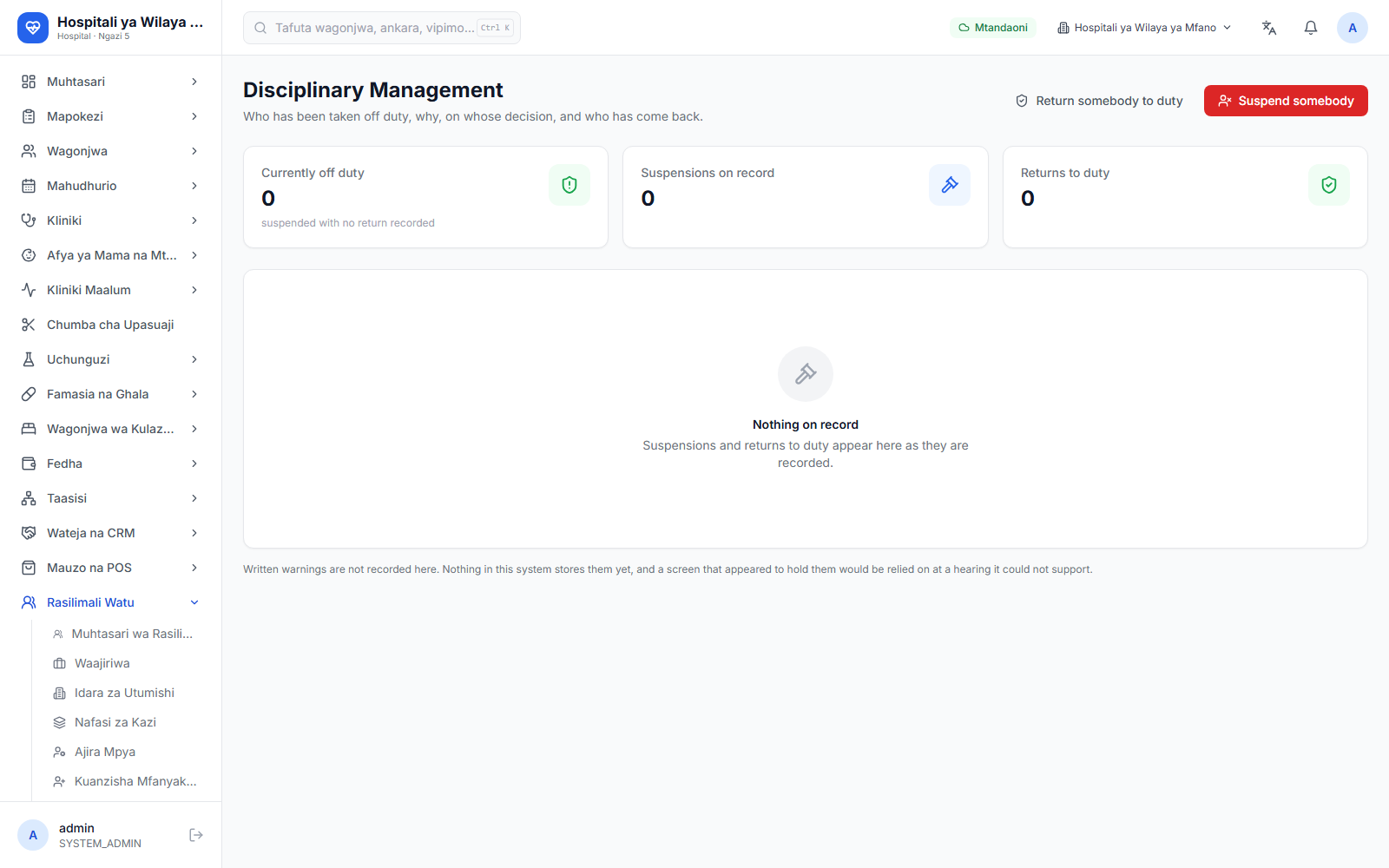
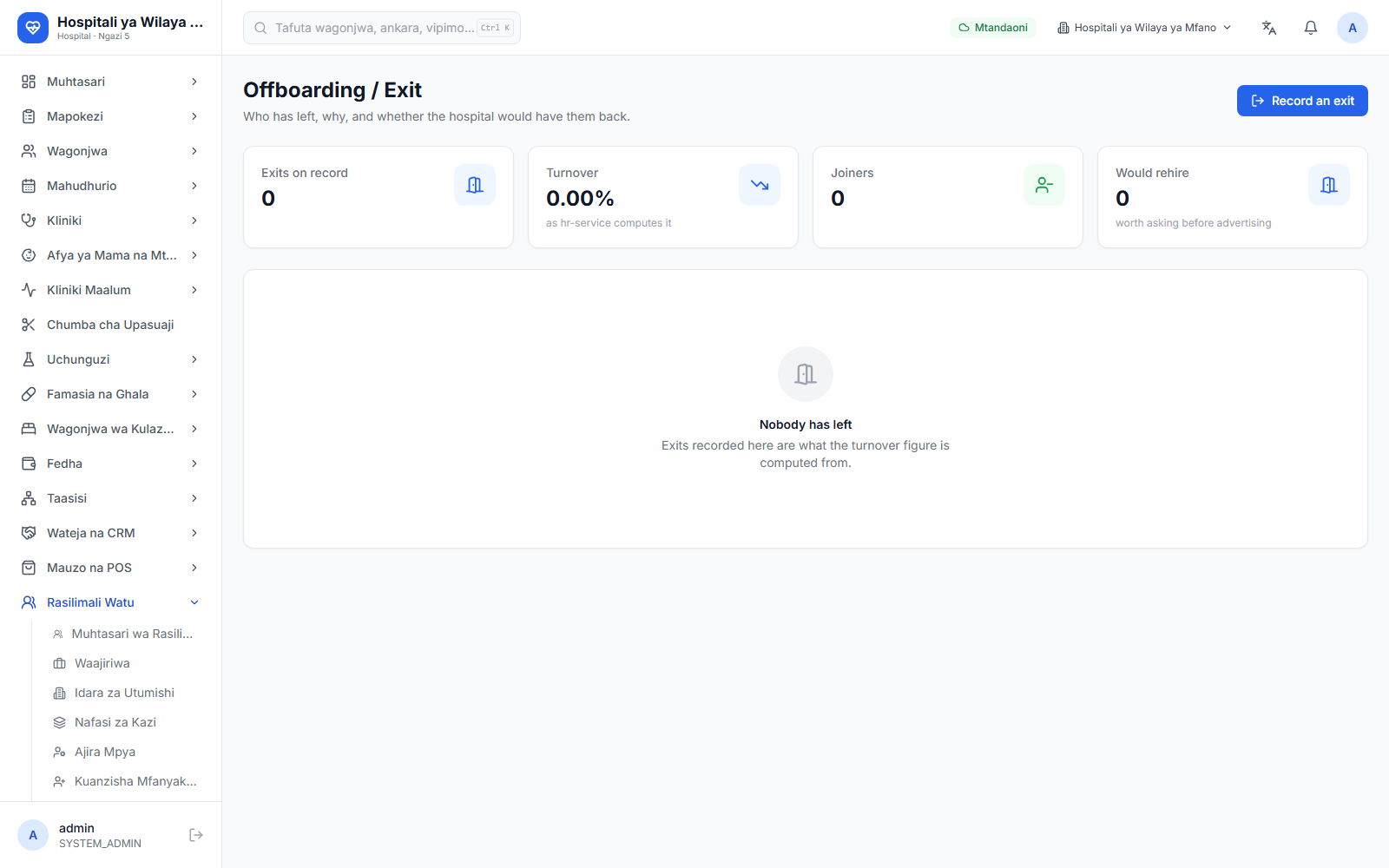
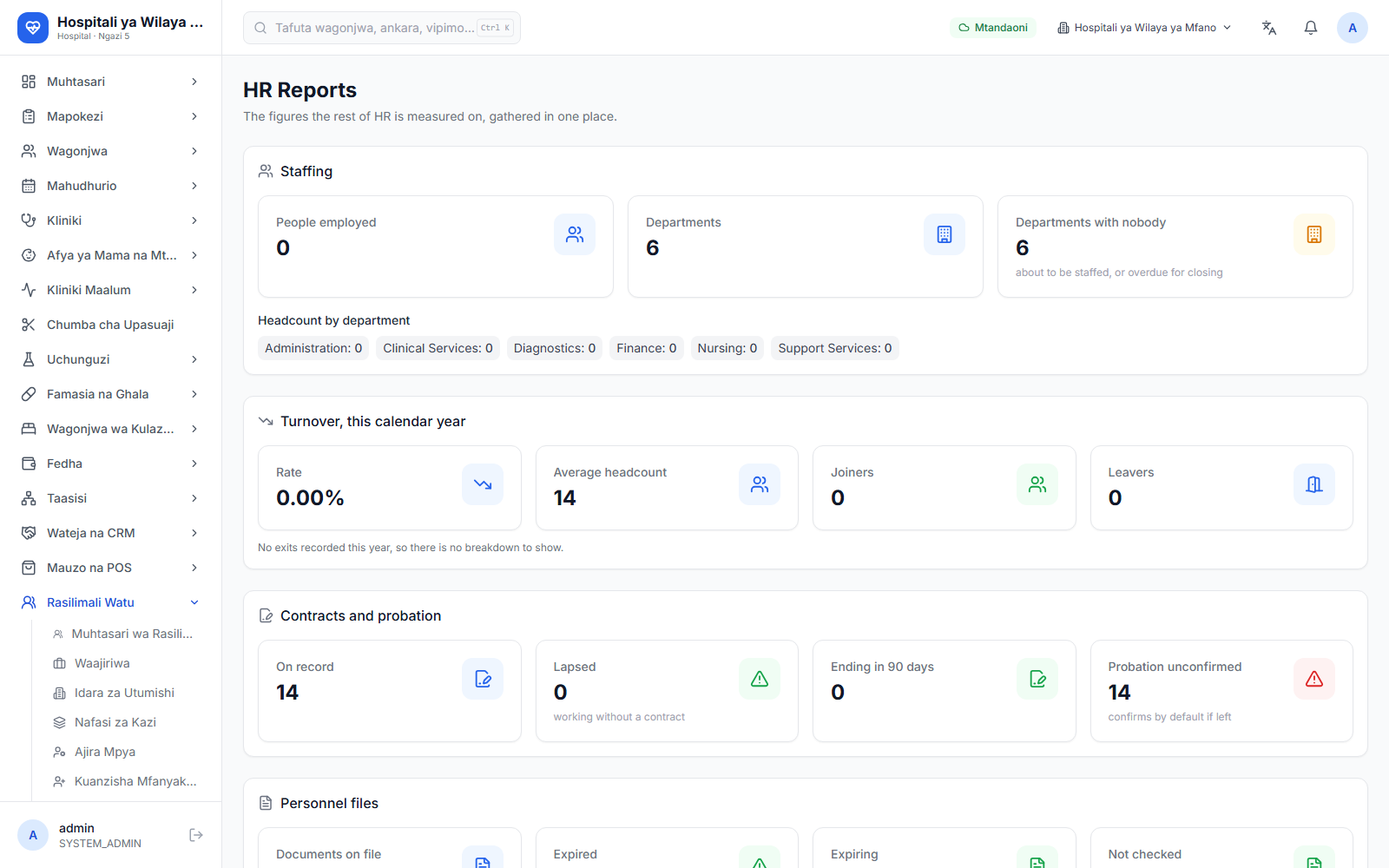
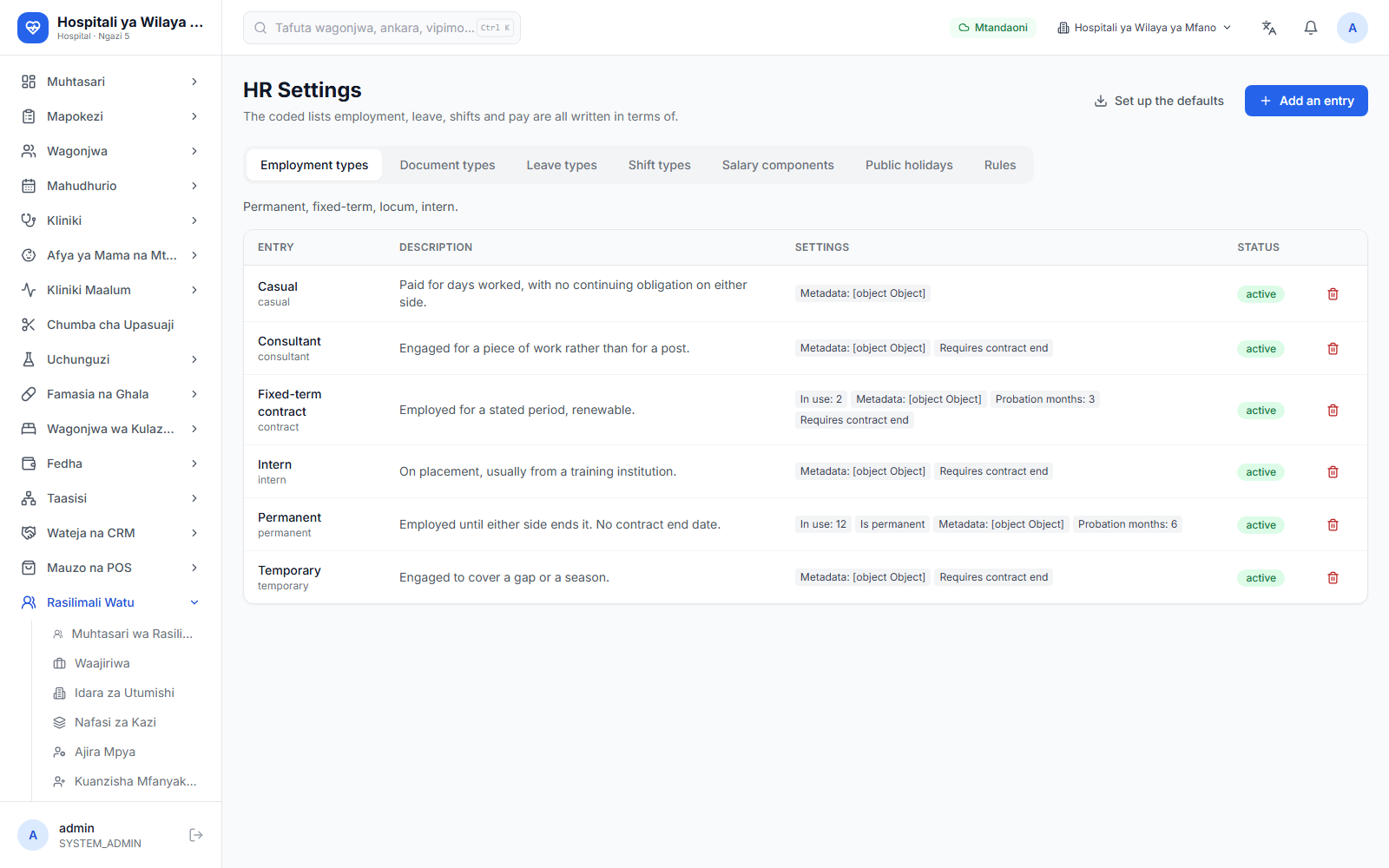
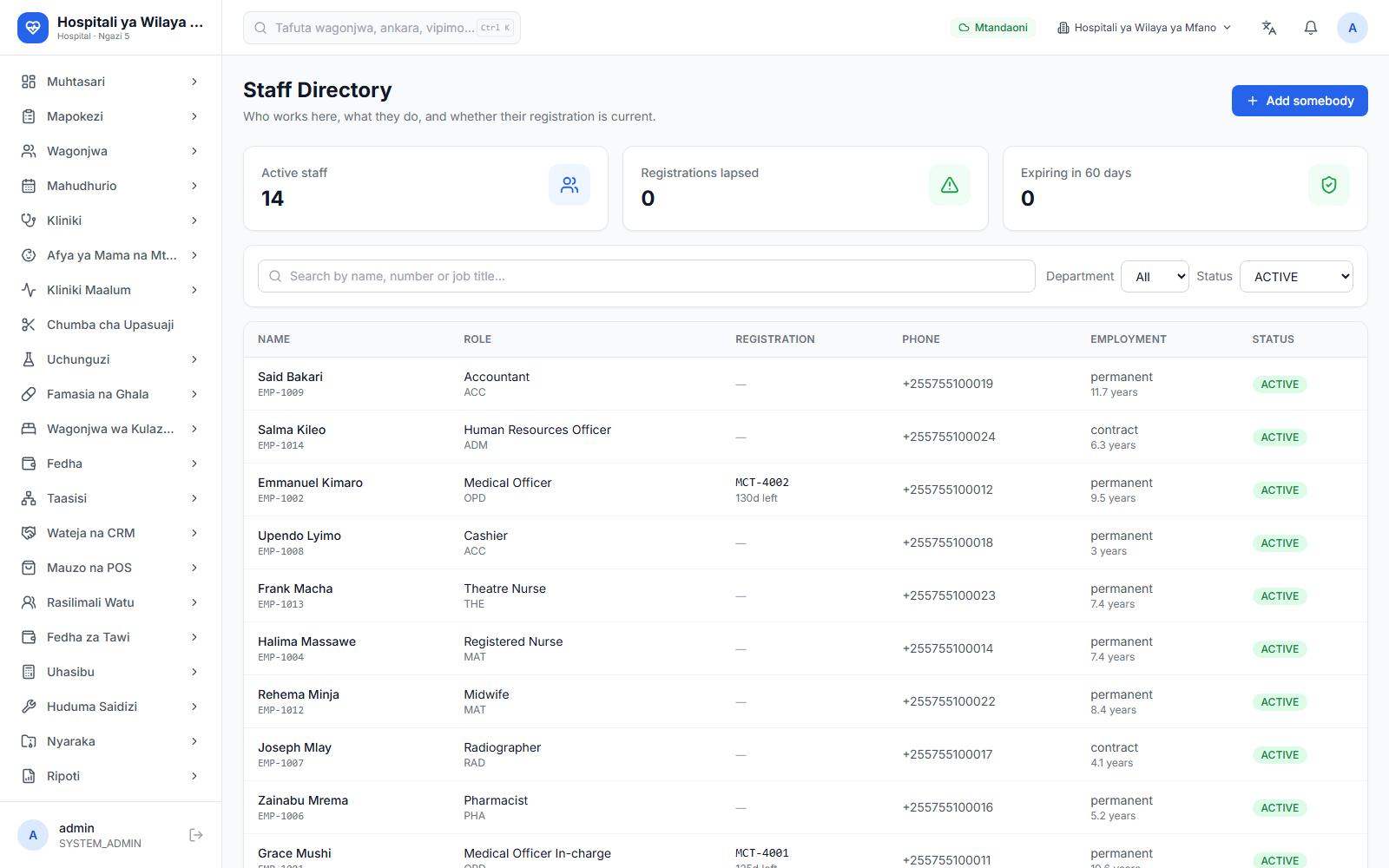
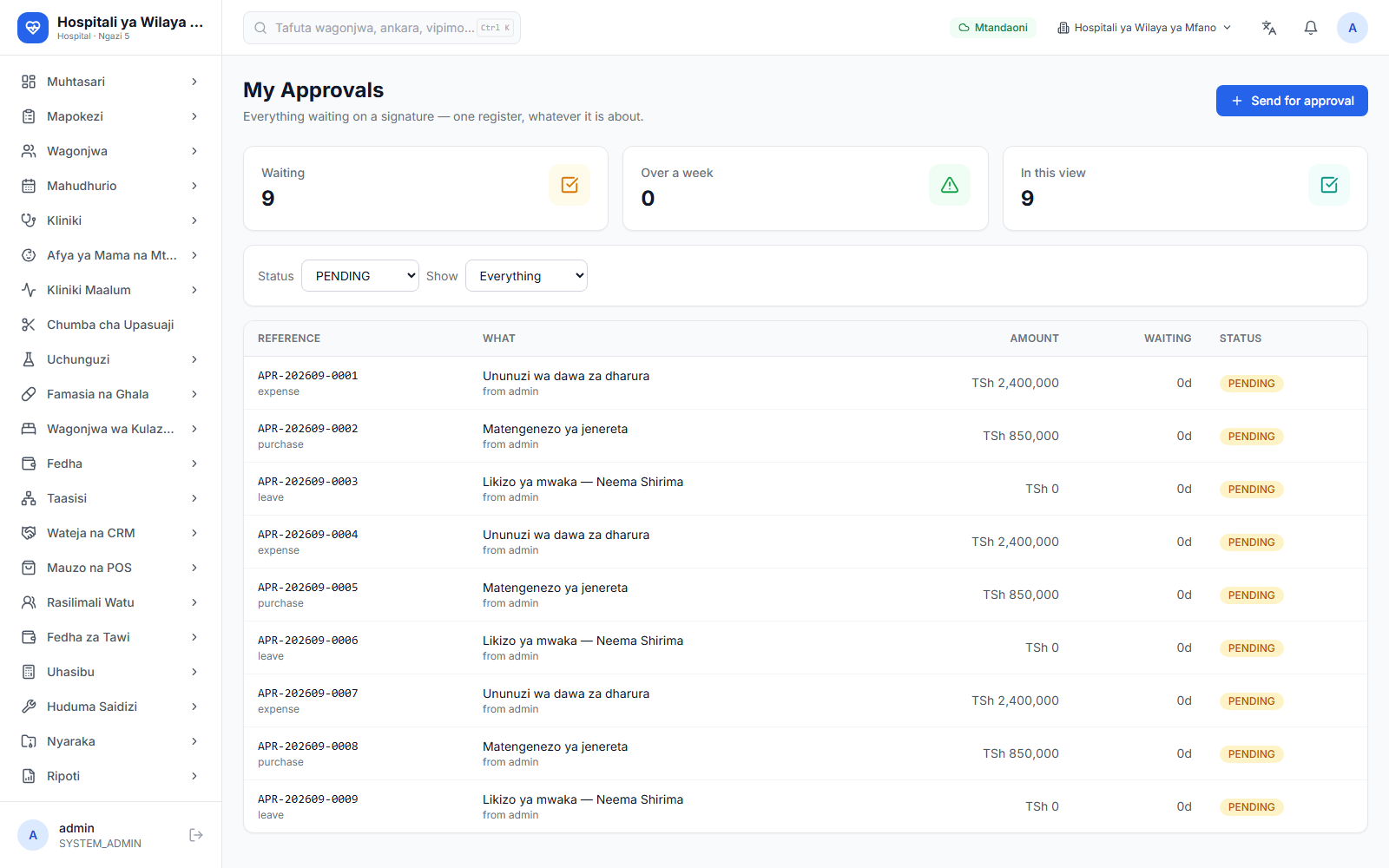
Waajiriwa, nafasi za kazi, mahudhurio ya kazi, likizo, ajira mpya, mafunzo, nyaraka za mfanyakazi, na mishahara. Mishahara ina hatua tatu: kuandaa, kuhesabu, na kuidhinisha — na aliyeandaa si anayeidhinisha. Employees, posts, attendance, leave, recruitment, training, personnel documents and payroll. A payroll run has three steps — build, compute, approve — and whoever builds it is not the one who signs it off.
Huduma saidiziSupport services
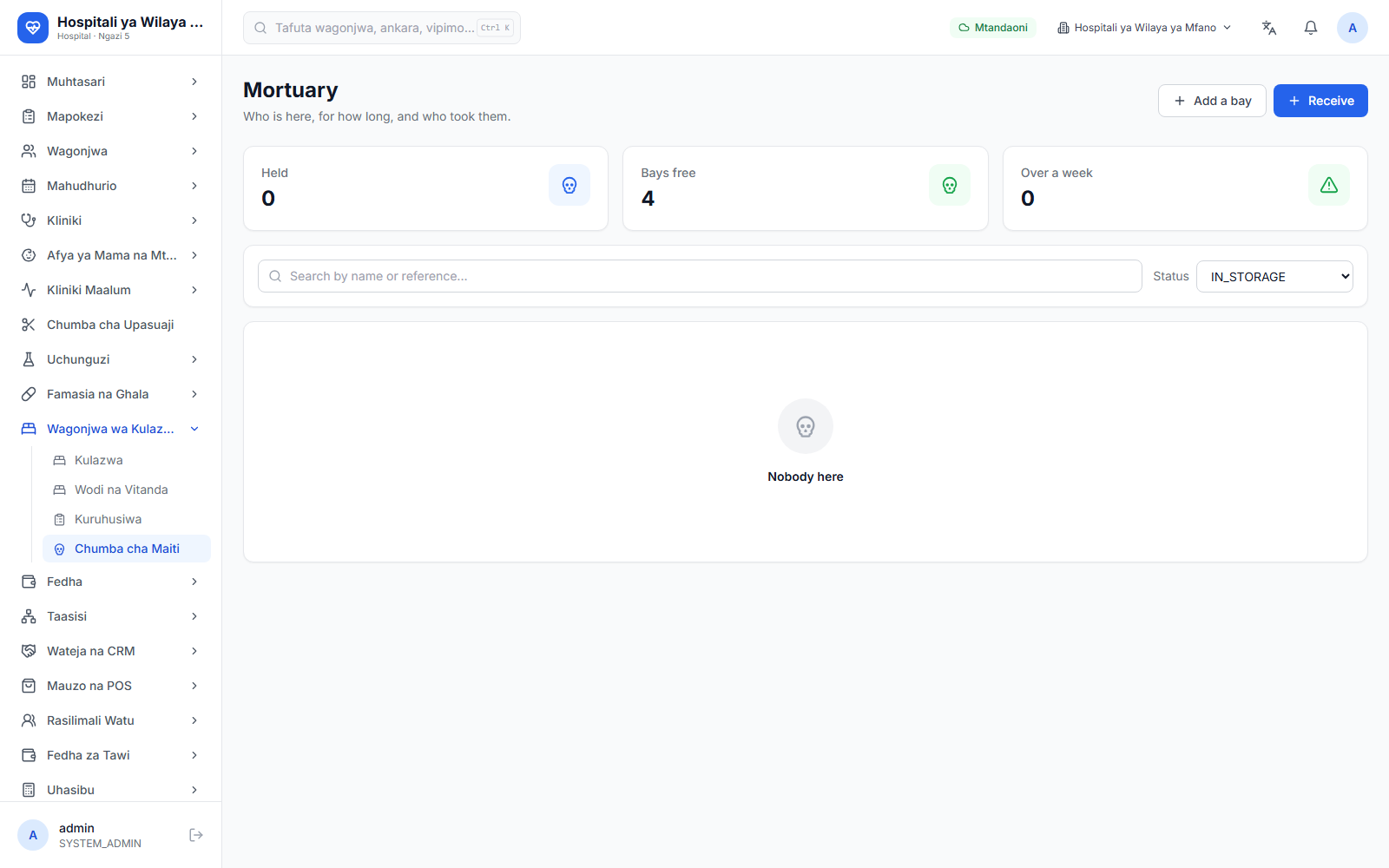
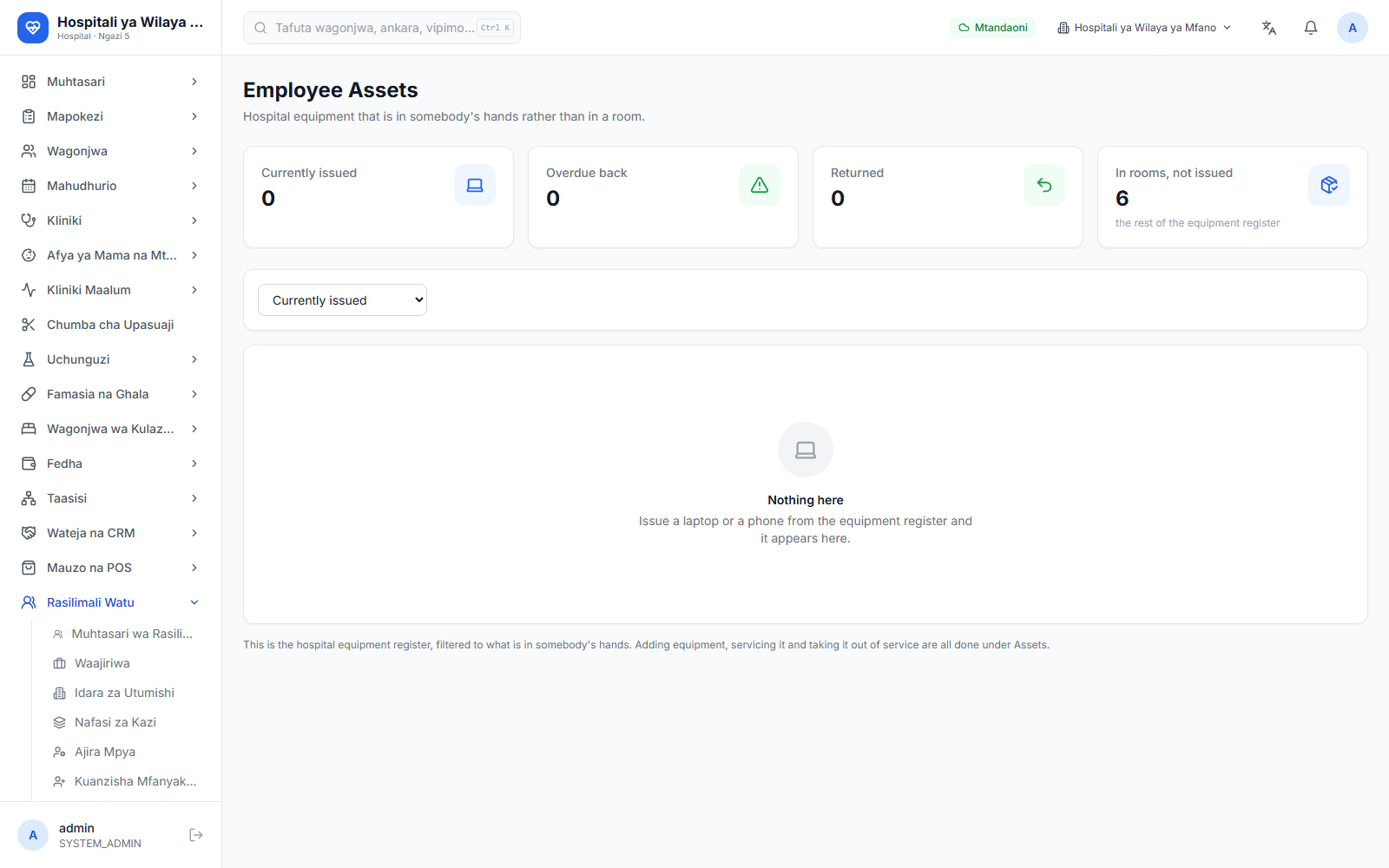
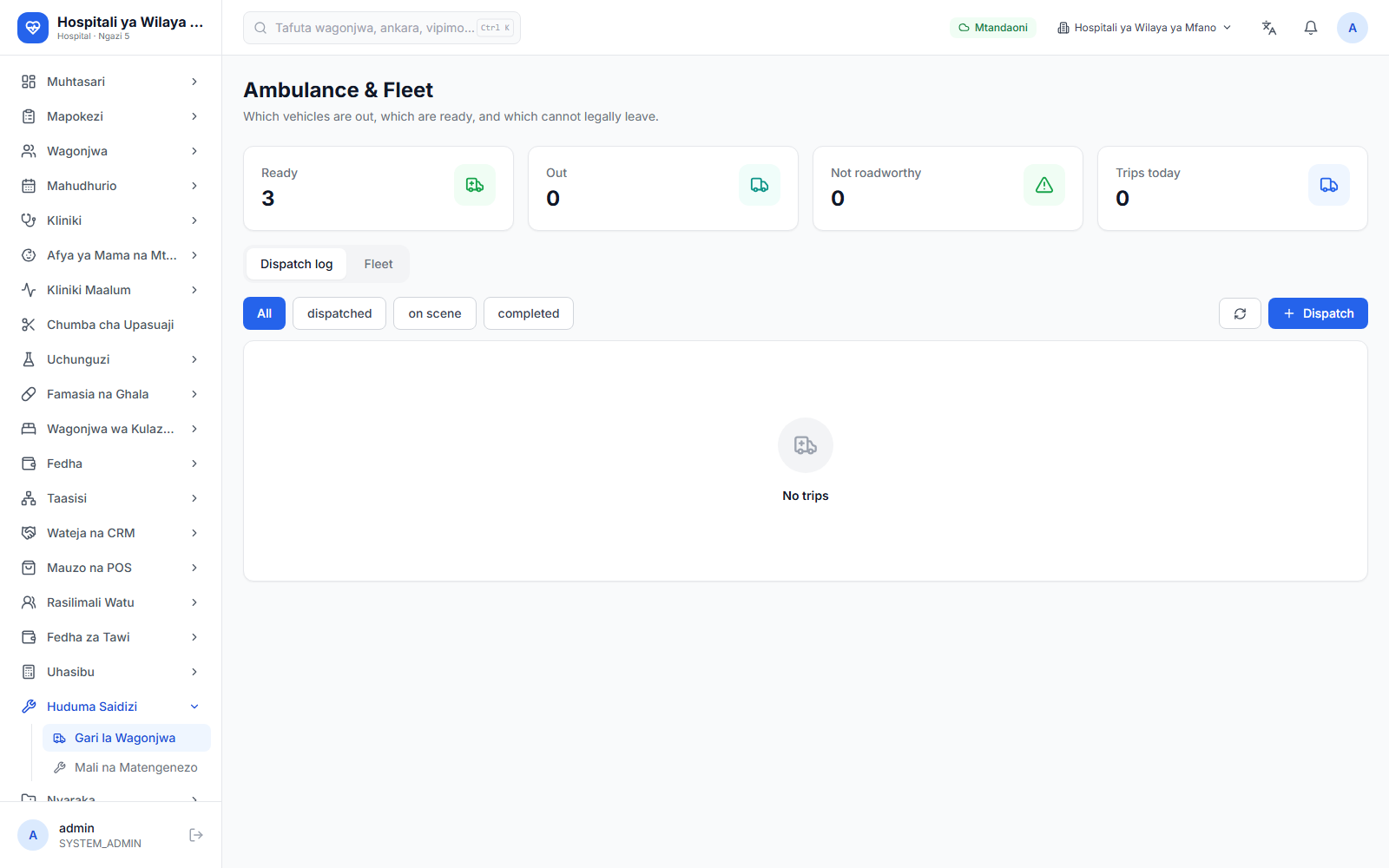
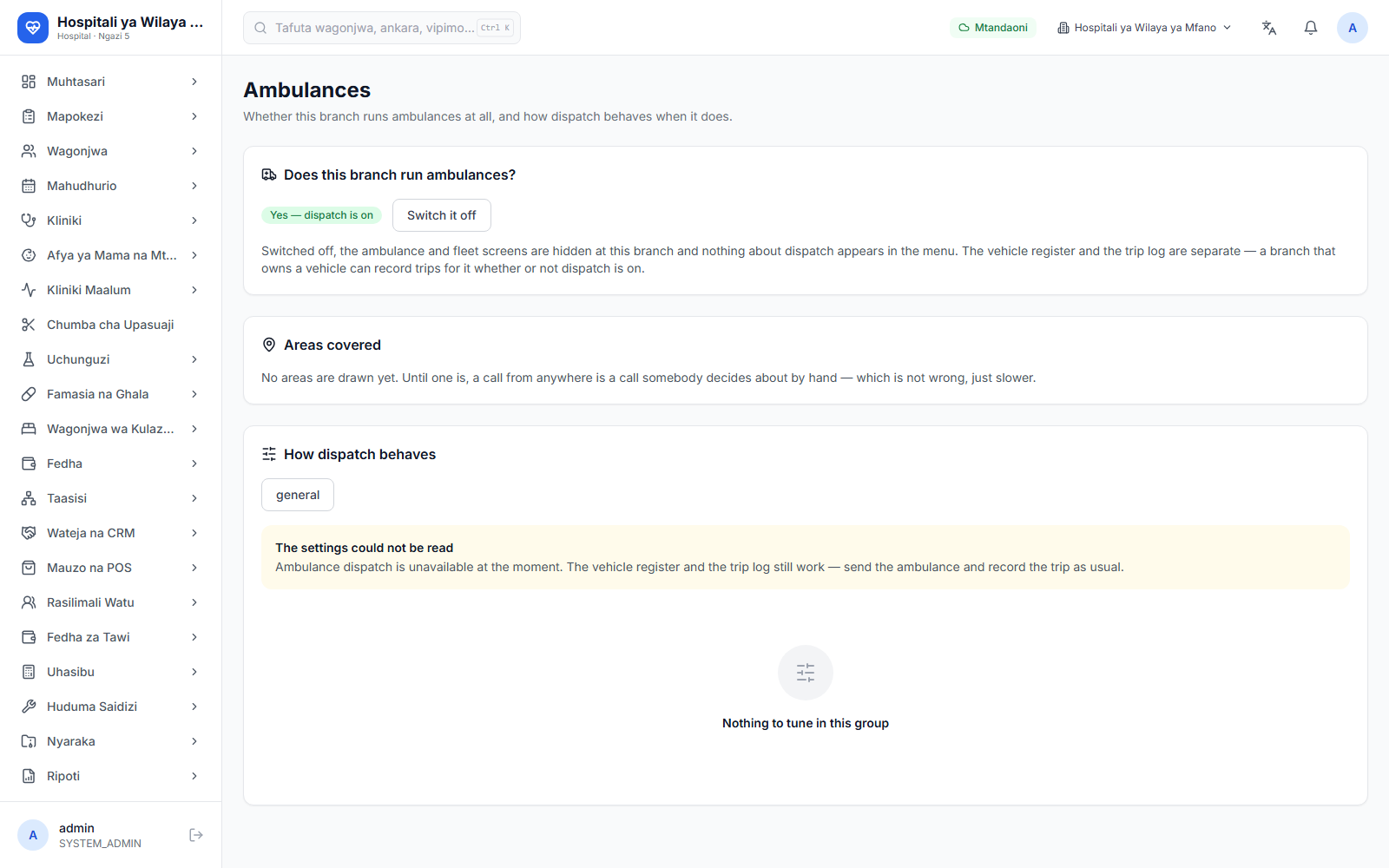
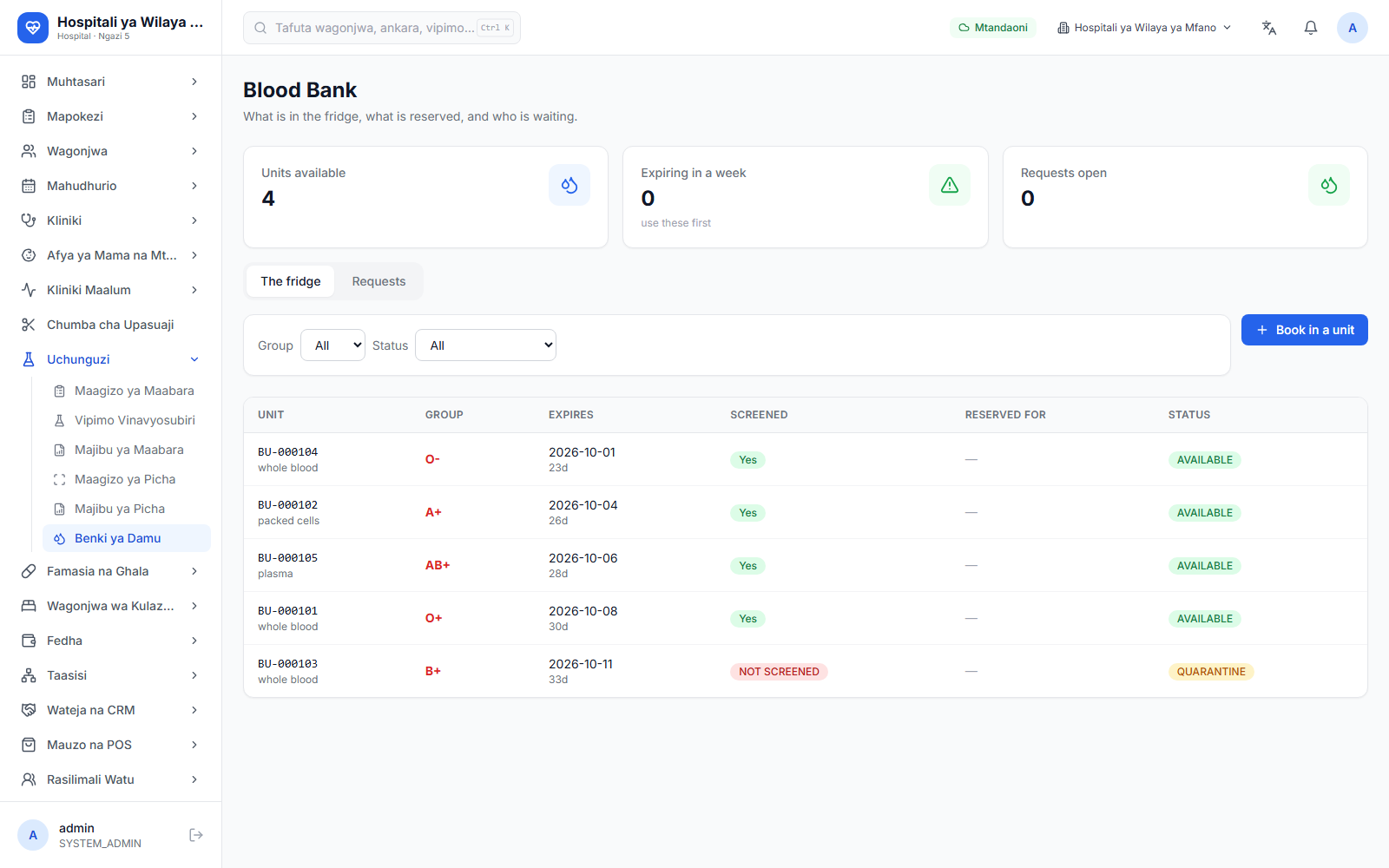
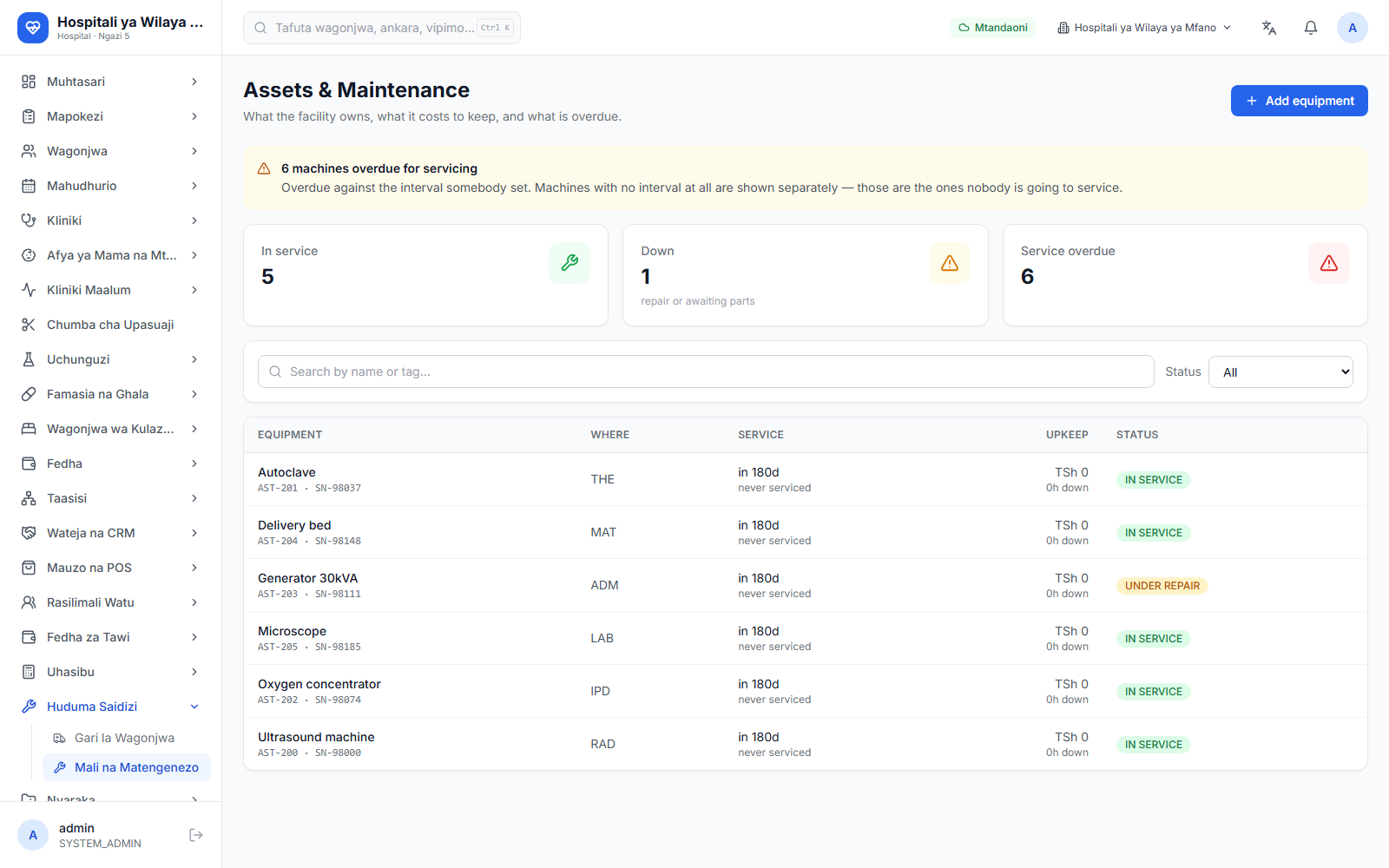
Benki ya damu, chumba cha maiti, magari ya wagonjwa, na mali na matengenezo. Kila kimoja kinawashwa tu kwenye tawi lenye huduma hiyo. Blood bank, mortuary, ambulances, and assets and maintenance. Each is switched on only at a branch that has it.
05Fedha na uwajibikajiMoney and accountability
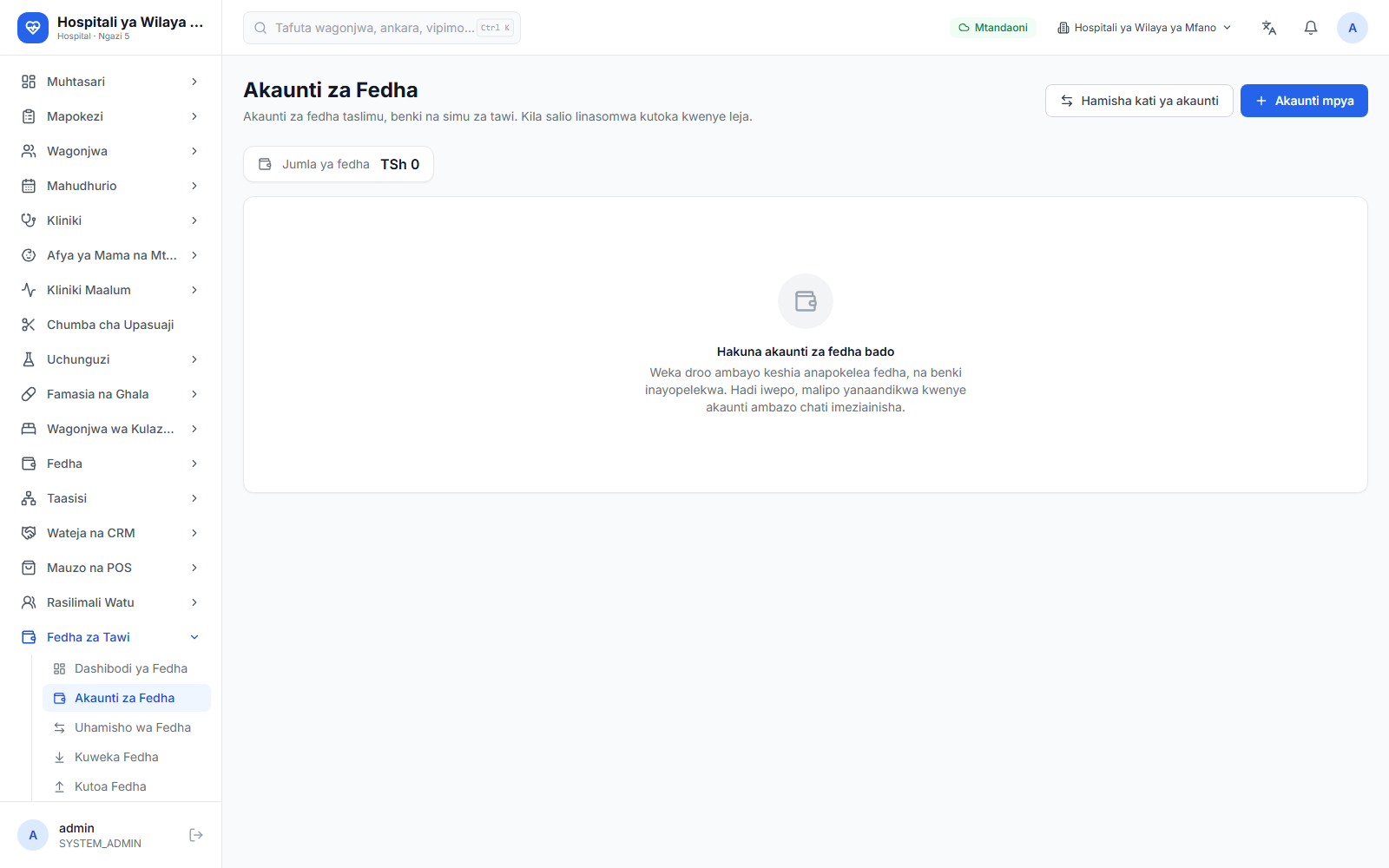
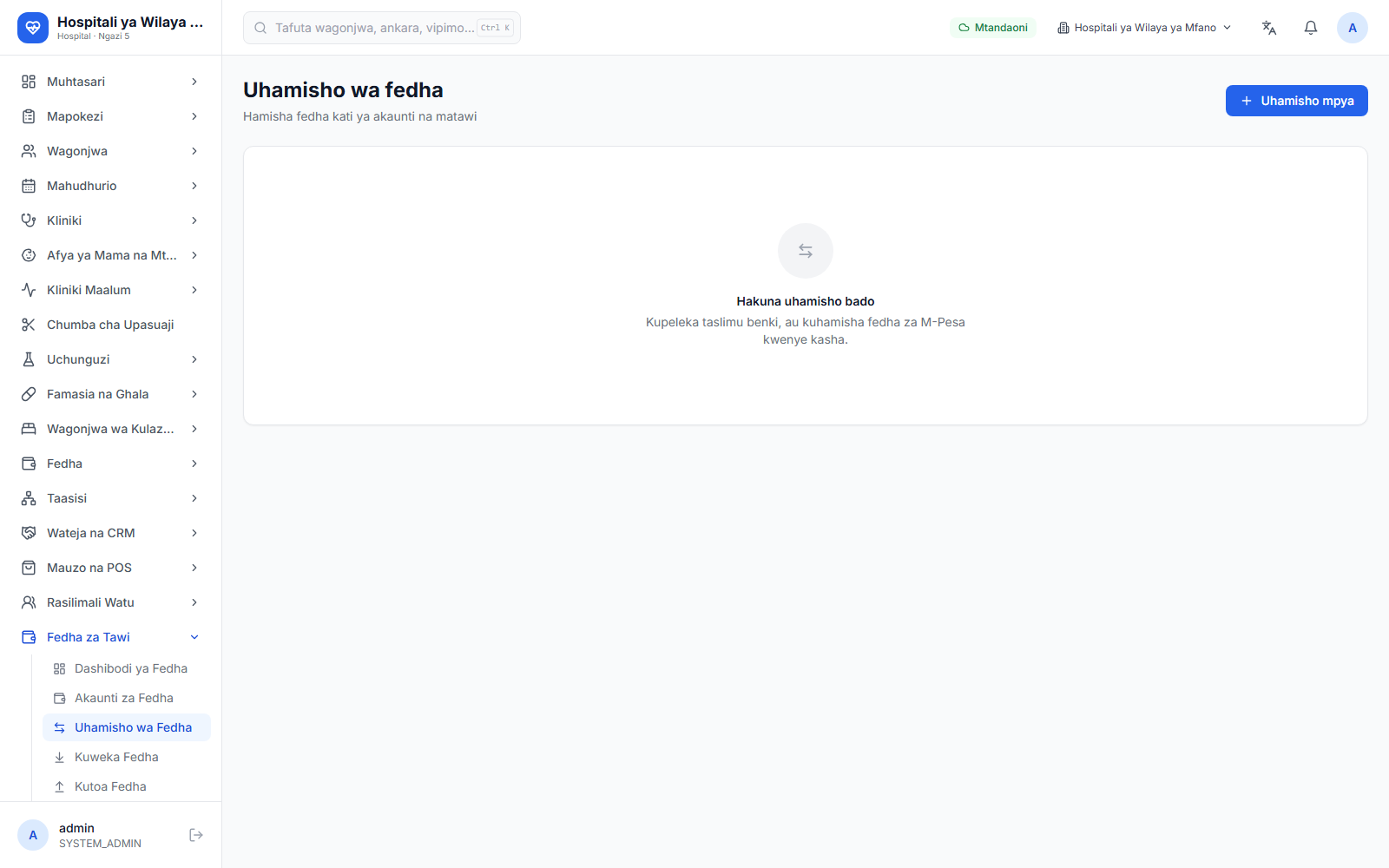
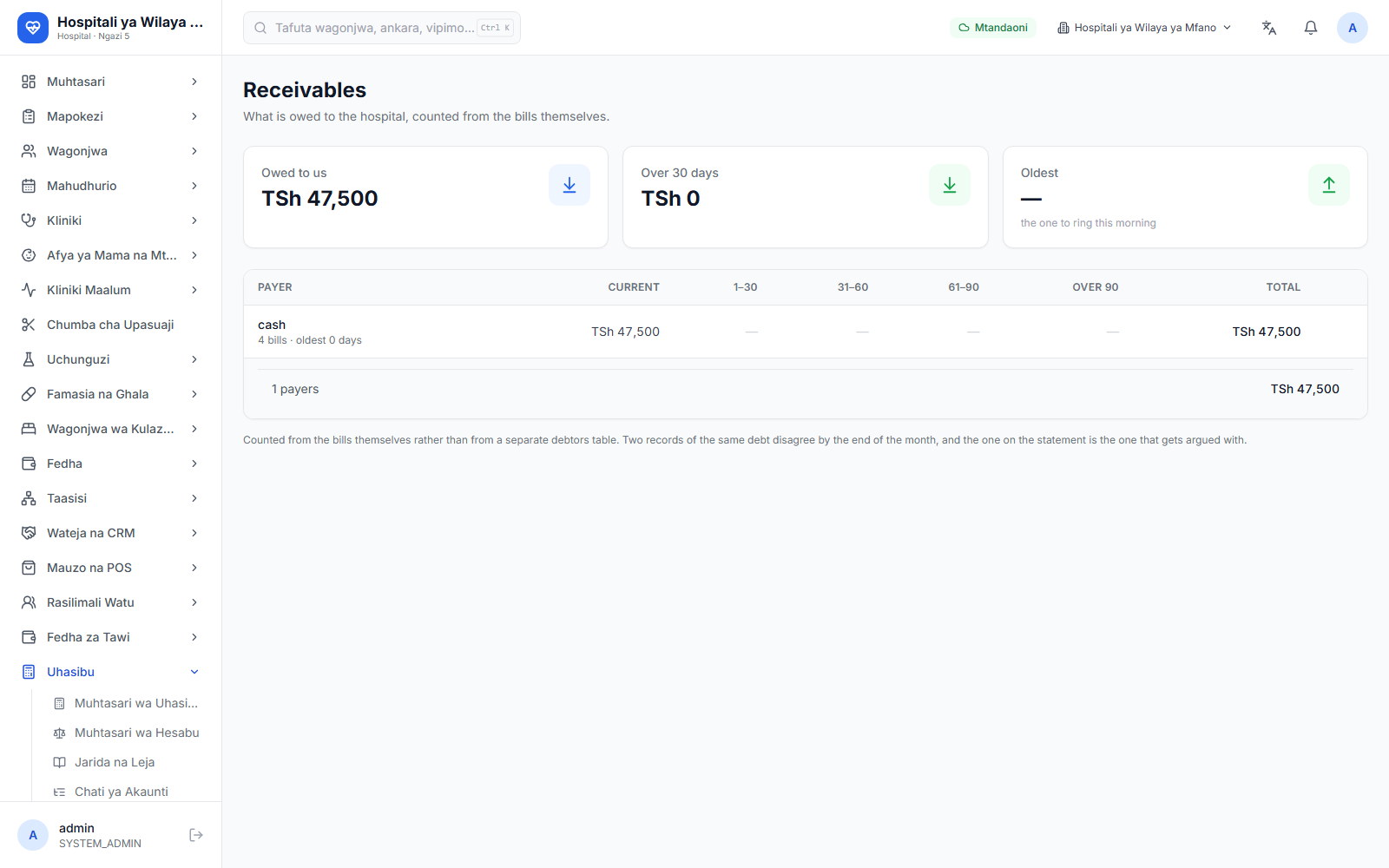
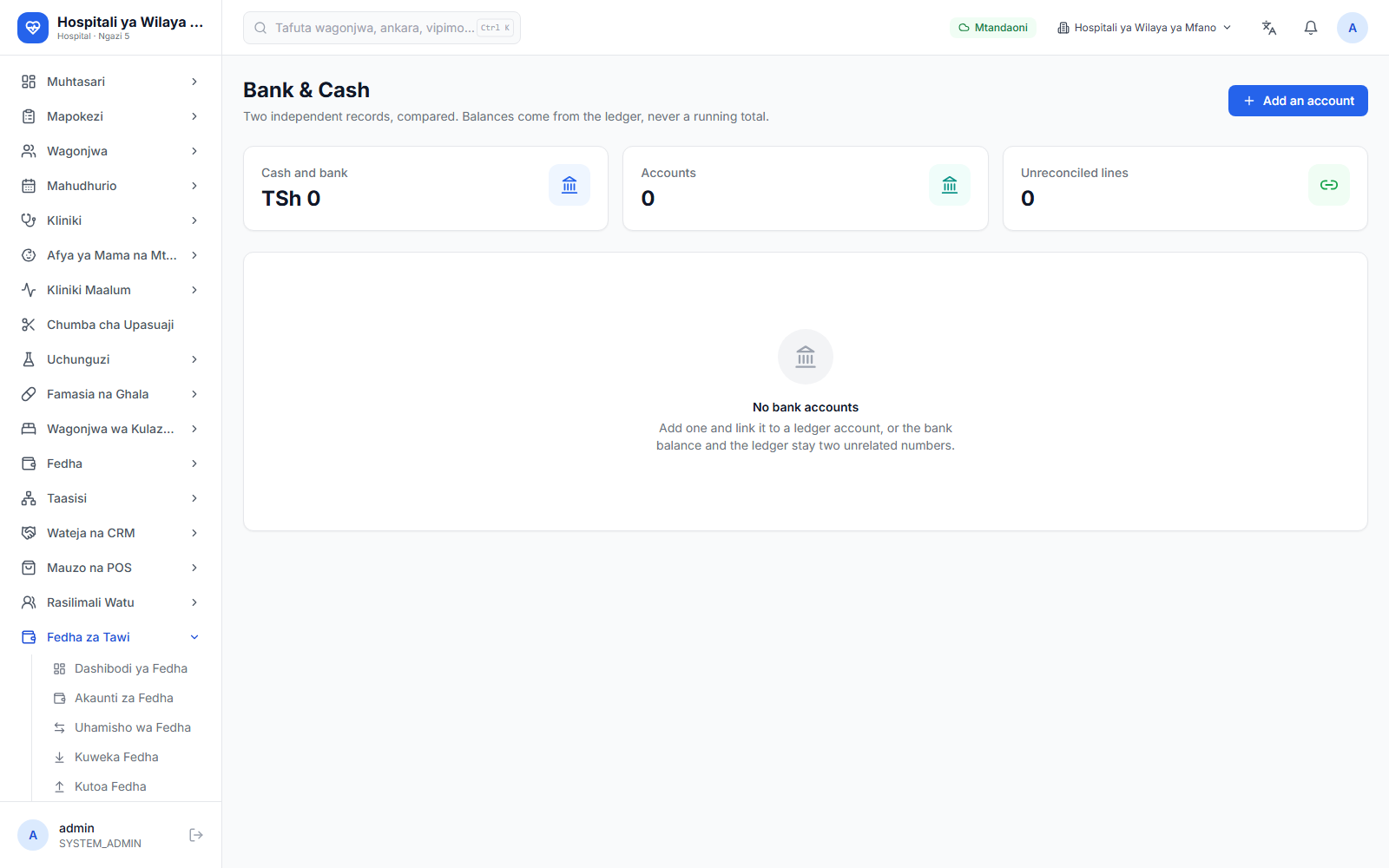
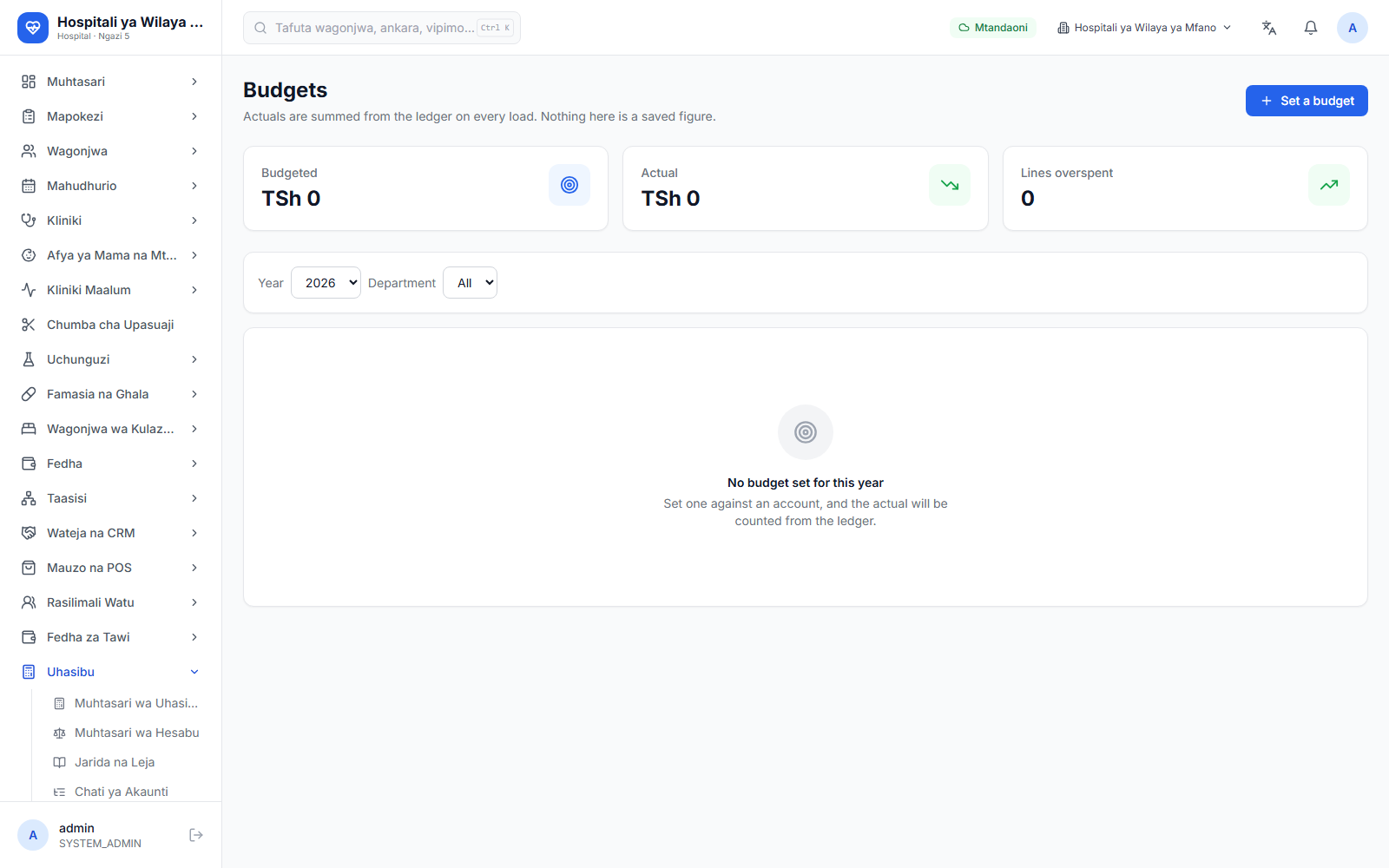
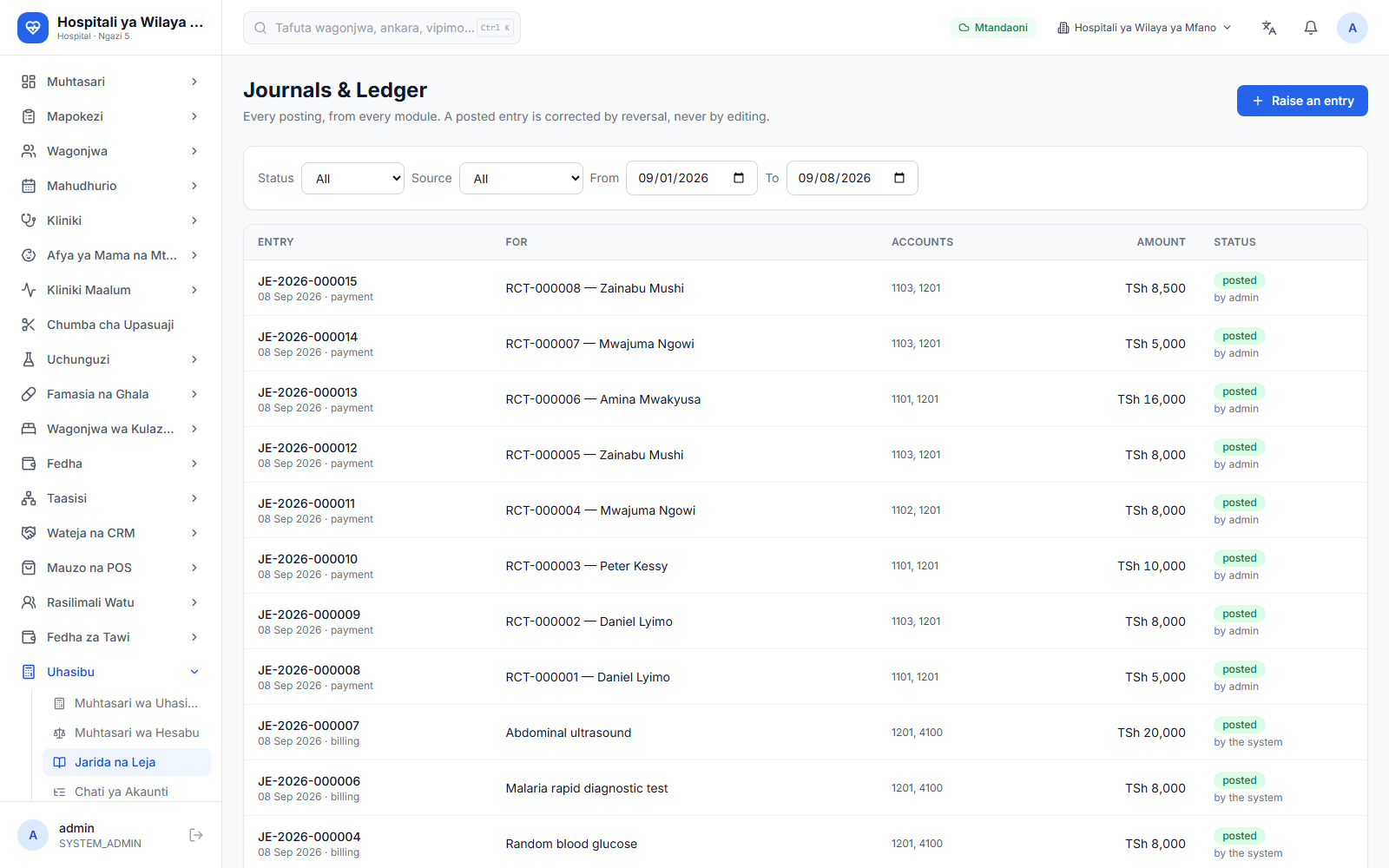
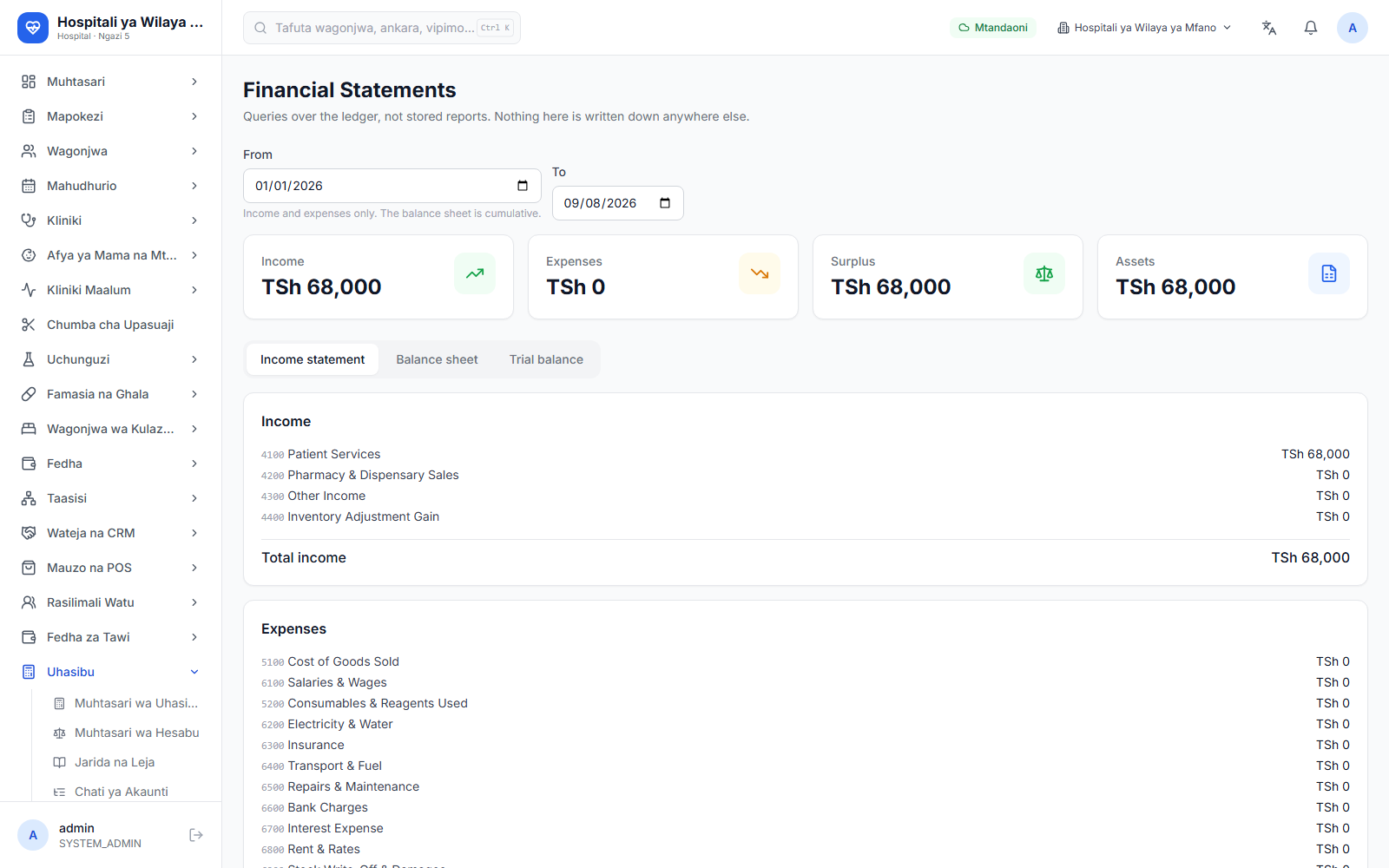
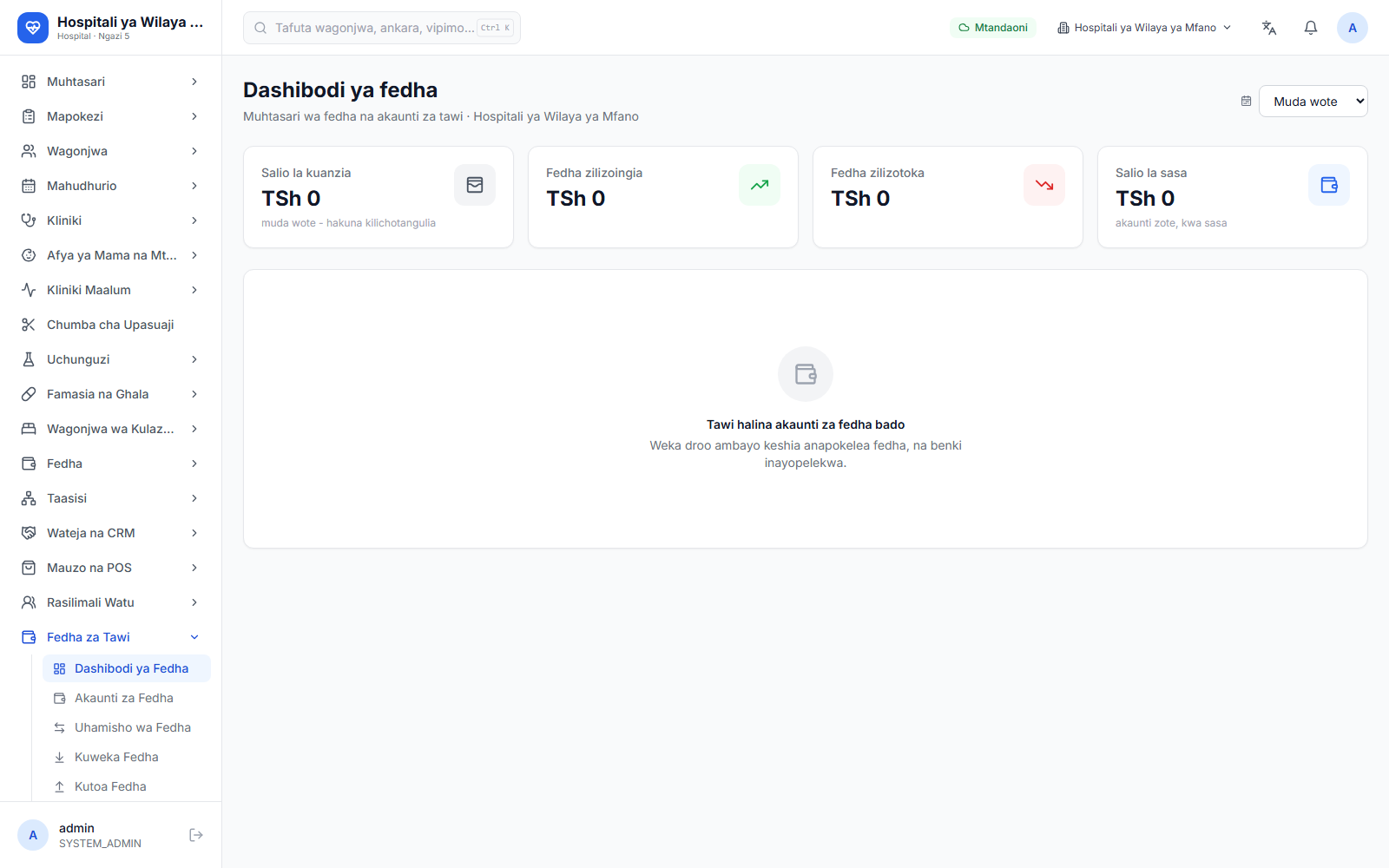
Sehemu ngumu zaidi ya hospitali si kutibu — ni kuhakikisha kile kilichotolewa kimelipiwa, na kile kilicholipwa kimeingia benki. Mfumo huu unashika hatua zote kwenye njia moja. The hard part of a hospital is not the treatment — it is making sure what was given was paid for, and what was paid reached the bank. This system holds every step on one path.
Vidhibiti vilivyojengwa ndaniThe controls that are built in
| KitendoAction | Nani anaruhusiwaWho may | Kwa niniWhy |
|---|---|---|
| Kutoa punguzo kwenye ankaraDiscount a bill | Ruhusa yake pekeeIts own permission | Punguzo ni njia halali ya fedha kutoka — na pia njia isiyo halali. A discount is a legitimate way for money to leave, and also an illegitimate one. |
| Kufuta ankaraVoid a bill | Ruhusa nyingine tofautiA different permission again | Aliyeitengeneza ankara asiwe ndiye anayeifuta. Whoever raised it should not be the one who erases it. |
| Kurudisha malipoReverse a payment | Ruhusa ya juu kabisa ya kauntaThe strictest till permission | Ni fedha inayotoka mkononi baada ya kuingia. It is cash leaving the drawer after it arrived. |
| Kubadilisha kuingizwa kwenye lejaEdit a posted ledger entry | Hairuhusiwi kwa mtu yeyoteNobody | Kosa linarekebishwa kwa kuingiza kinyume chake, ili historia ibaki. A mistake is corrected by posting its mirror image, so both stay on the record. |
| Kuchapisha noti ya kreditiPrint a credit note | Ankara iliyolipwa pekeeOnly against a settled bill | Noti ya krediti dhidi ya deni hai ni hati ya uongo. A credit note against a live debt is a false document. |
| Kulipa msambazajiPay a supplier | Baada ya oda, risiti ya mzigo na ankara kulinganaOnly after order, delivery and invoice match | Hii ndiyo inayozuia malipo ya mzigo usiokuwepo. This is what stops a payment for goods that never came. |
06Hospitali kubwa na zahanati ndogoA big hospital and a small dispensary
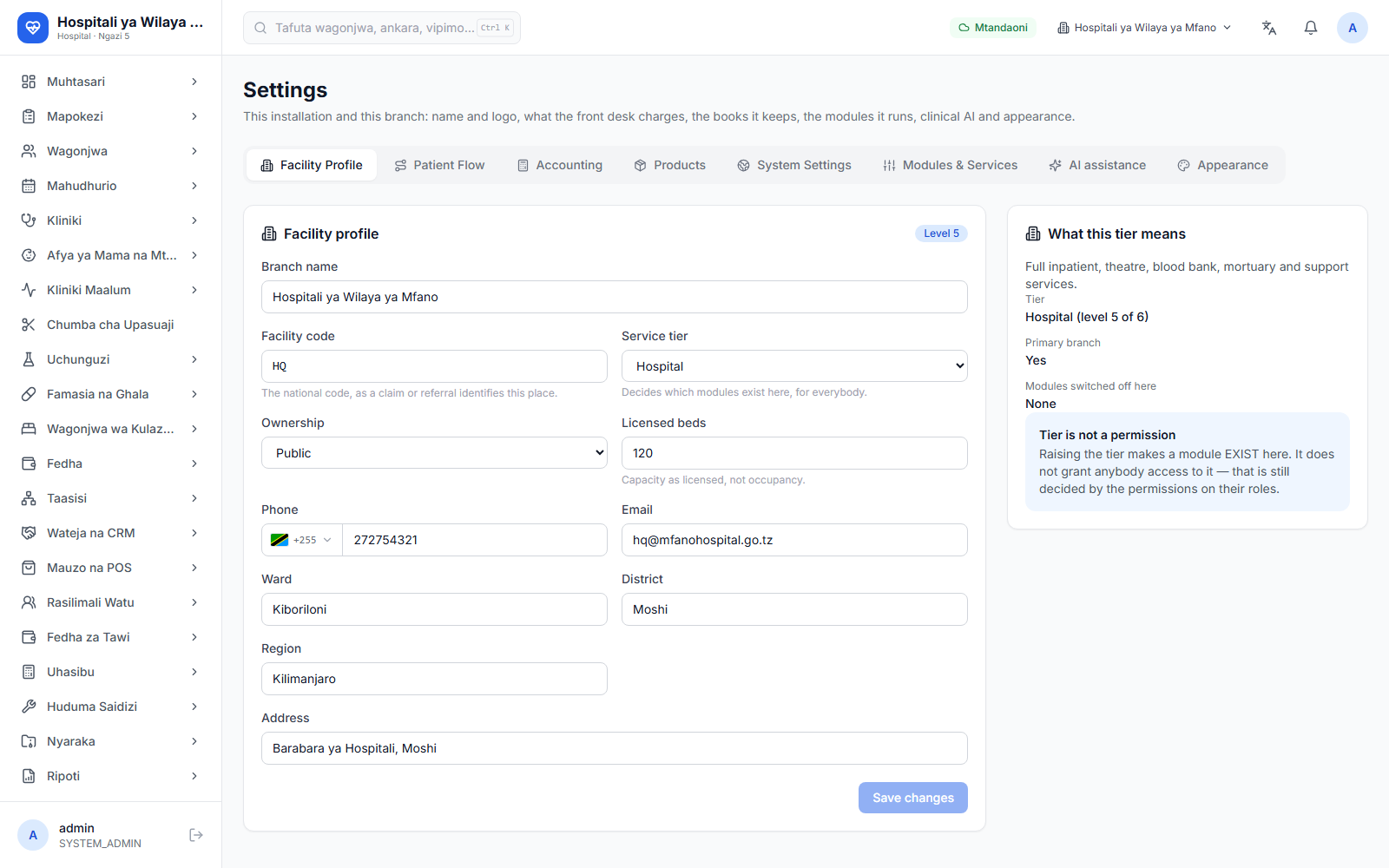
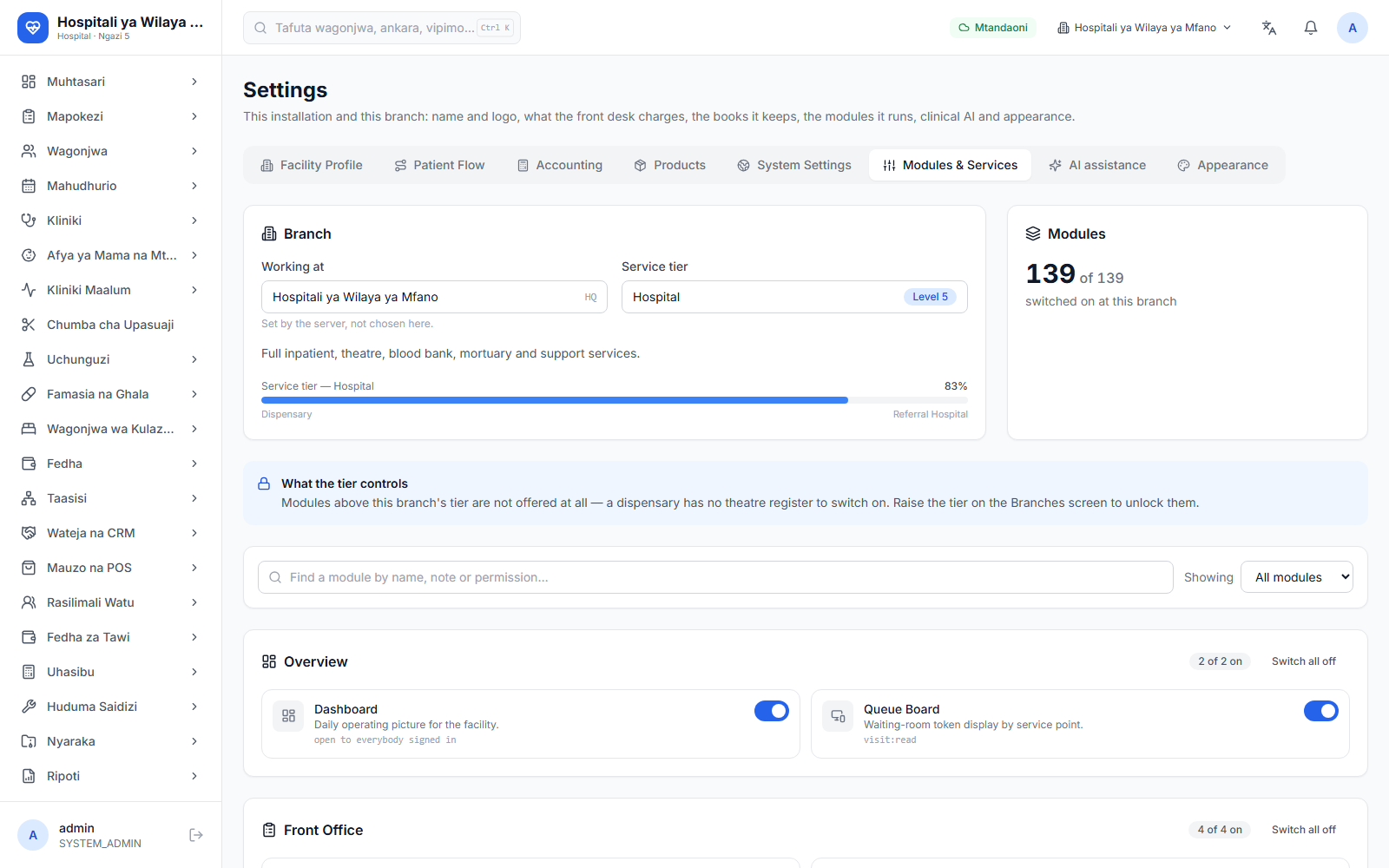
Mfumo ni mmoja. Kinachotofautiana ni kile kilichowashwa kwenye kila tawi. Zahanati isiyo na chumba cha upasuaji haioni menyu ya upasuaji hata kidogo — na wala haiwezi kufungua ukurasa huo kwa kuandika anwani yake. The system is one. What differs is what is switched on at each branch. A dispensary with no theatre does not see a theatre menu at all — and cannot reach that screen by typing its address either.
Kuwasha au kuzima ni kazi ya msimamizi, si ya fundi wa kompyuta. Inafanyika kwenye skrini moja, na sababu inaandikwa — ili mtu atakayeuliza "kwa nini menyu hii haipo?" apate jibu badala ya kukisia. Switching a module on or off is an administrator's job, not an engineer's. It is done on one screen, and the reason is recorded — so that anybody who asks "why is this menu missing?" gets an answer instead of a guess.
Matawi mengi, mfumo mmojaMany branches, one system
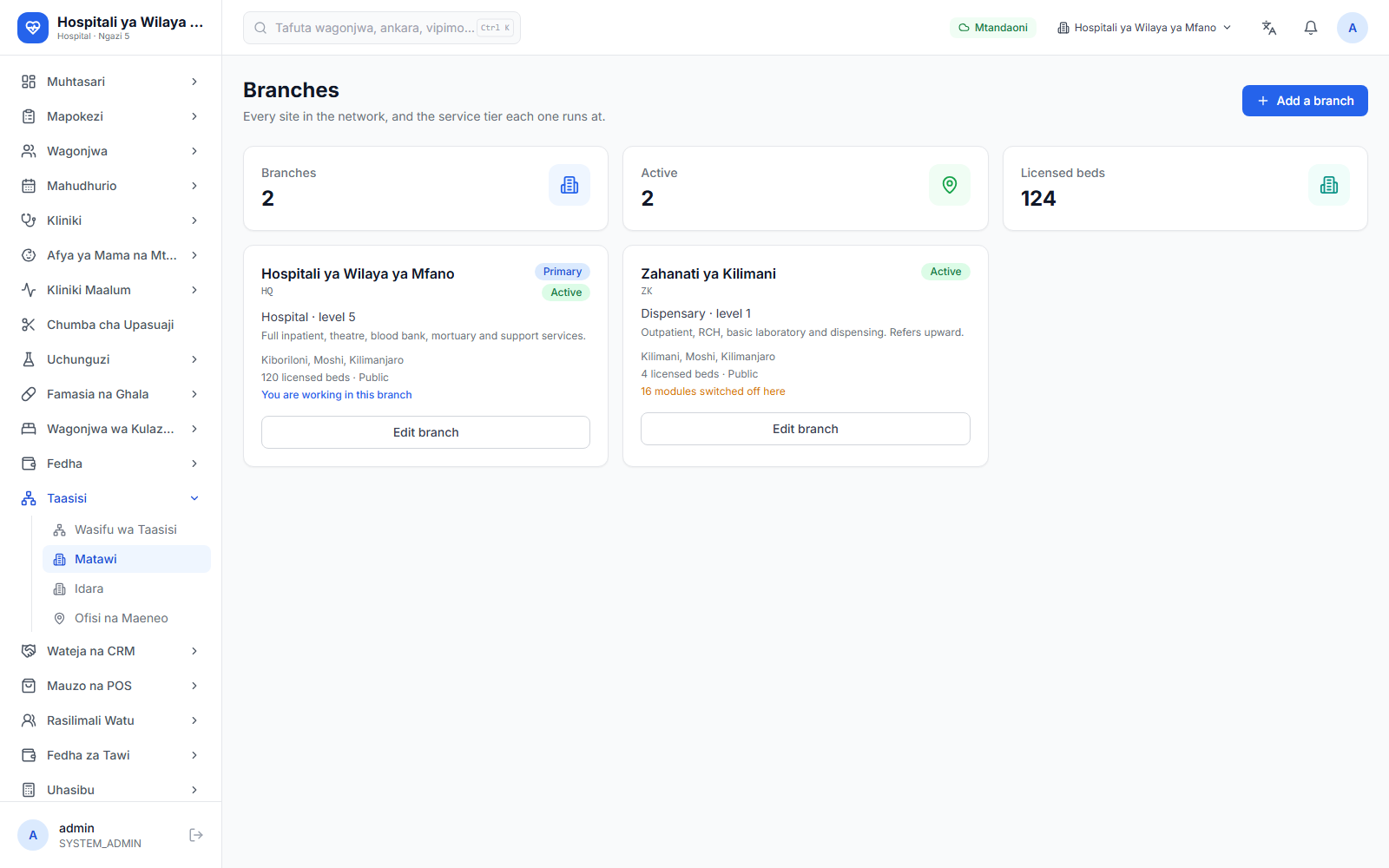
Hospitali yenye vituo vya kando inaviendesha vyote kwenye mfumo mmoja. Kila tawi linaona rekodi zake; uongozi wa juu unaona vyote kwa pamoja. Mfanyakazi anayehudumu tawi moja haoni fedha wala wagonjwa wa tawi jingine. A hospital with satellite sites runs them all on one system. Each branch sees its own records; head office sees them together. Somebody who works at one branch does not see another branch's money or patients.
07Usalama, ruhusa na kumbukumbuSecurity, permissions and the audit trail
Rekodi ya mgonjwa ni siri ya kisheria. Mfumo hauzuii tu kwa kuficha vitufe — seva yenyewe inakataa ombi la mtu asiye na ruhusa, hata kama ameandika anwani moja kwa moja. A patient record is a legal confidence. The system does not protect it by hiding buttons — the server itself refuses a request from somebody without the permission, even if they type the address directly.
Ruhusa kwa kila kitendoA permission per action
Zaidi ya ruhusa 160 tofauti. Mhasibu anaona fedha, si majibu ya maabara; muuguzi anaona chati, si mishahara. More than 160 distinct permissions. A cashier sees money, not lab results; a nurse sees charts, not salaries.
Kumbukumbu isiyofutikaA trail that cannot be edited
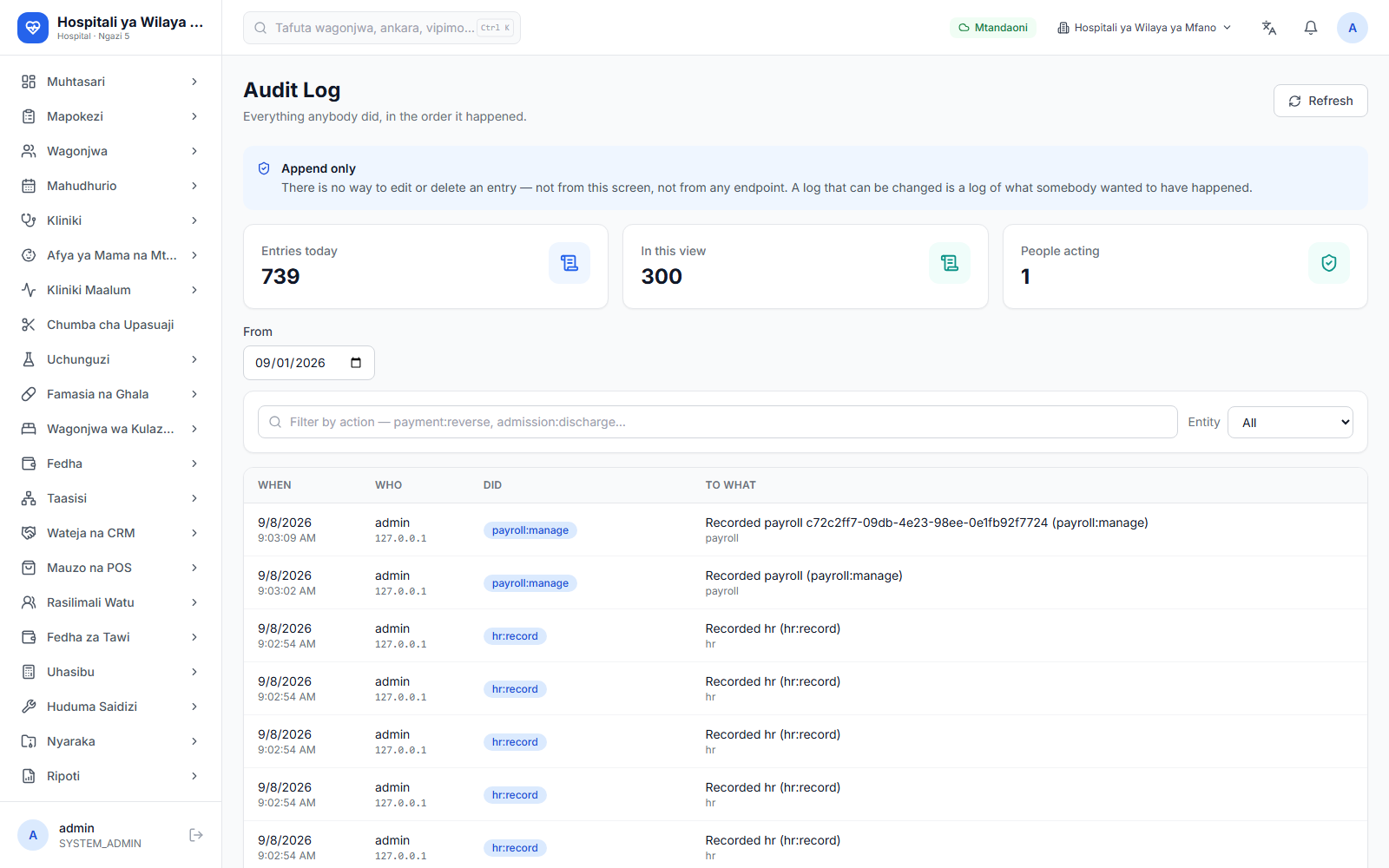
Kila kitendo kinaandikwa na seva: nani, lini, kitu gani. Hakuna njia ya mtumiaji kuandika au kufuta kwenye kumbukumbu hiyo. Every action is written by the server: who, when, what. No user has any way to write to that log, or to erase from it.
Macho mawiliTwo pairs of eyes
Majibu ya maabara, mishahara, matumizi na kurudisha fedha — vyote vina mtu wa kuandaa na mtu mwingine wa kuidhinisha. Lab results, payroll, expenses and reversals — each has one person to prepare and another to approve.
Akaunti za wafanyakaziStaff accounts
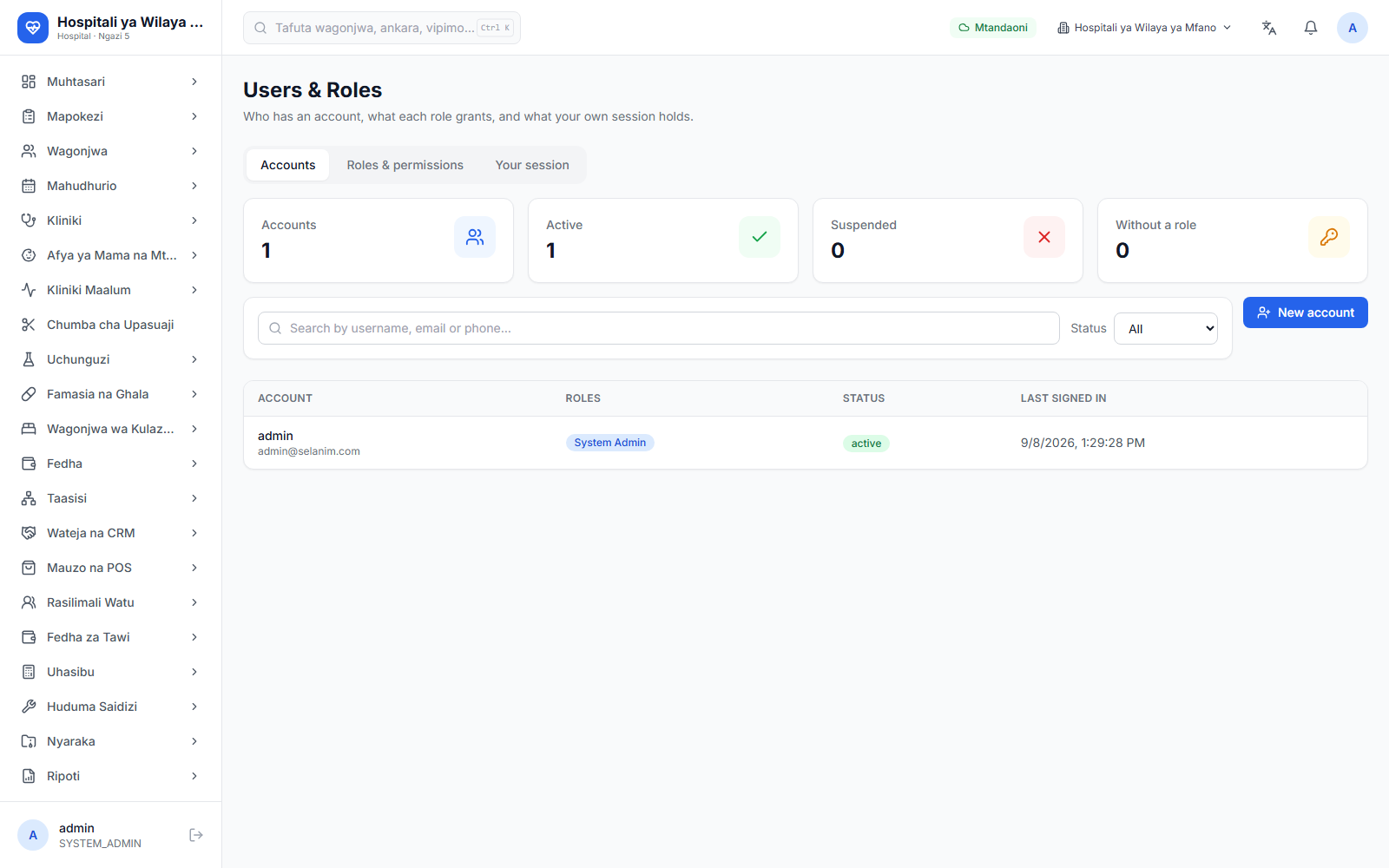
Hakuna kujisajili mwenyewe. Msimamizi ndiye anayefungua akaunti, anaipa majukumu, na anaweza kuisimamisha siku mfanyakazi anapoondoka. There is no self-registration. An administrator opens the account, grants its roles, and can suspend it the day somebody leaves.
08Ripoti za kitaifa na bimaNational returns and insurance
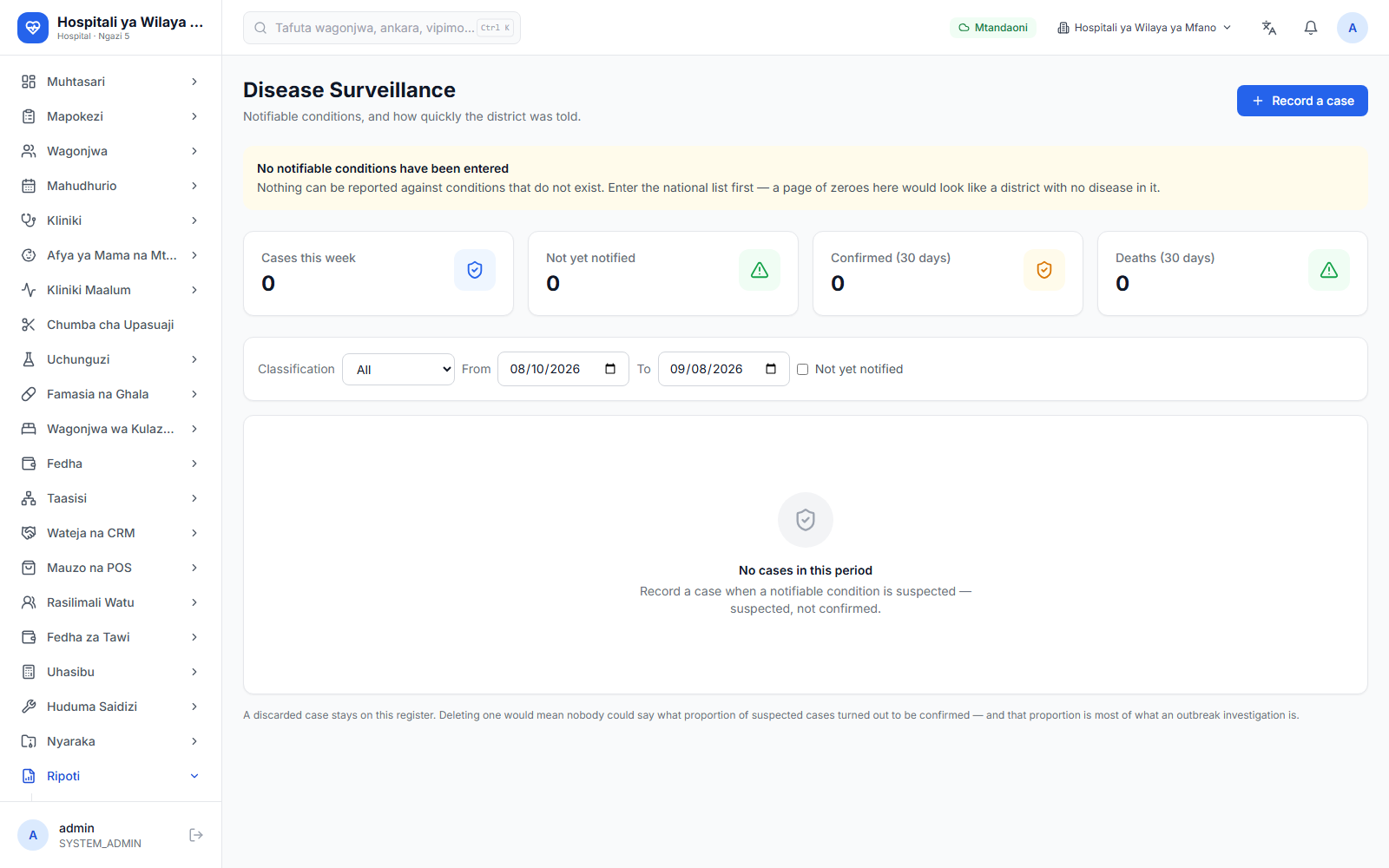
Takwimu za HMIS zinajengwa kutoka kwenye mahudhurio, utambuzi na huduma zilizotolewa. Magonjwa ya kuarifiwa (IDSR) yanaandikwa yanapotokea, na yale ya dharura yanawekwa alama ya kuarifiwa mara moja. HMIS figures build from attendances, diagnoses and services given. Notifiable conditions (IDSR) are recorded as they occur, with the immediate ones flagged for same-day notification.
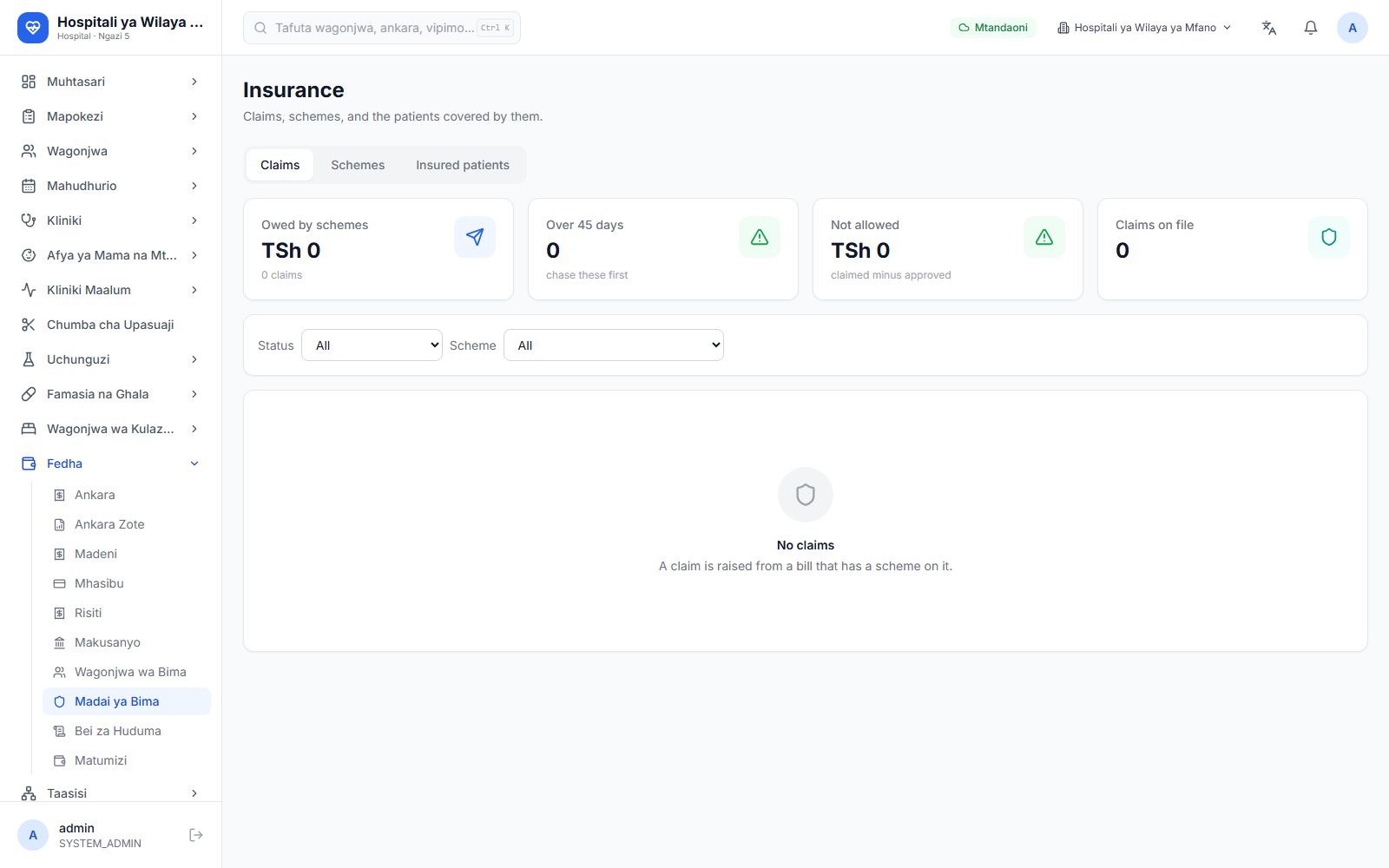
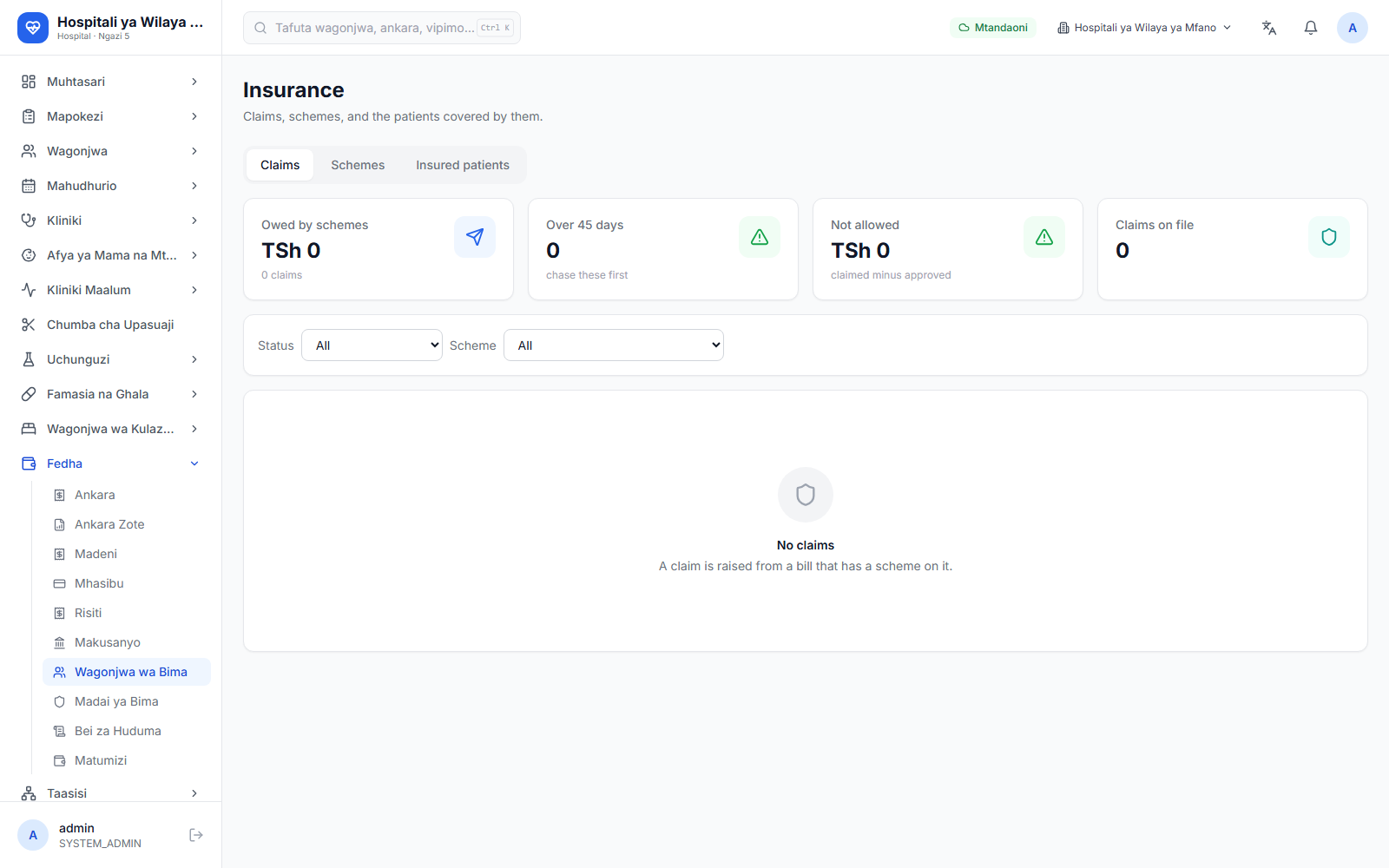
Kwa upande wa bima: mifuko inasajiliwa na asilimia yake ya ugharamiaji, dai linaandaliwa kutoka kwenye ankara halisi, na hatua zake zinafuatiliwa hadi linapolipwa au kukataliwa — pamoja na sababu. On the insurance side: schemes are registered with their coverage percentage, a claim is prepared from the real bill, and its stages are tracked until it is paid or rejected — with the reason.
09Simu ya mkononi na kompyuta binafsiPhone and desktop
Mfumo unafunguliwa kwa kivinjari kwenye kompyuta yoyote ya hospitali — hakuna programu ya kusakinisha kila mashine. Kwa wanaotaka app ya simu au programu ya desktop (kwa mfano kwa ajili ya printa za risiti au kisoma-bakodi), API yote imeandikwa kikamilifu: njia 553, pamoja na faili ya Postman na OpenAPI kwa watengenezaji. The system opens in a browser on any hospital computer — nothing to install on each machine. For anyone who wants a phone app or a desktop program (for receipt printers or barcode scanners, say), the whole API is documented: 553 endpoints, with a Postman collection and an OpenAPI file for developers.
WodiOn the ward
Kupima vitals, kuona chati na kusonga foleni kwa kishikwambi. Vitals, charts and the queue from a tablet.
KauntaAt the counter
Programu ya desktop inayochapisha risiti moja kwa moja kwenye printa. A desktop client printing receipts straight to the printer.
MgonjwaFor the patient
Portal ya mgonjwa: miadi, majibu yaliyoruhusiwa, ankara na ujumbe. A patient portal: appointments, released results, bills and messages.
10Kuanza: nini kinahitajikaGetting started: what is needed
| KipengeleItem | Zahanati / kituo cha afyaDispensary / health centre | Hospitali ya wilayaDistrict hospital |
|---|---|---|
| SevaServer | Kompyuta moja imara (8GB RAM) au seva ya winguOne solid PC (8GB RAM) or a cloud server | Seva ya kweli (16GB+), au winguA real server (16GB+), or cloud |
| Kompyuta za watumiajiWorkstations | 2 – 5 | 15 – 60 |
| MtandaoNetwork | LAN ya ndani; intaneti si lazima kwa kazi ya kila sikuA local network; the internet is not required for daily work | LAN imara; intaneti kwa bima na ripotiA solid LAN; internet for claims and returns |
| UmemePower | UPS kwa sevaA UPS on the server | UPS na jeneretaUPS and a generator |
| PrintaPrinters | Moja ya risitiOne receipt printer | Risiti, ankara, na leboReceipts, invoices and labels |
| MafunzoTraining | Siku 22 days | Siku 5 – 10, kwa vitengo5 – 10 days, by unit |
Hatua za usakinishajiHow a deployment goes
- Wiki 1 — Kuweka mfumo. Seva, mtandao, na kuingiza wasifu wa hospitali: jina, nembo, matawi, idara, na orodha ya bei. Week 1 — Standing it up. Server, network, and the hospital's own profile: name, logo, branches, departments and the price list.
- Wiki 2 — Watumiaji na ruhusa. Kufungua akaunti za wafanyakazi na kuwapa majukumu yanayolingana na kazi zao halisi. Week 2 — Users and permissions. Staff accounts, with roles that match the jobs people actually do.
- Wiki 3 — Mafunzo kwa vitengo. Mapokezi na kaunta kwanza, kisha kliniki, maabara na famasia, mwisho uhasibu. Week 3 — Training by unit. Front desk and cashier first, then clinic, lab and pharmacy, and accounts last.
- Wiki 4 — Kuanza kwa hatua. Kuanza na mapokezi na malipo pekee kwa siku chache, kisha kuongeza vitengo vingine hadi vyote viwe ndani. Week 4 — A staged start. Begin with reception and payments only for a few days, then add the other units until everything is inside.
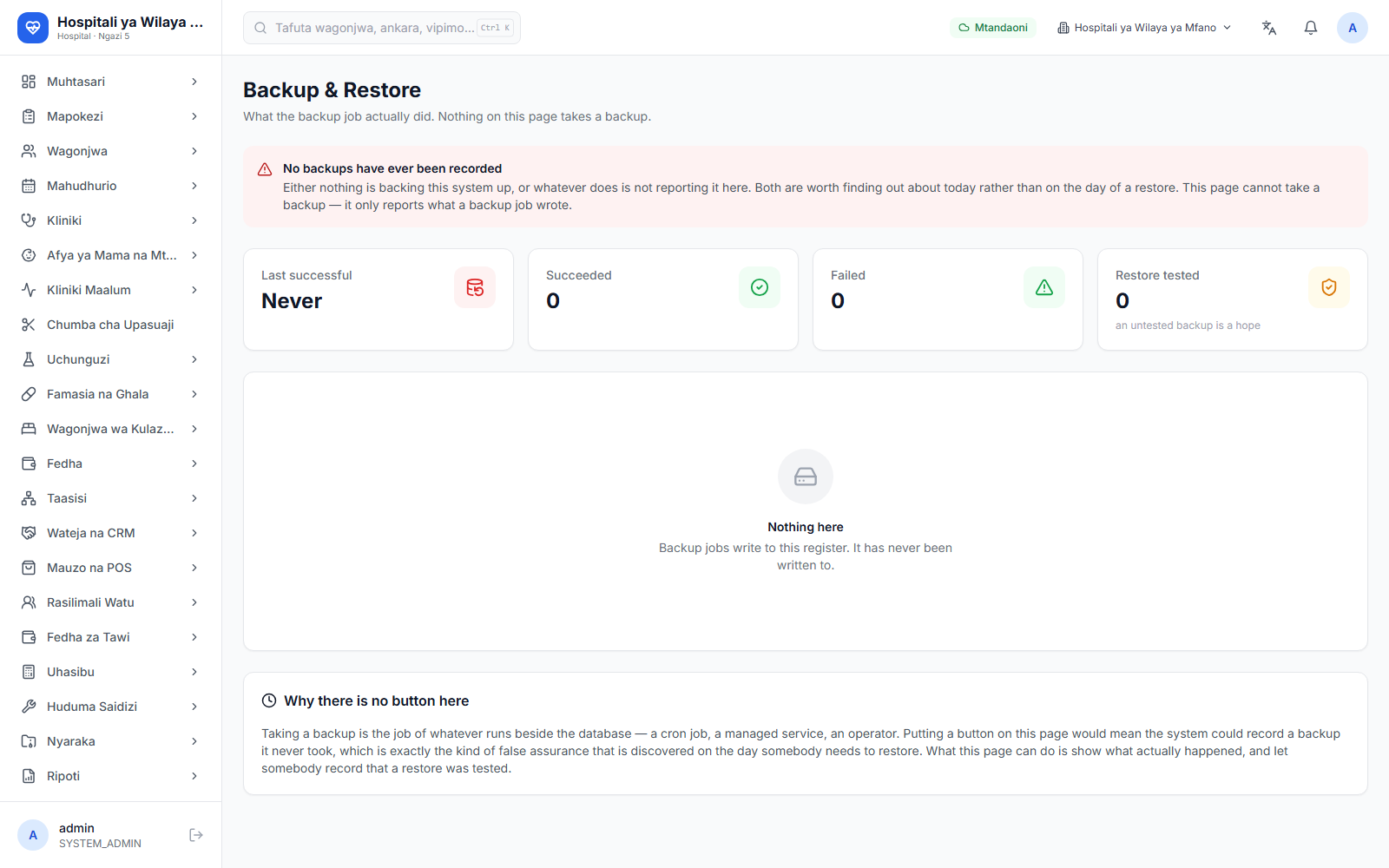
- Kuendelea — Hifadhi nakala. Nakala ya kila siku, na jaribio la kurejesha mara moja kwa mwezi. Hifadhi ambayo haijawahi kujaribiwa si hifadhi. Ongoing — Backups. A daily copy, and a restore drill once a month. A backup nobody has ever restored is not a backup.
11Yasiyokuwepo badoWhat is not there yet
Tunayaeleza wazi, kwa sababu kugundua baadaye ni gharama kubwa zaidi kuliko kuambiwa mapema. Said plainly, because finding out later costs far more than being told now.
- Risiti za kielektroniki za TRA (EFD). Mfumo unachapisha risiti zake zenye namba na kumbukumbu kamili, lakini bado hauunganishwi moja kwa moja na mashine ya EFD. TRA electronic fiscal receipts (EFD). The system prints its own numbered receipts with a full trail, but it does not yet talk directly to an EFD device.
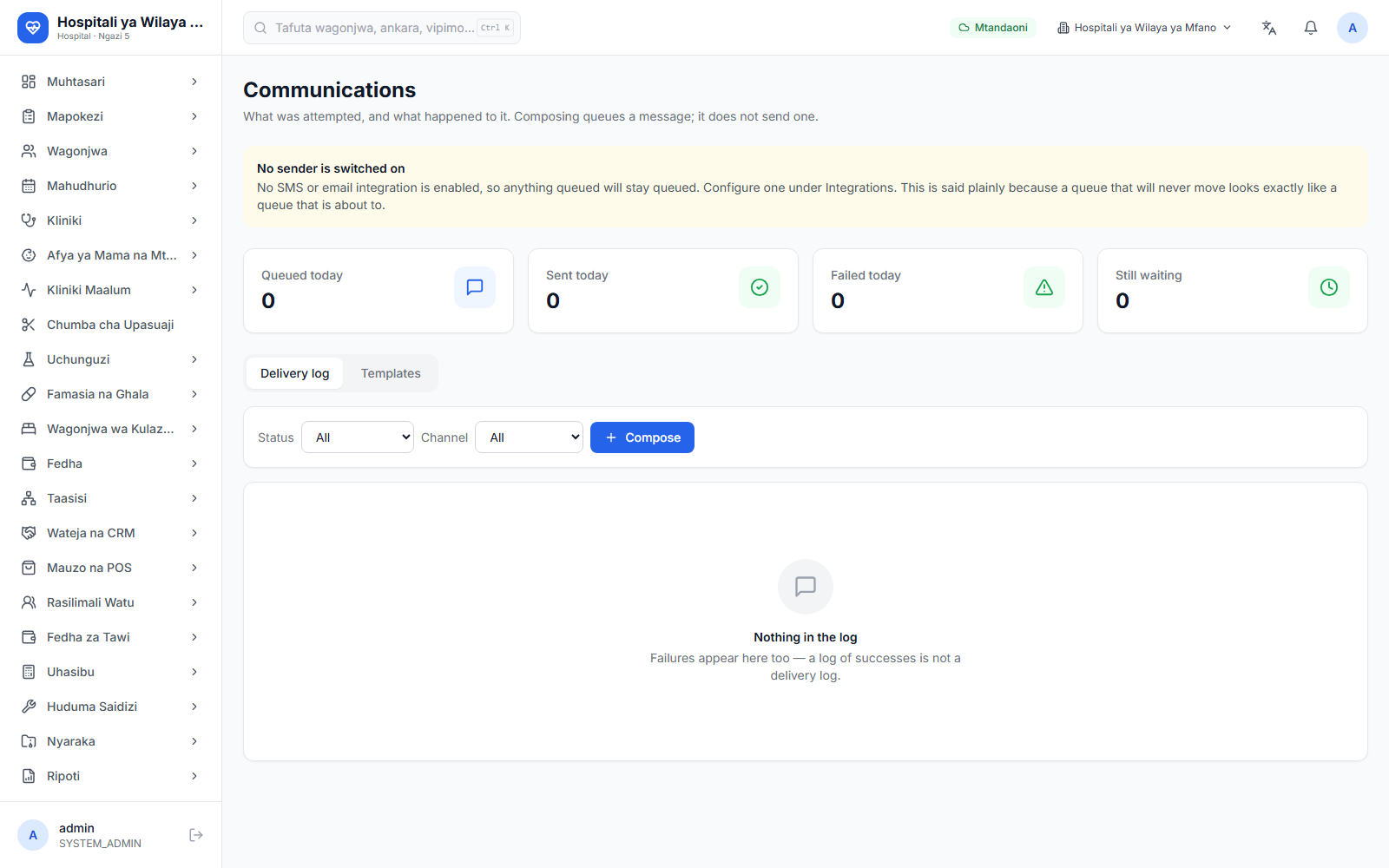
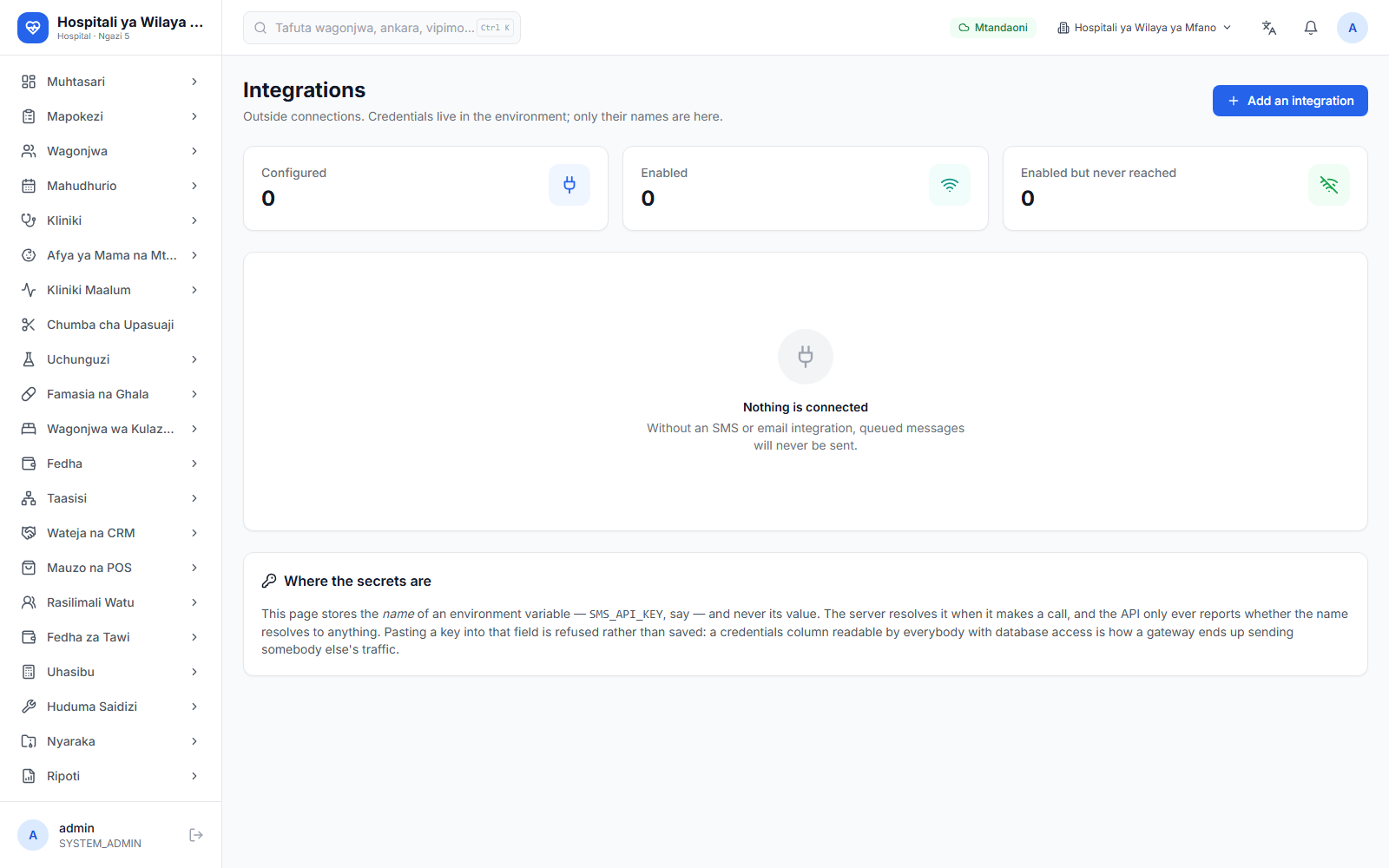
- Kutuma SMS. Mfumo unaandaa ujumbe na kuuweka kwenye foleni, lakini hospitali inahitaji akaunti ya lango la SMS ili ujumbe utoke kweli. Sending SMS. The system composes and queues messages, but the hospital needs an SMS gateway account for anything to actually leave.
- Kufanya kazi bila mtandao kabisa. Kompyuta lazima iwe imeunganishwa na seva ya hospitali. Ikikatika, mfumo unasema wazi badala ya kuhifadhi kimyakimya. Full offline working. A workstation must be connected to the hospital server. If the link drops the system says so rather than quietly queueing clinical writes.
- Vifaa vya maabara vinavyojiunganisha vyenyewe. Majibu yanaingizwa na mtaalamu; muunganisho wa moja kwa moja na mashine ni kazi ya baadaye. Direct laboratory analyser links. Results are typed by the technologist; machine interfacing is future work.
12Maswali yanayoulizwa mara kwa maraCommon questions
Je, tunaweza kuanza na vitengo vichache tu?Can we start with only a few units?
Ndiyo, na ndiyo njia inayoshauriwa. Anza na mapokezi na malipo; ongeza maabara, famasia na wodi mfululizo. Vilivyozimwa havionekani kabisa kwenye menyu. Yes, and it is the recommended way. Start with reception and payments; add laboratory, pharmacy and the wards in turn. What is switched off is not visible at all.
Rekodi zetu za zamani zitaingiaje?What happens to our old records?
Daftari la wagonjwa linaweza kuingizwa kwa faili (majina, namba za faili, simu, bima). Rekodi kamili za kitabibu za nyuma kwa kawaida hazihamishwi — hospitali huanza upya kwa wagonjwa wanaokuja, na daftari la zamani linabaki kama kumbukumbu. The patient register can be imported (names, file numbers, phone, insurance). Full historical clinical notes usually are not migrated — a hospital starts fresh for patients as they come, and the old register stays as an archive.
Data yetu inakaa wapi?Where does our data live?
Kwenye seva ya hospitali yenu, au seva ya wingu mliyoichagua. Rekodi za wagonjwa hazitoki hapo — isipokuwa mkiamua wenyewe kuwasha msaada wa AI unaotumia huduma ya nje, ambao umezimwa mpaka mtakapouwasha na kuweka ufunguo wake. On your hospital's own server, or on a cloud server you choose. Patient records do not leave it — unless you deliberately switch on the AI assistant against an outside provider, which stays off until you enable it and supply a key.
Umeme ukikatika wakati wa kazi?What if the power fails mid-work?
Kilichohifadhiwa kimehifadhiwa. Kwa sababu kila kitendo kinatumwa seva mara moja, kilichopotea ni fomu iliyokuwa mkononi tu — siyo kazi ya siku nzima. UPS kwenye seva ndiyo kinga muhimu zaidi. What was saved is saved. Because each action reaches the server as it happens, what is lost is the form in front of somebody — not a day's work. A UPS on the server is the single most important protection.
Tunaweza kuona ni nani alifanya nini?Can we see who did what?
Ndiyo. Kila kitendo kina jina la aliyekifanya na saa. Kumbukumbu hiyo haiwezi kuhaririwa na mtumiaji yeyote, wa ngazi yoyote. Yes. Every action carries the name of whoever did it and the time. That log cannot be edited by any user, at any level.
13Kiambatisho: skrini zote za mfumoAppendix: every screen in the system
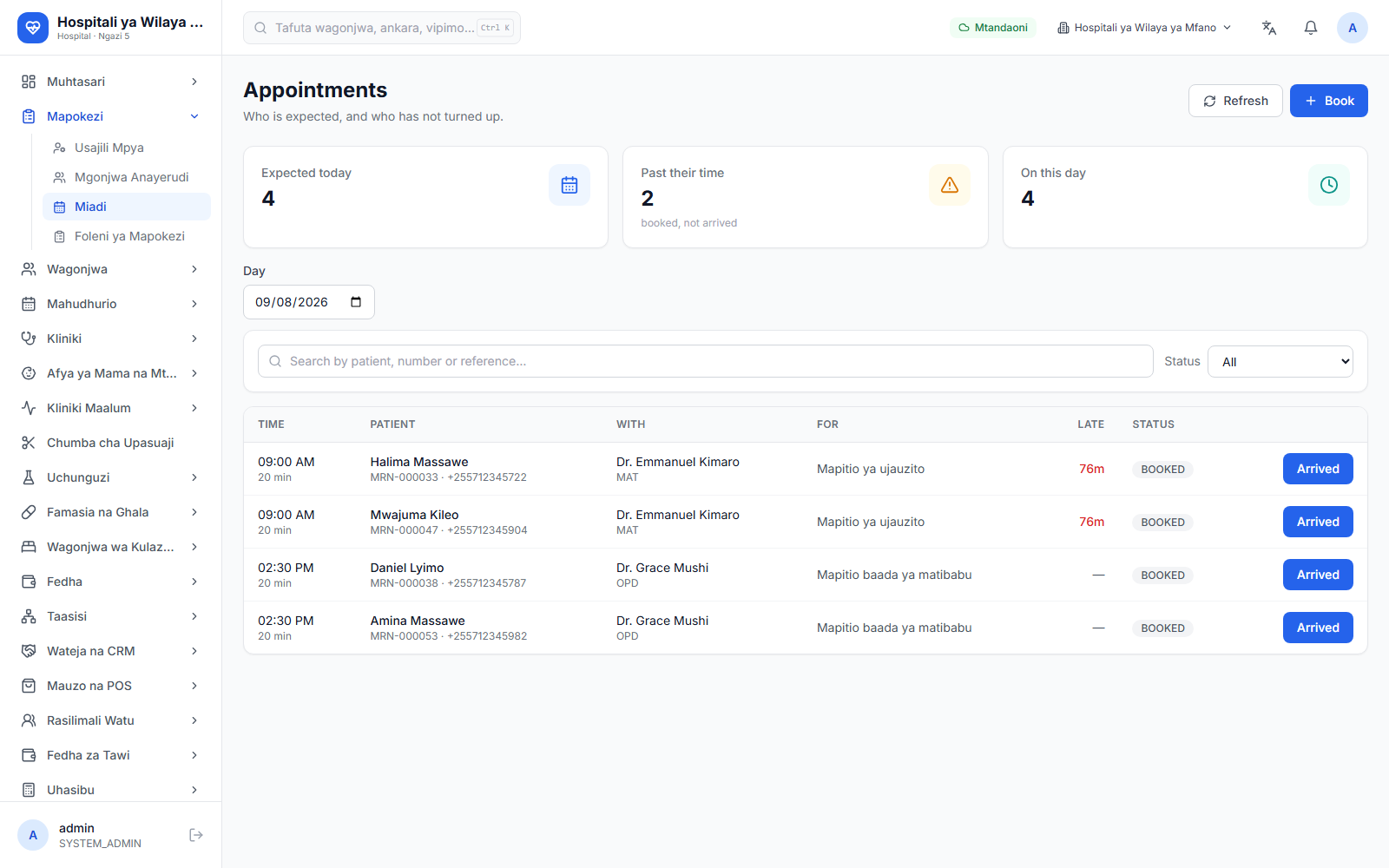
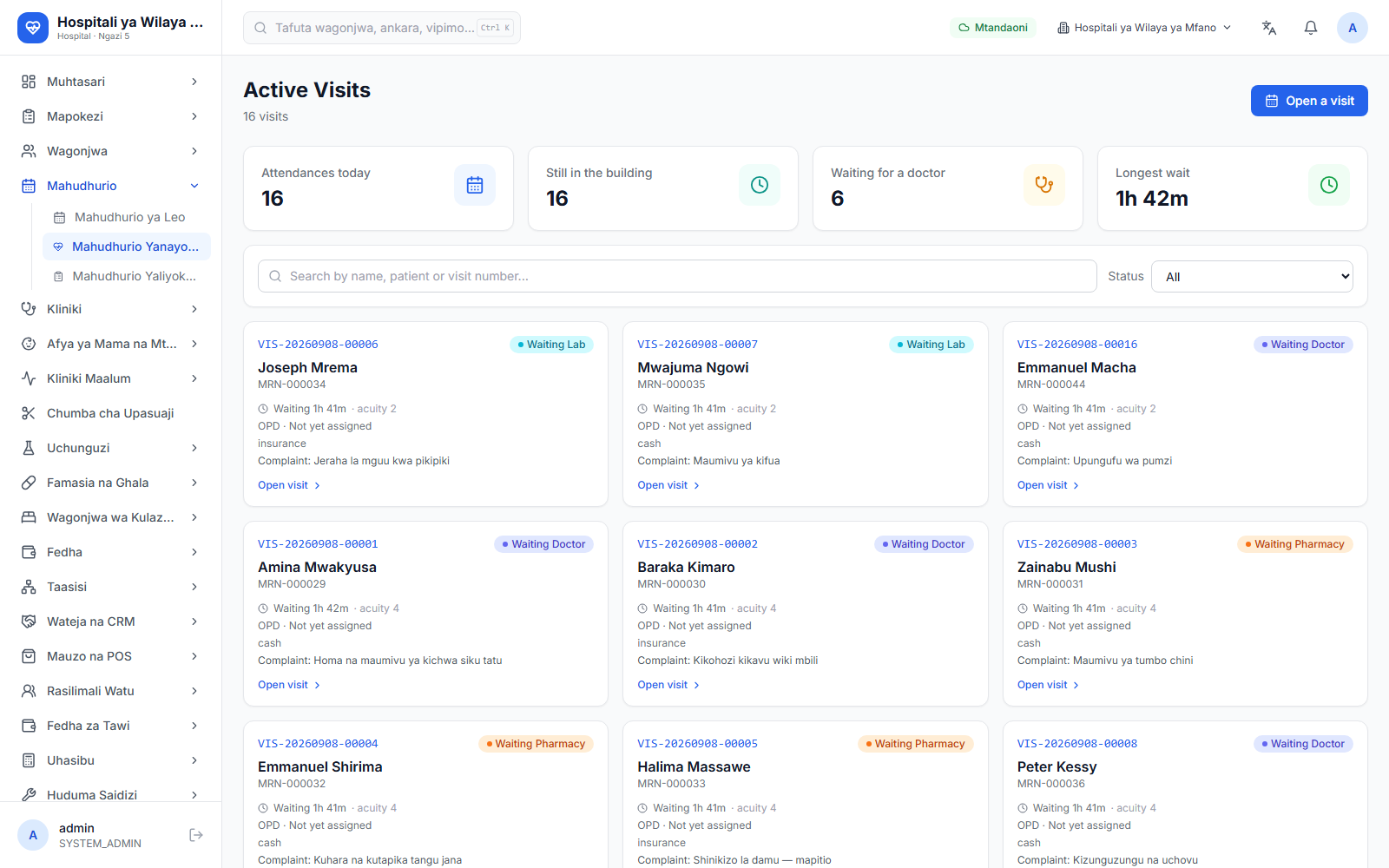
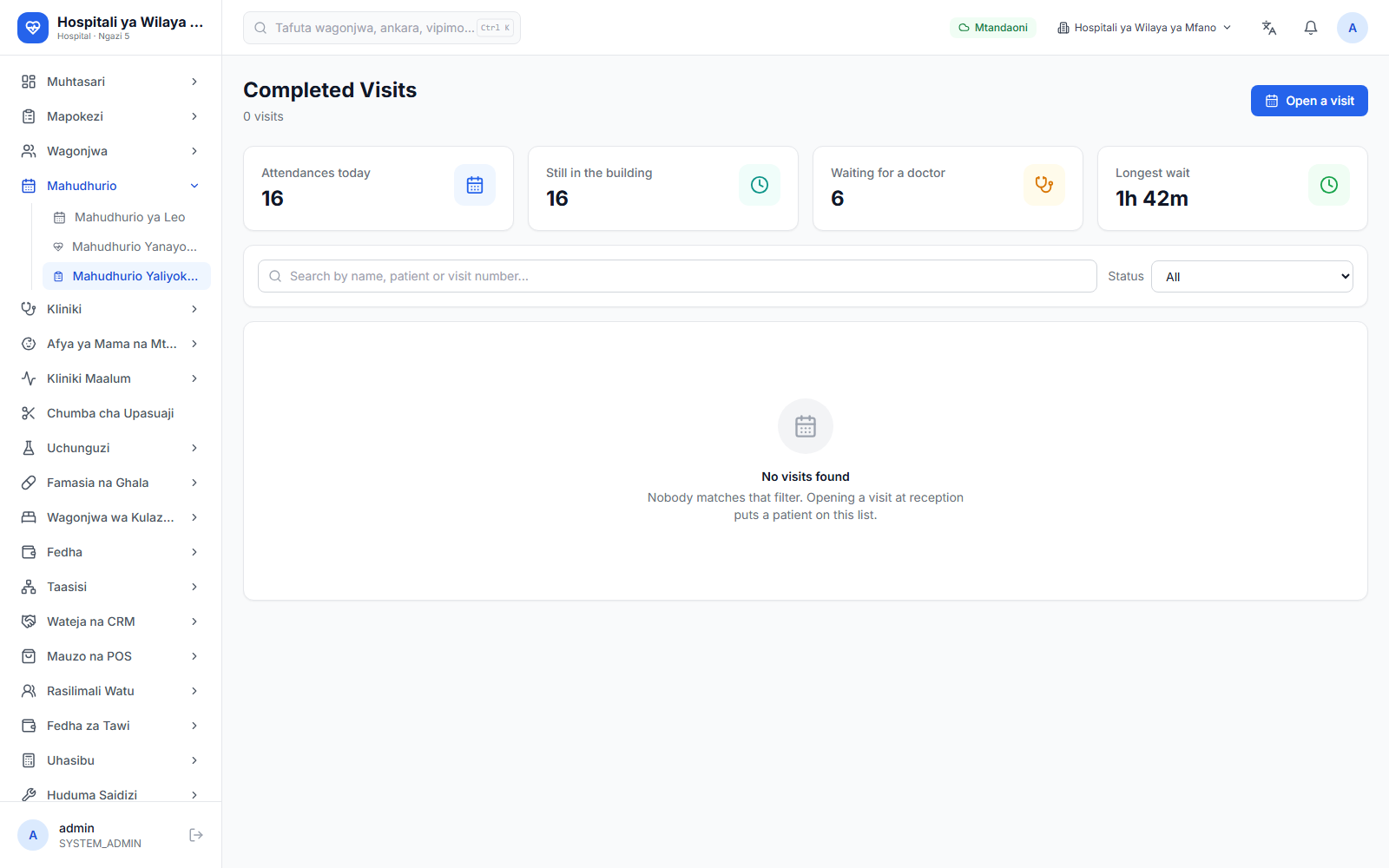
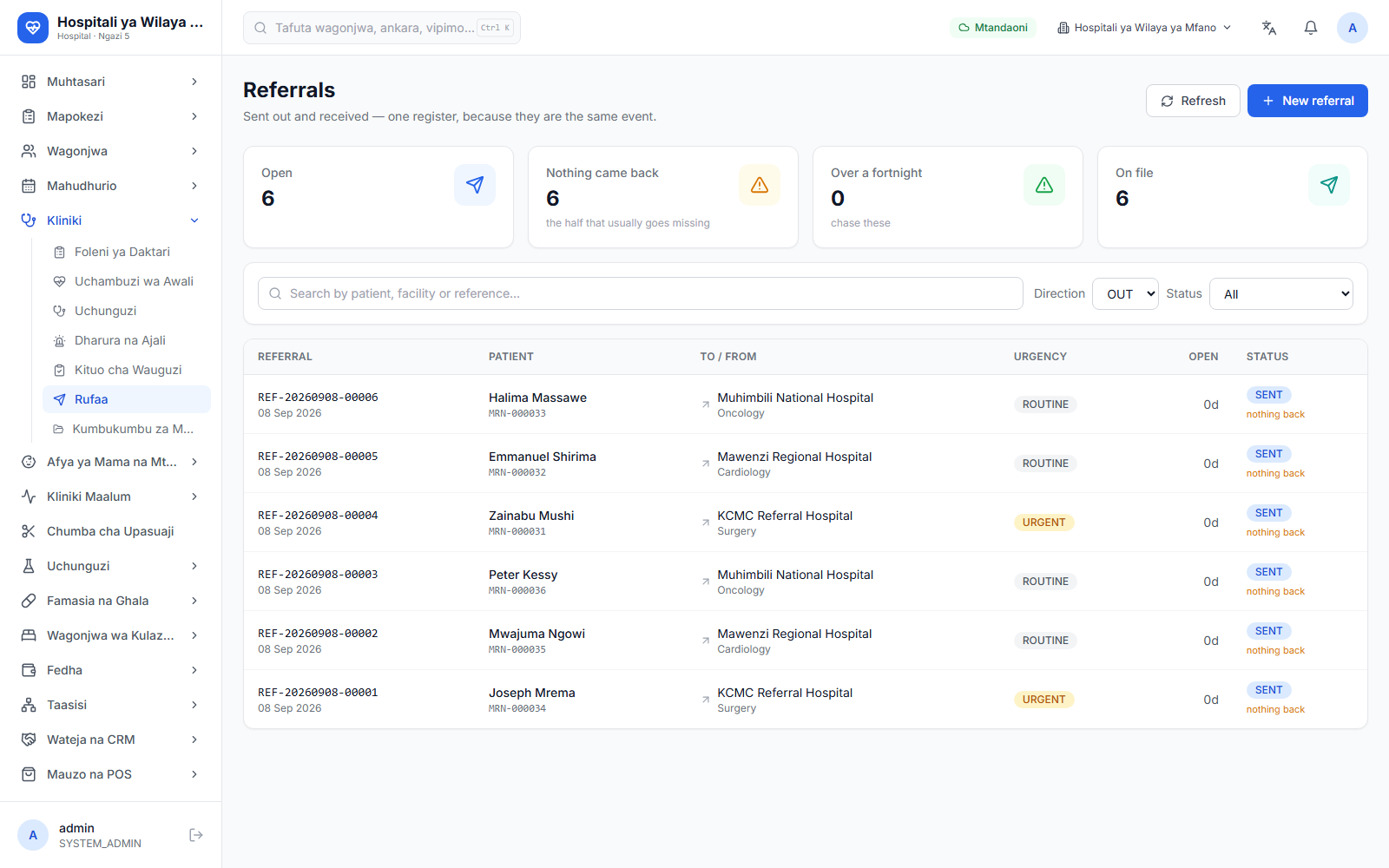
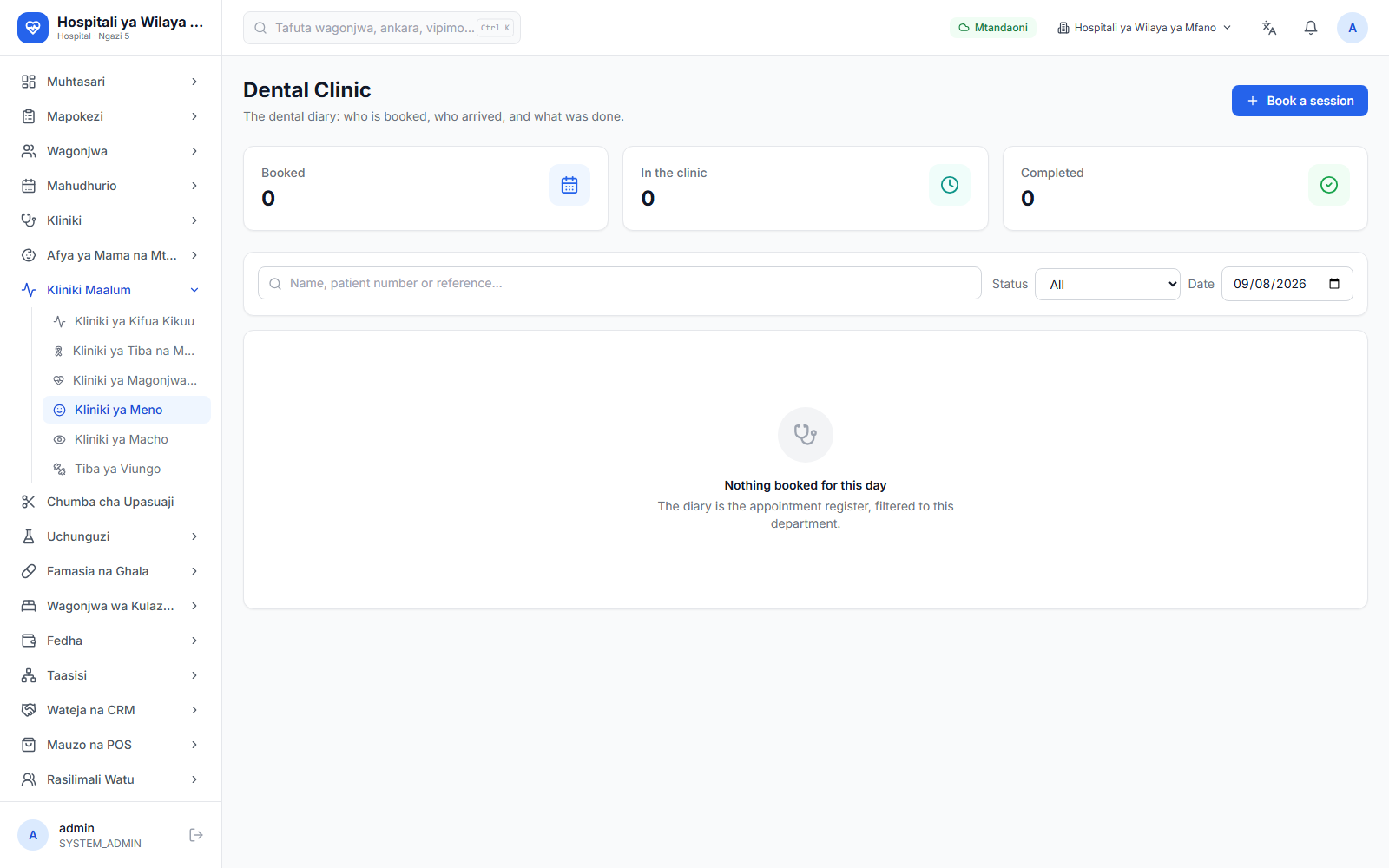
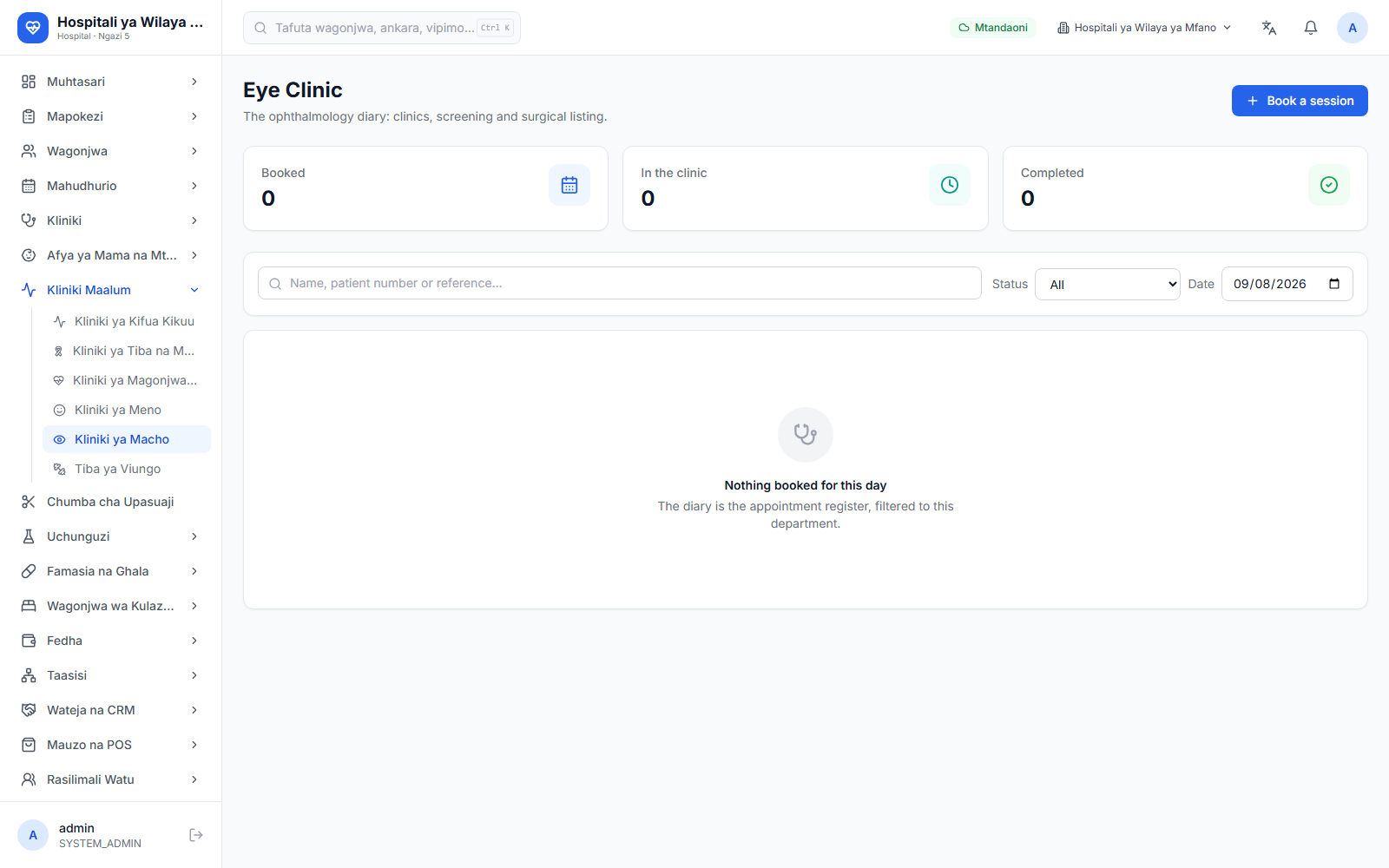
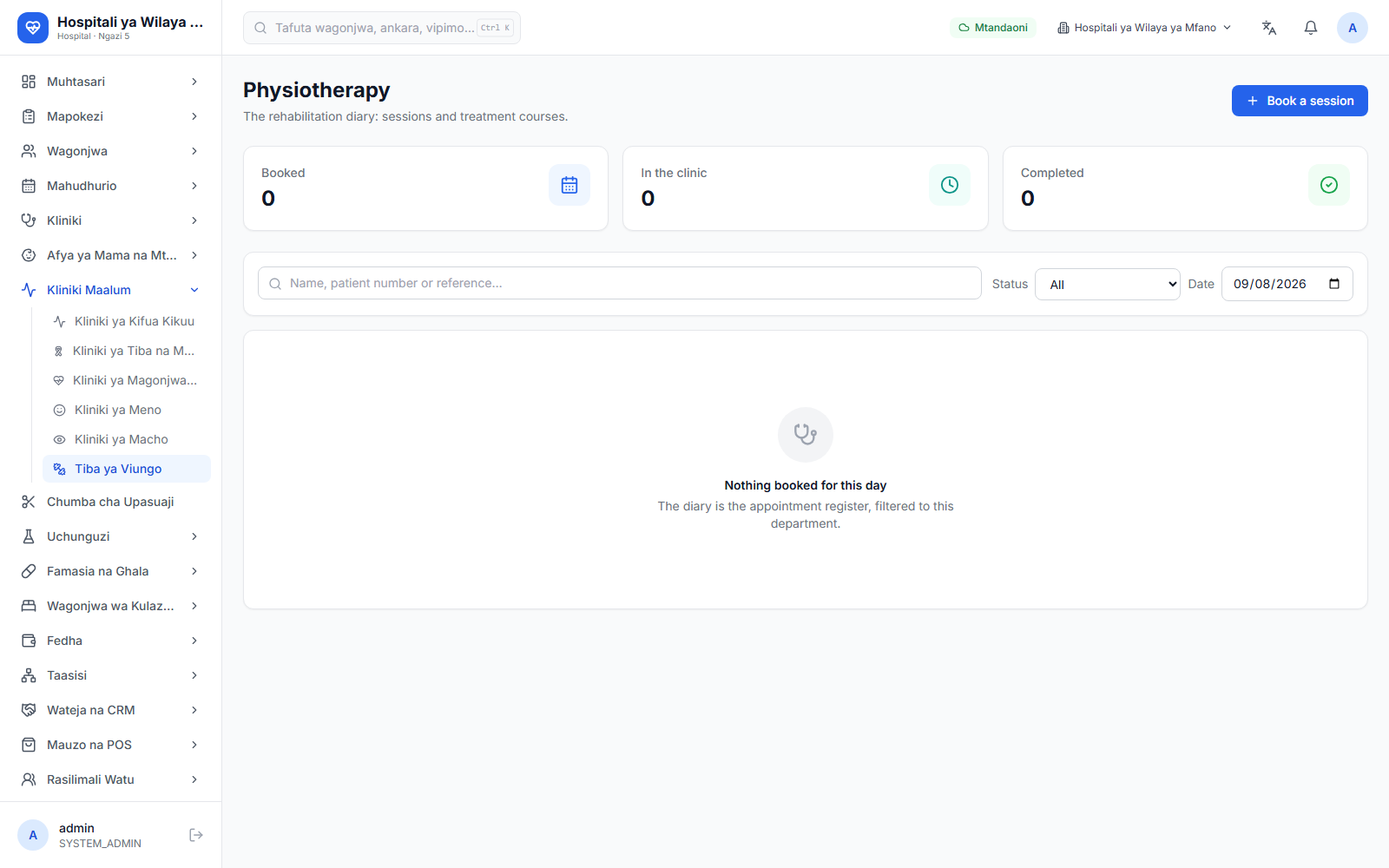
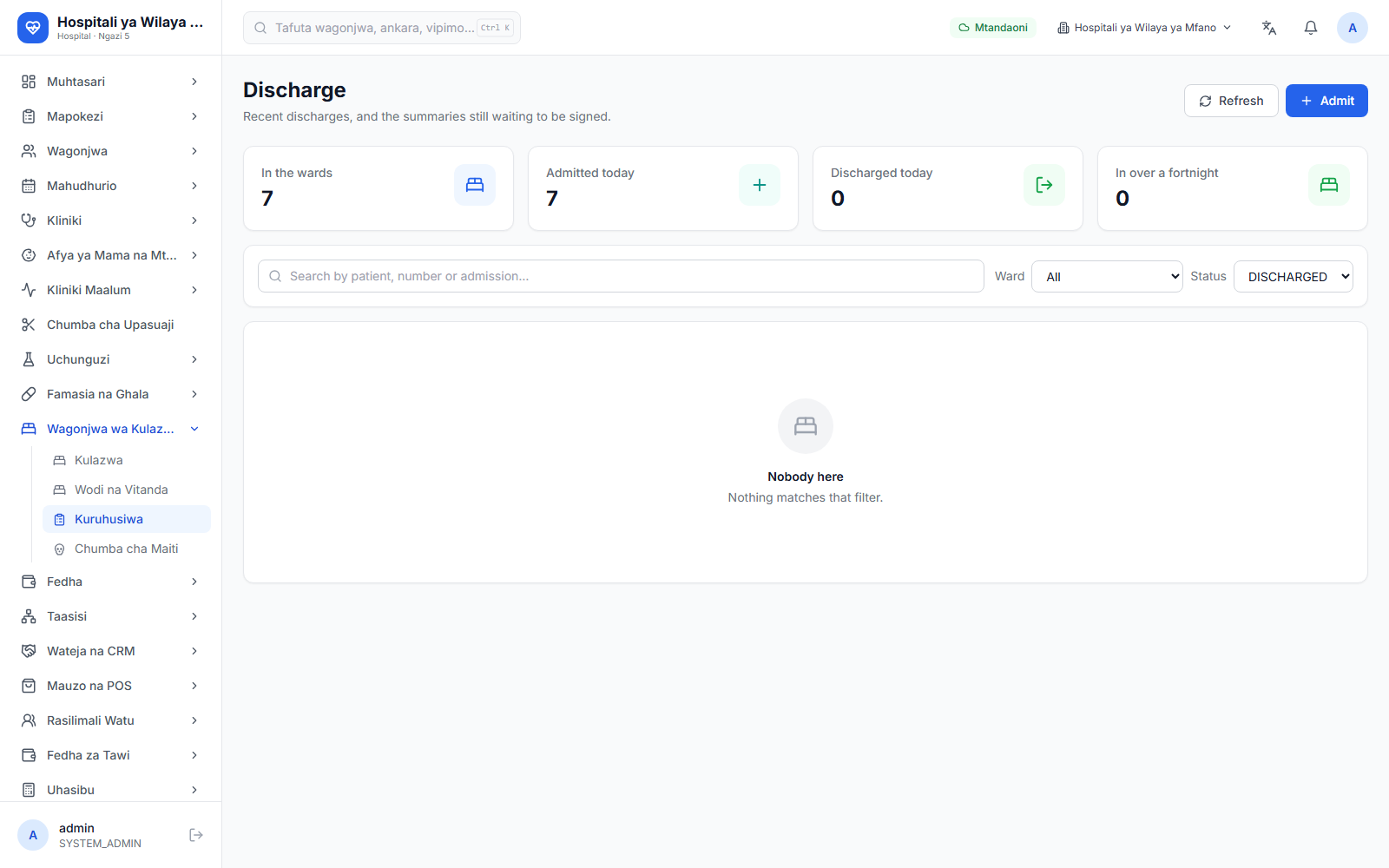
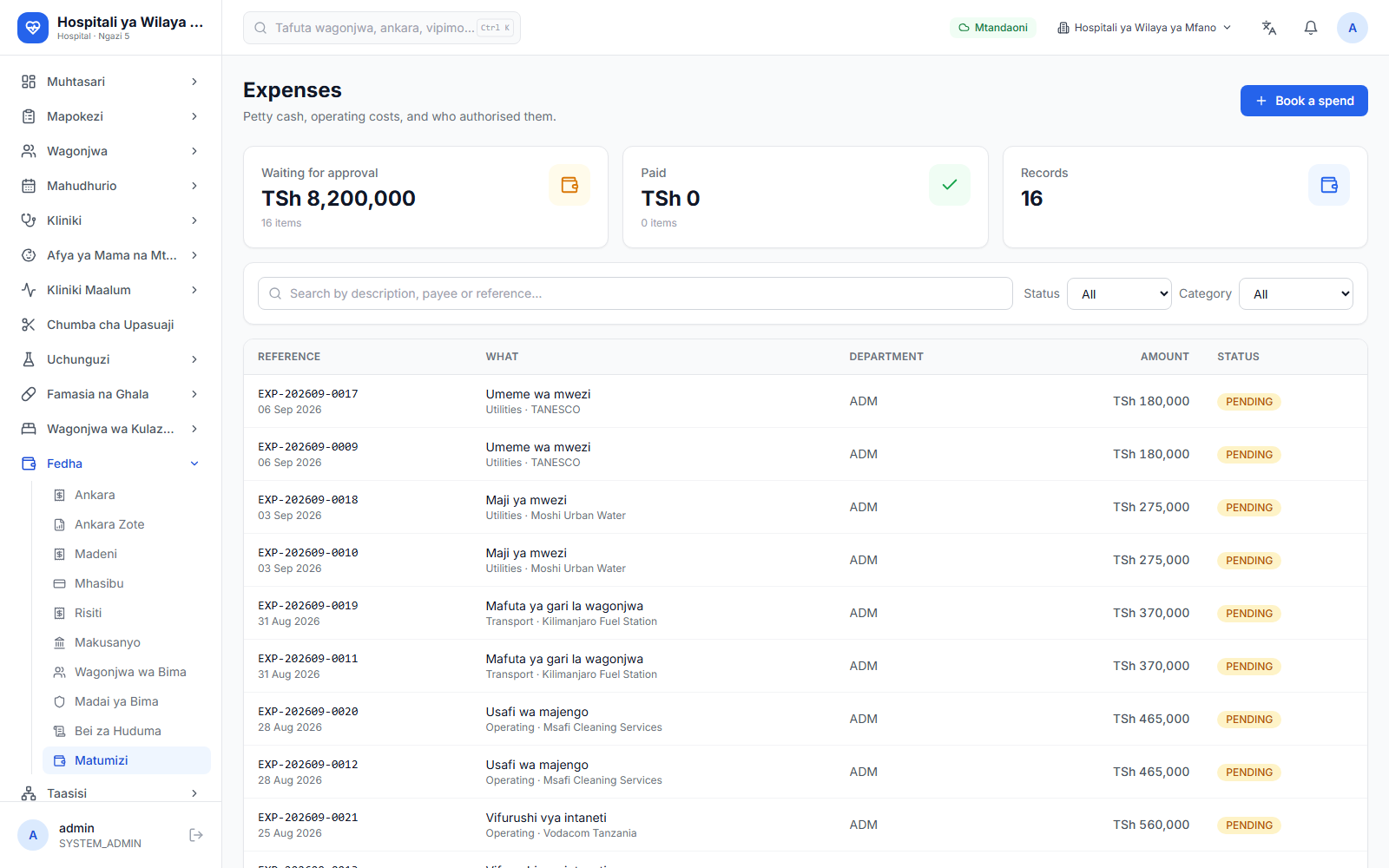
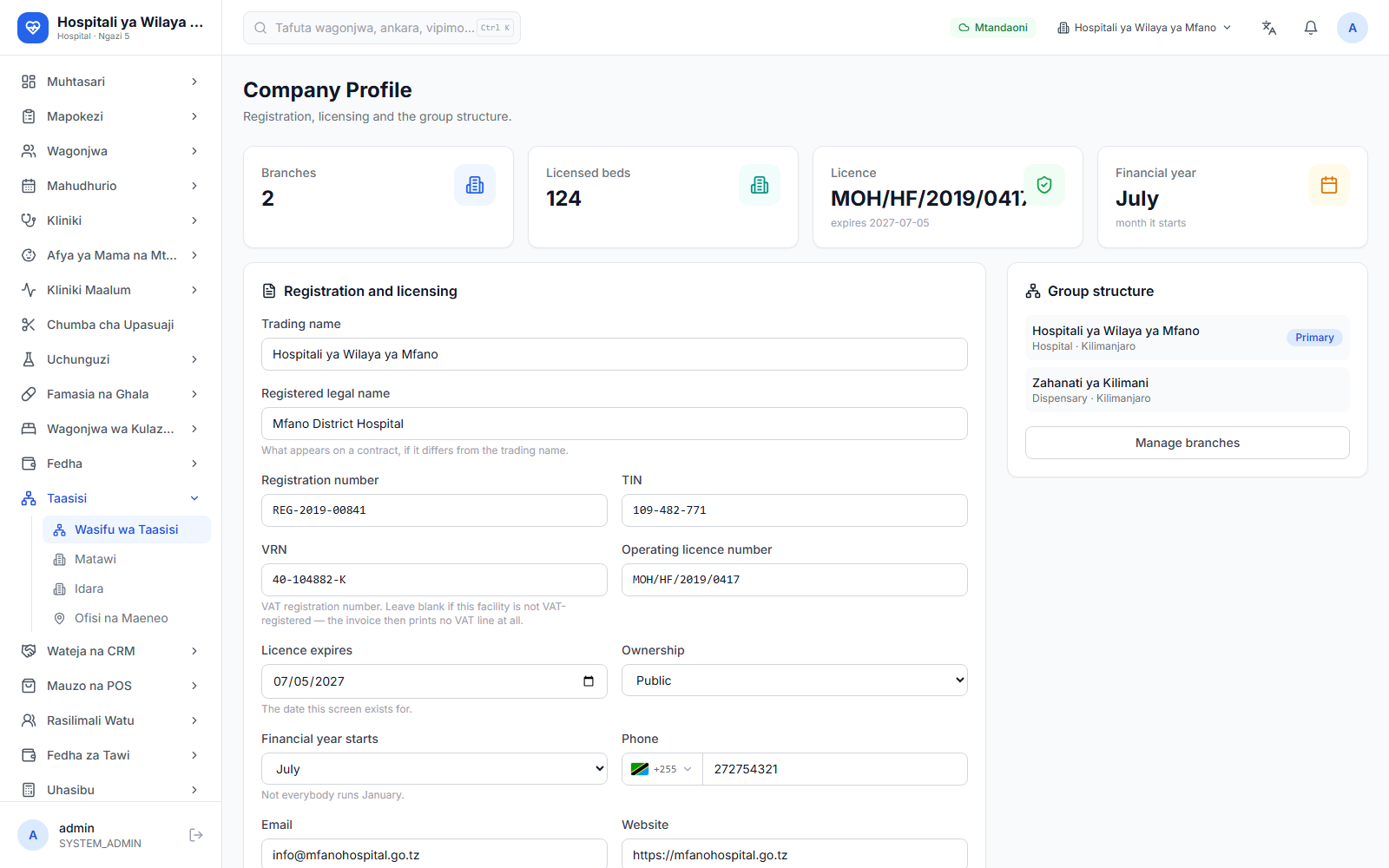
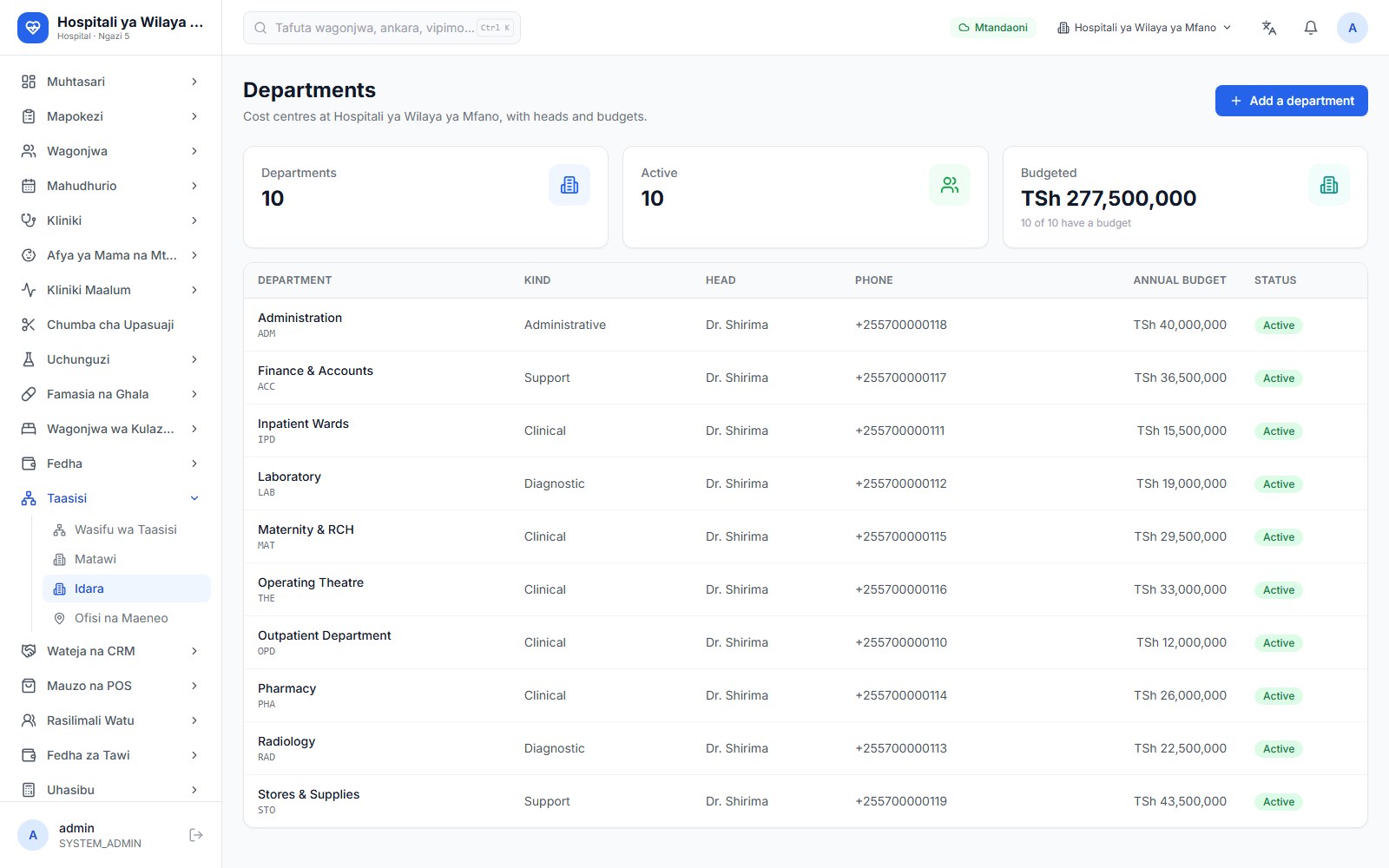
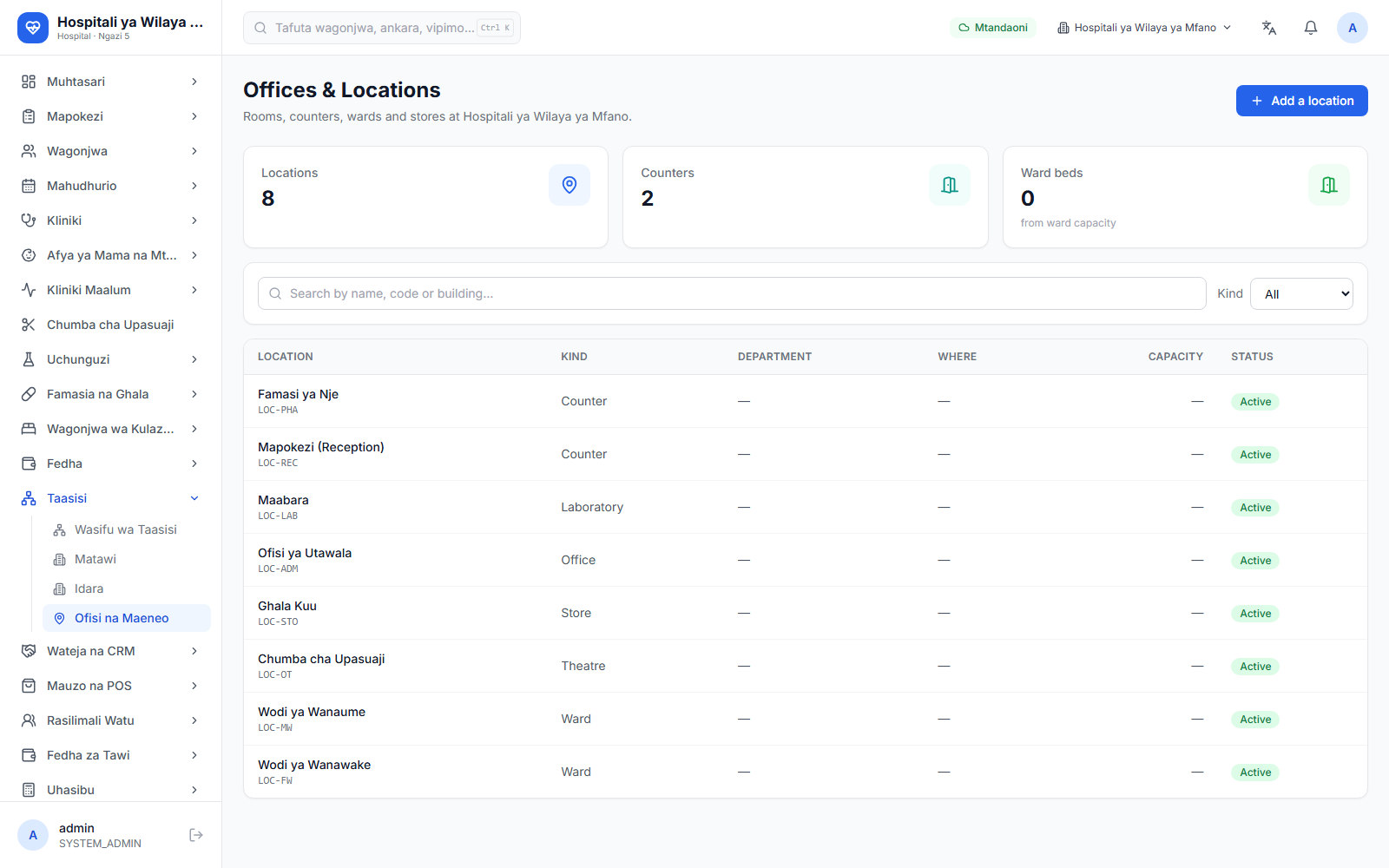
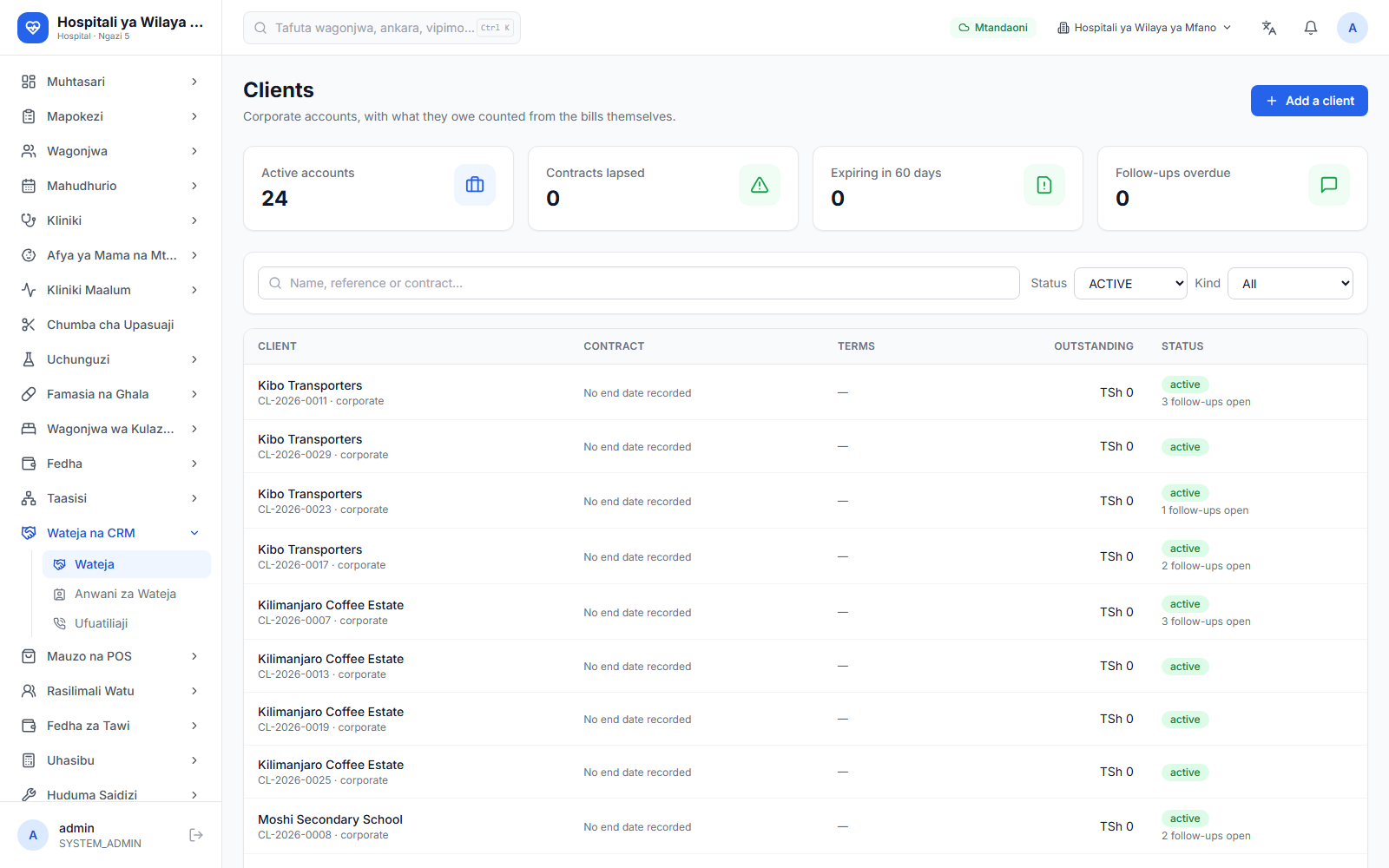
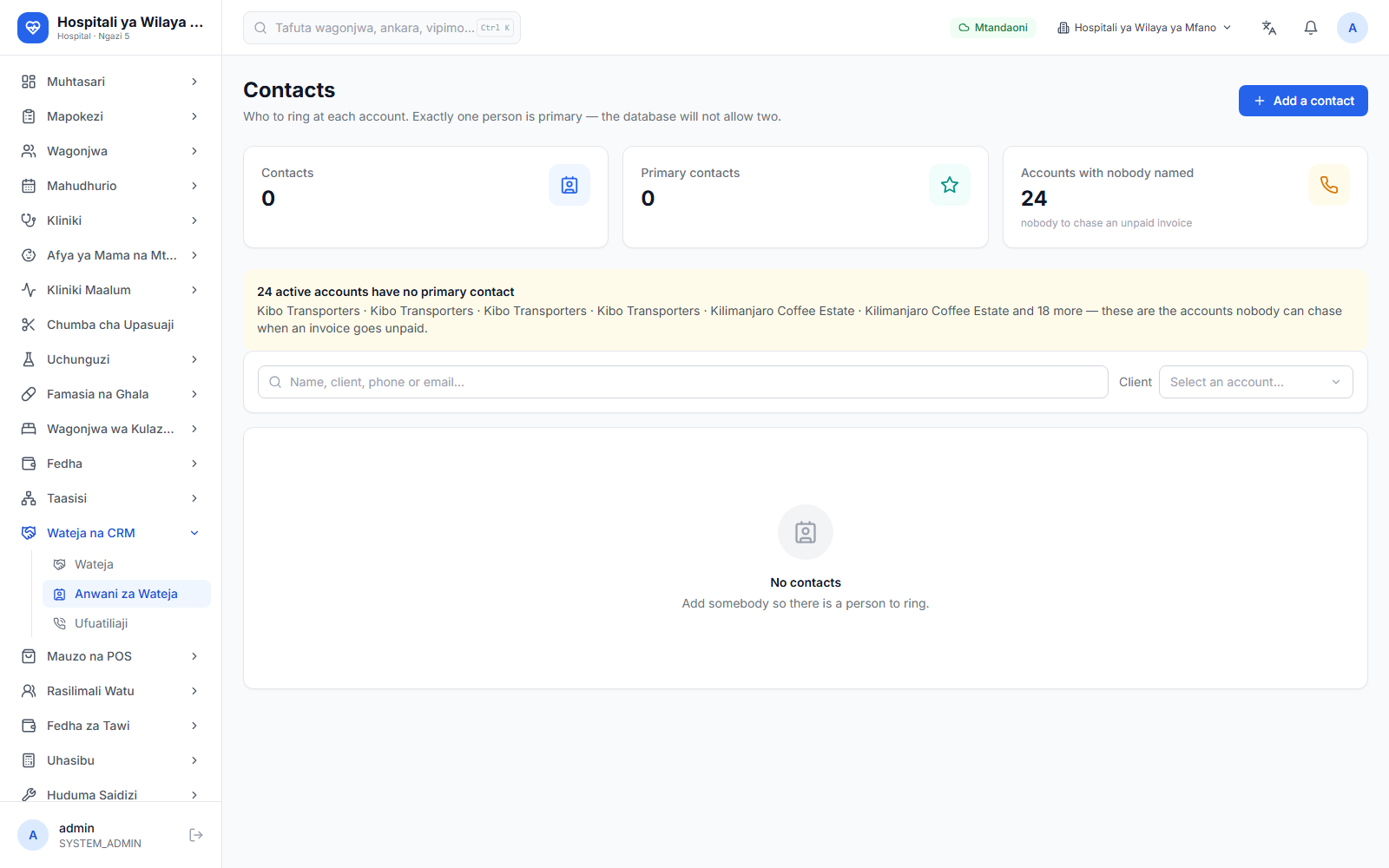
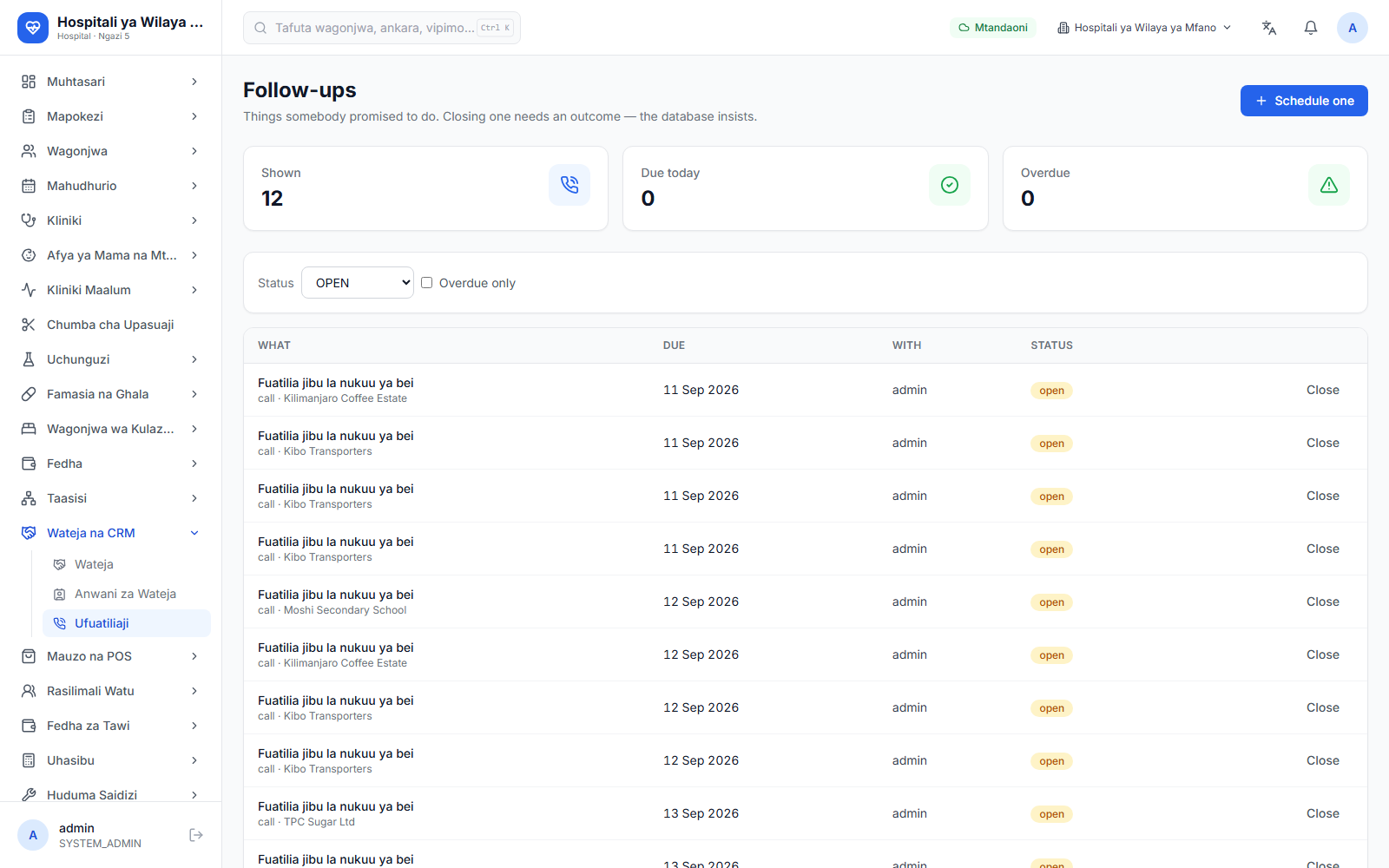
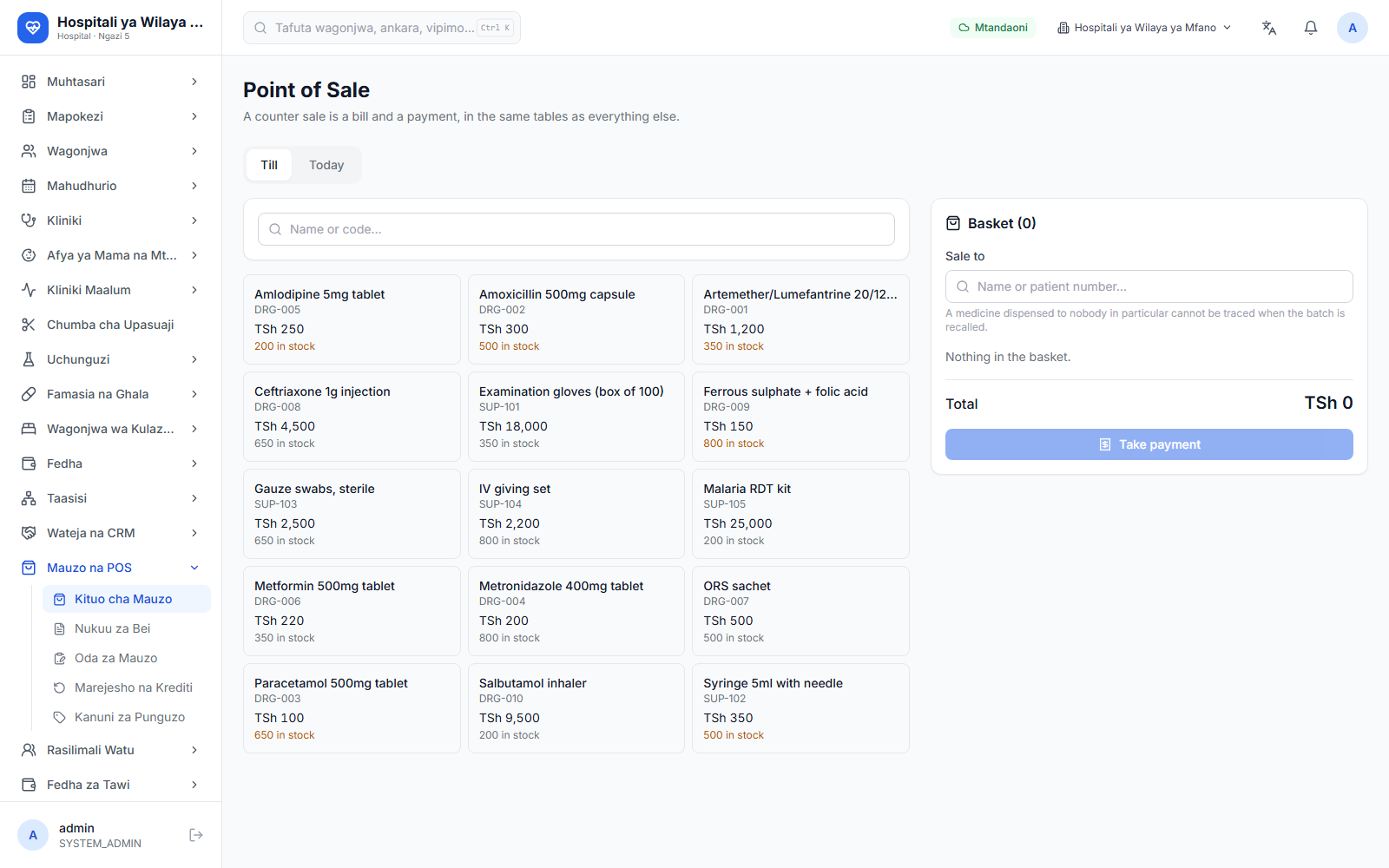
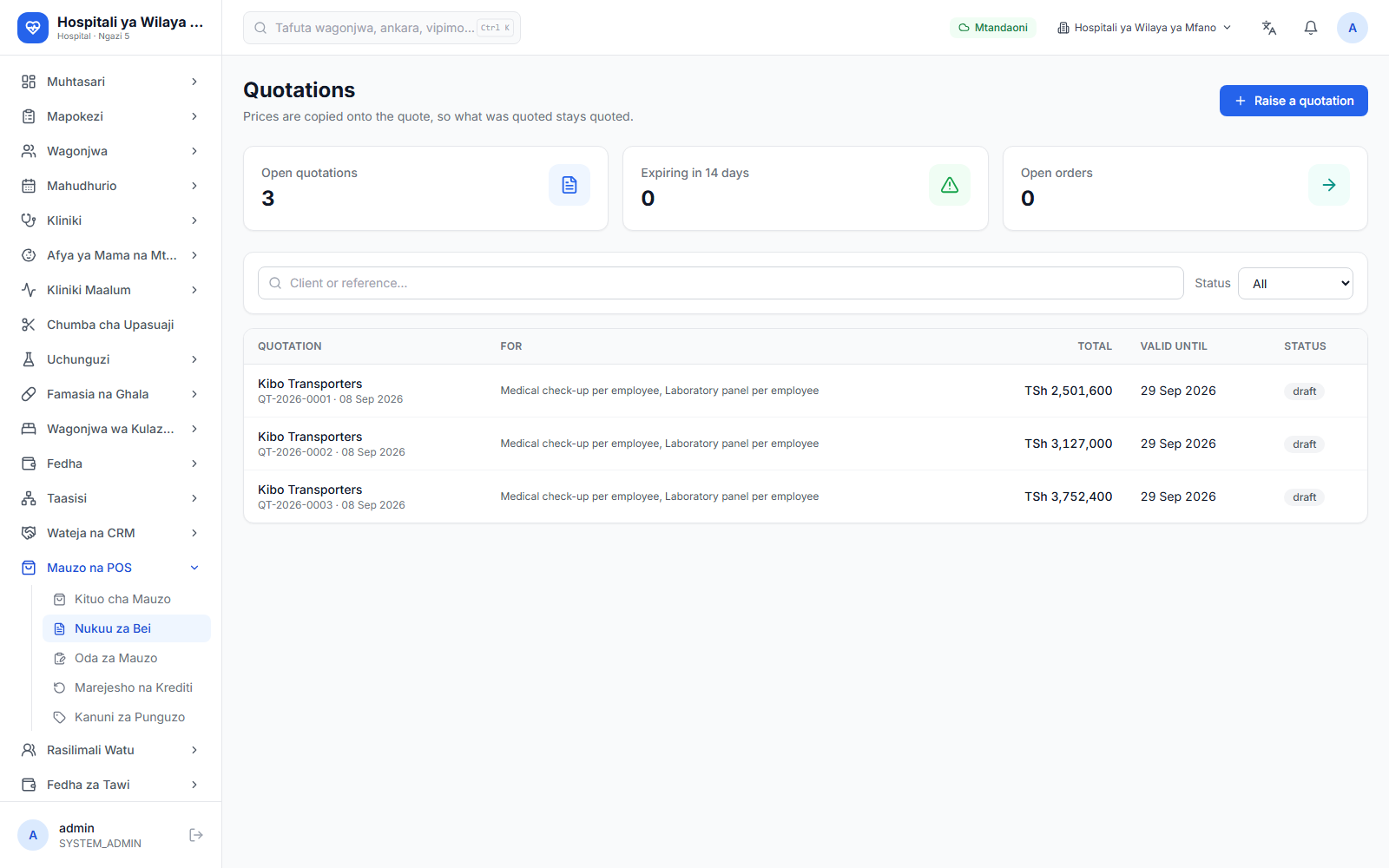
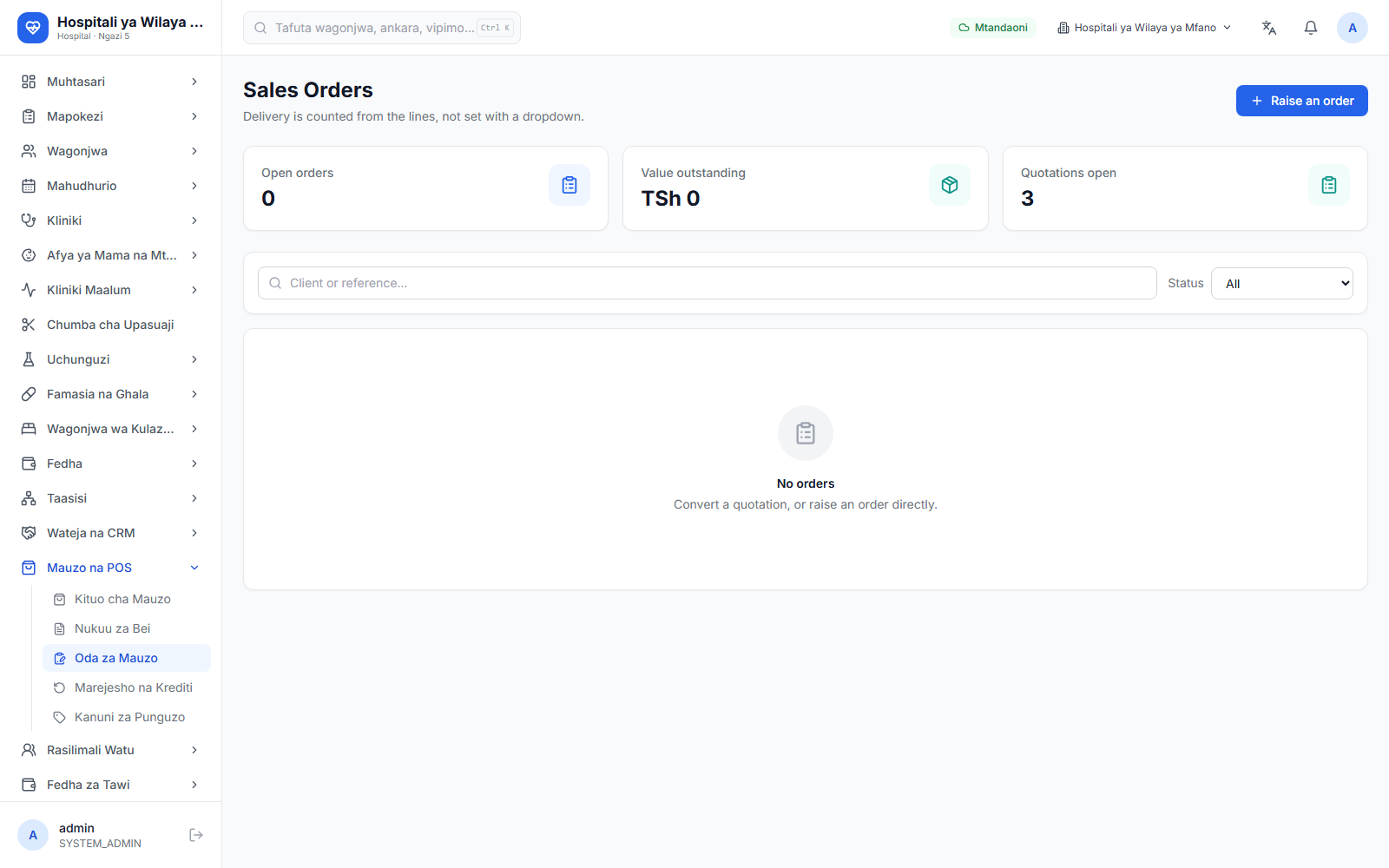
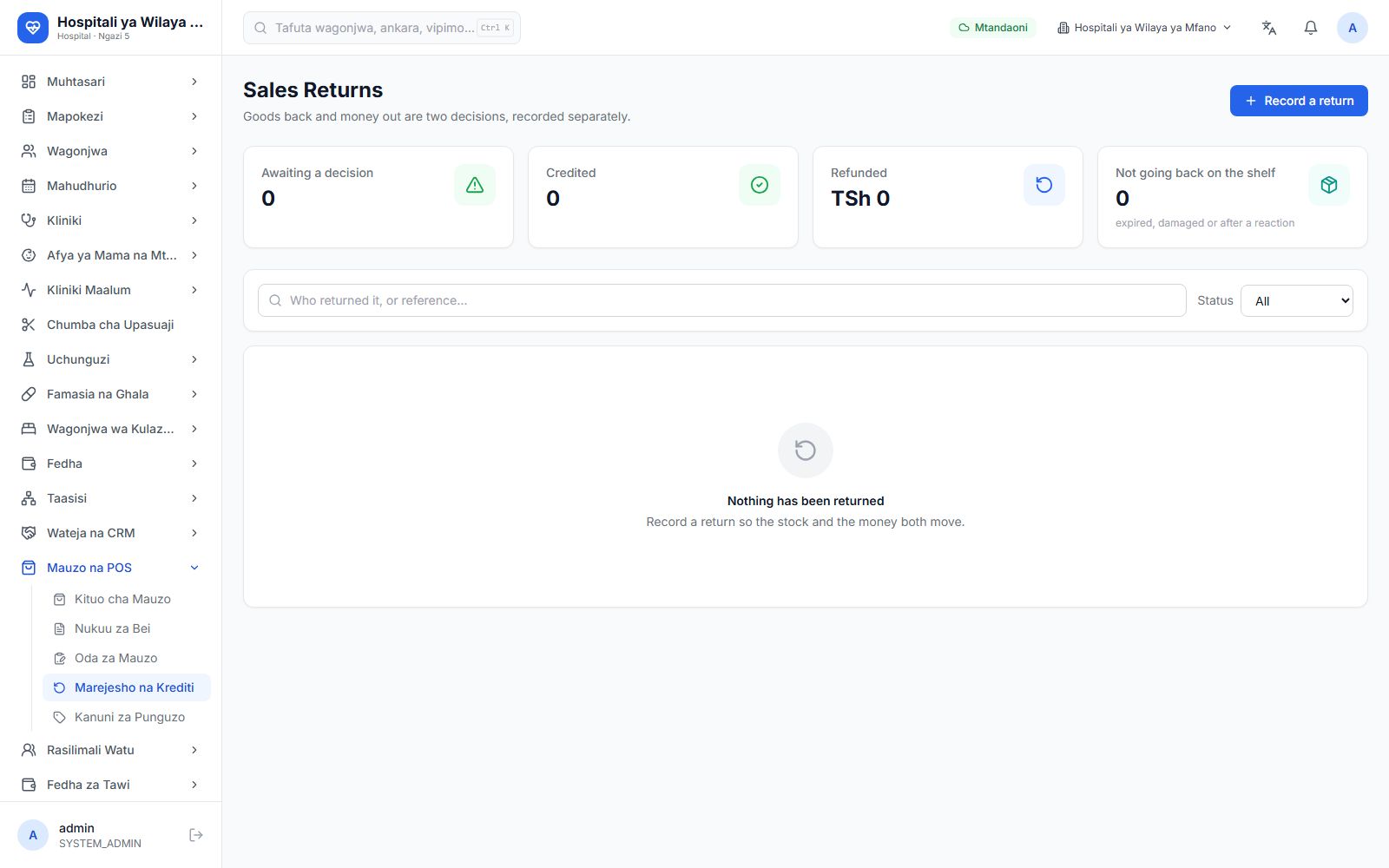
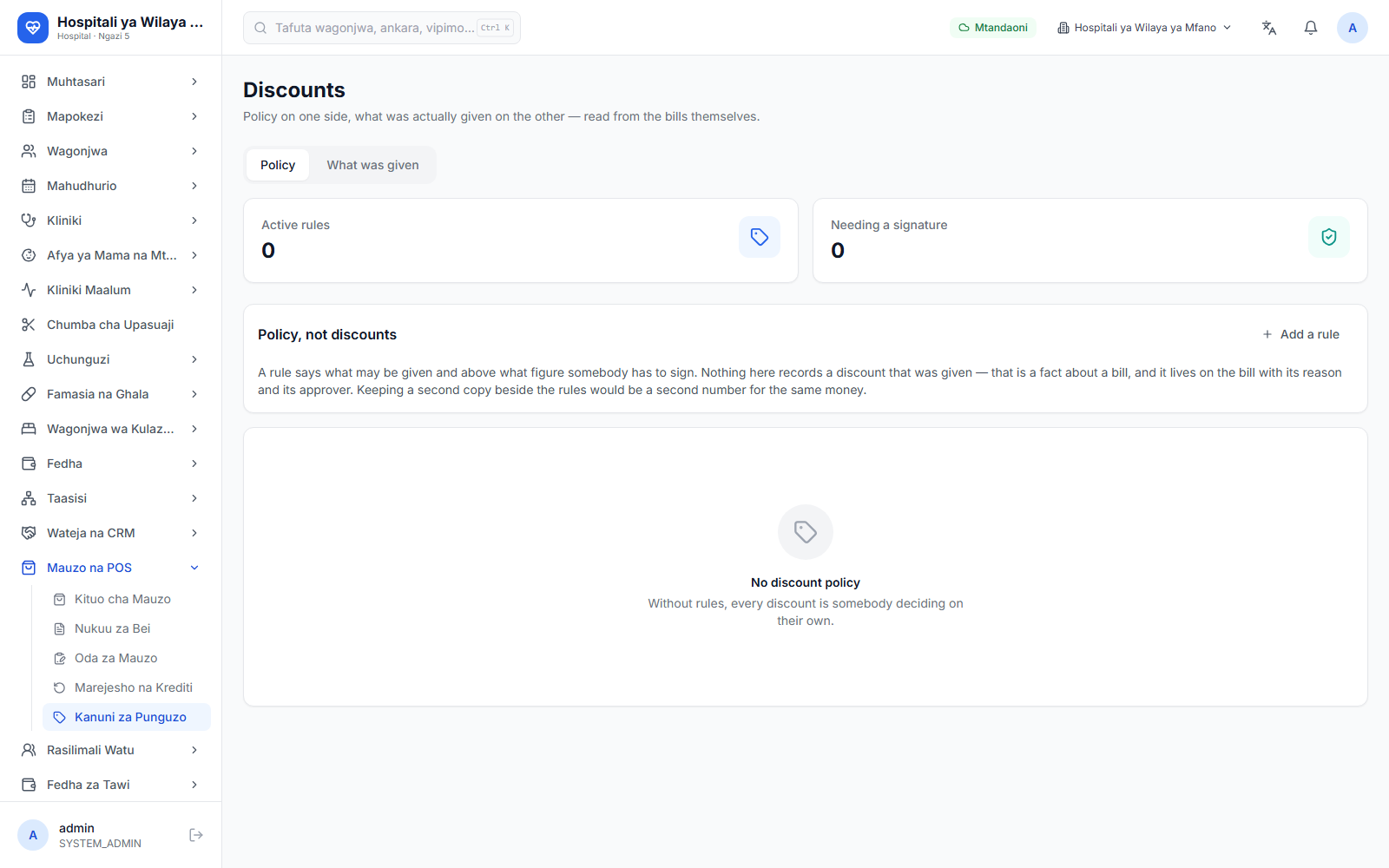
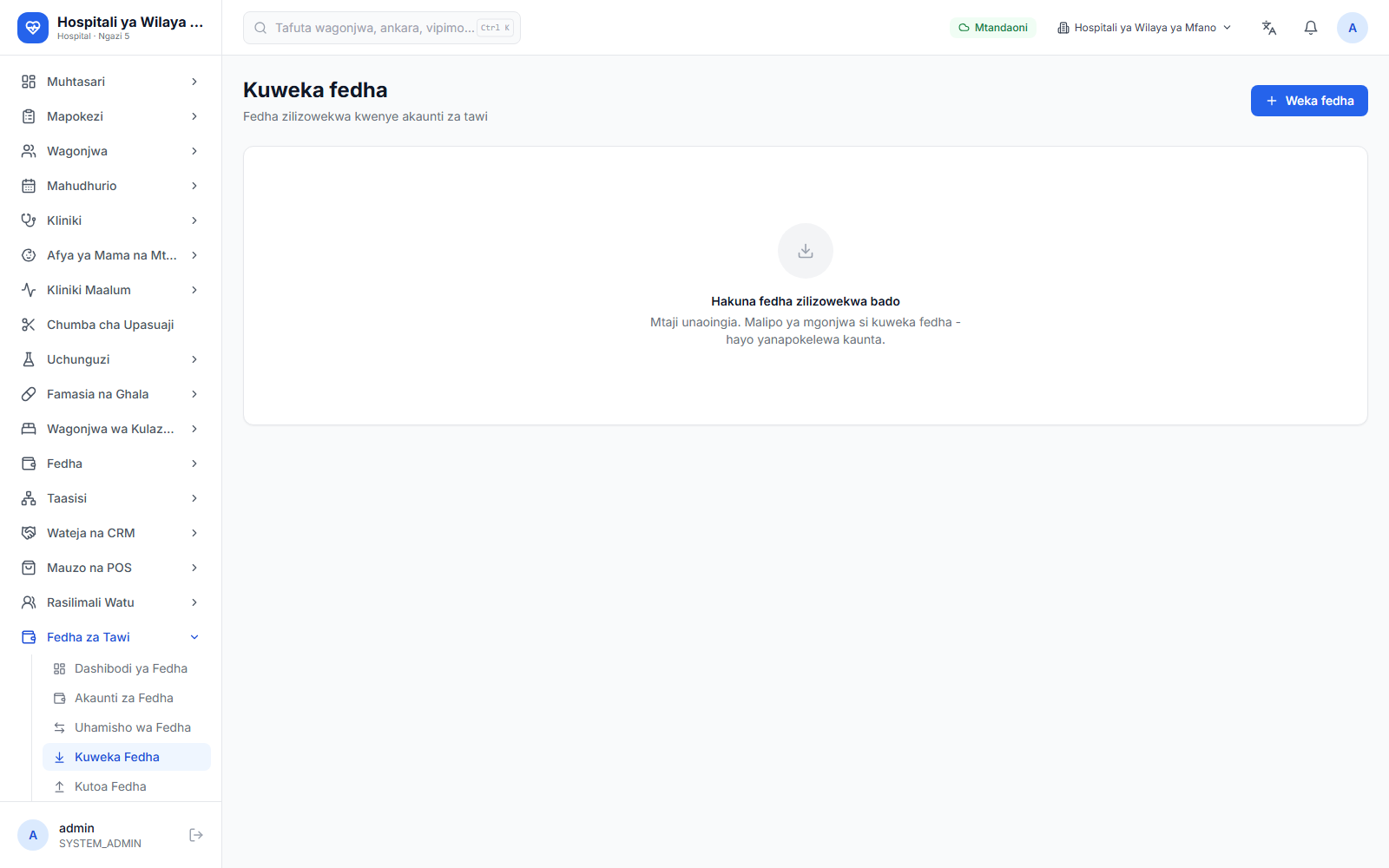
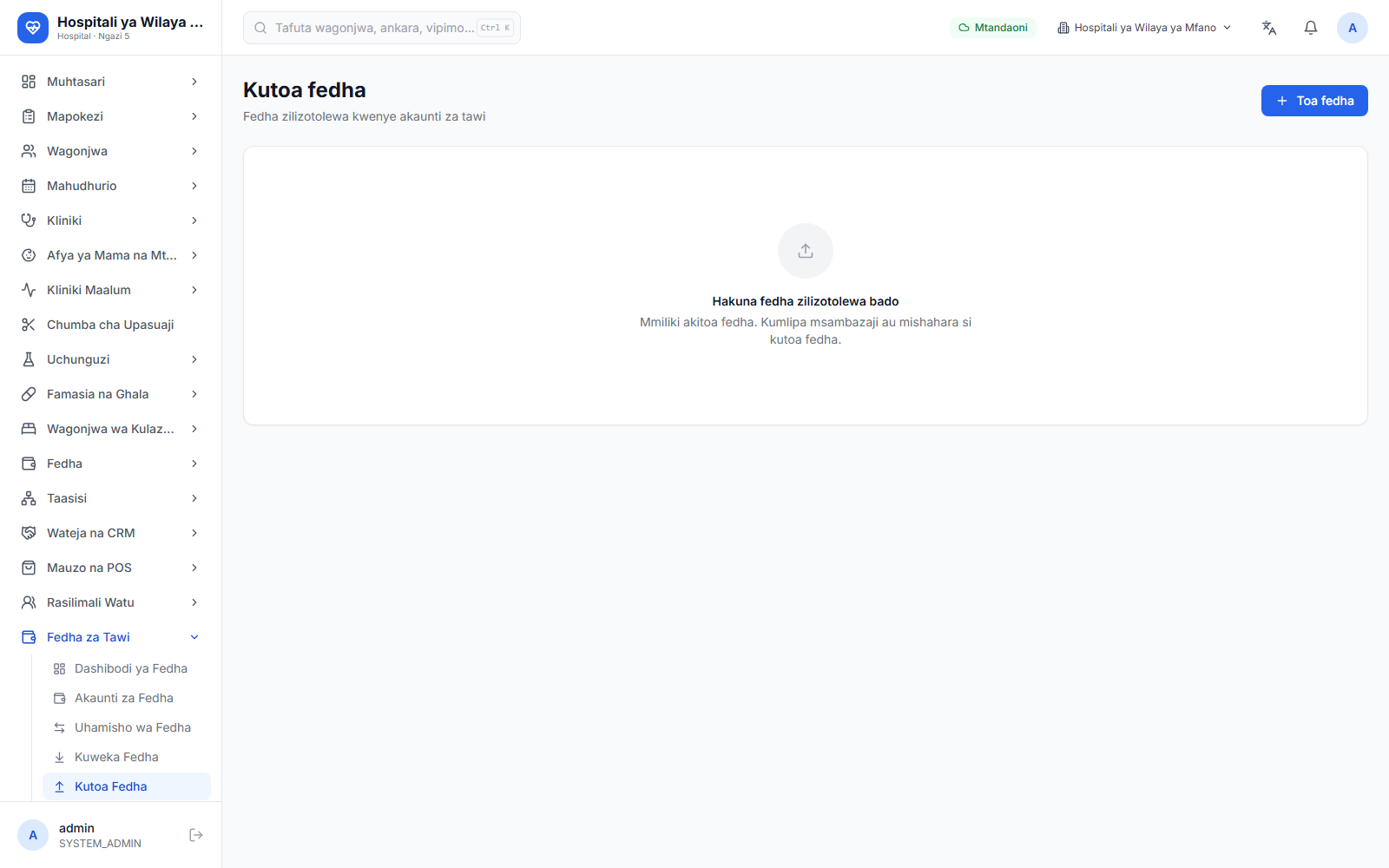
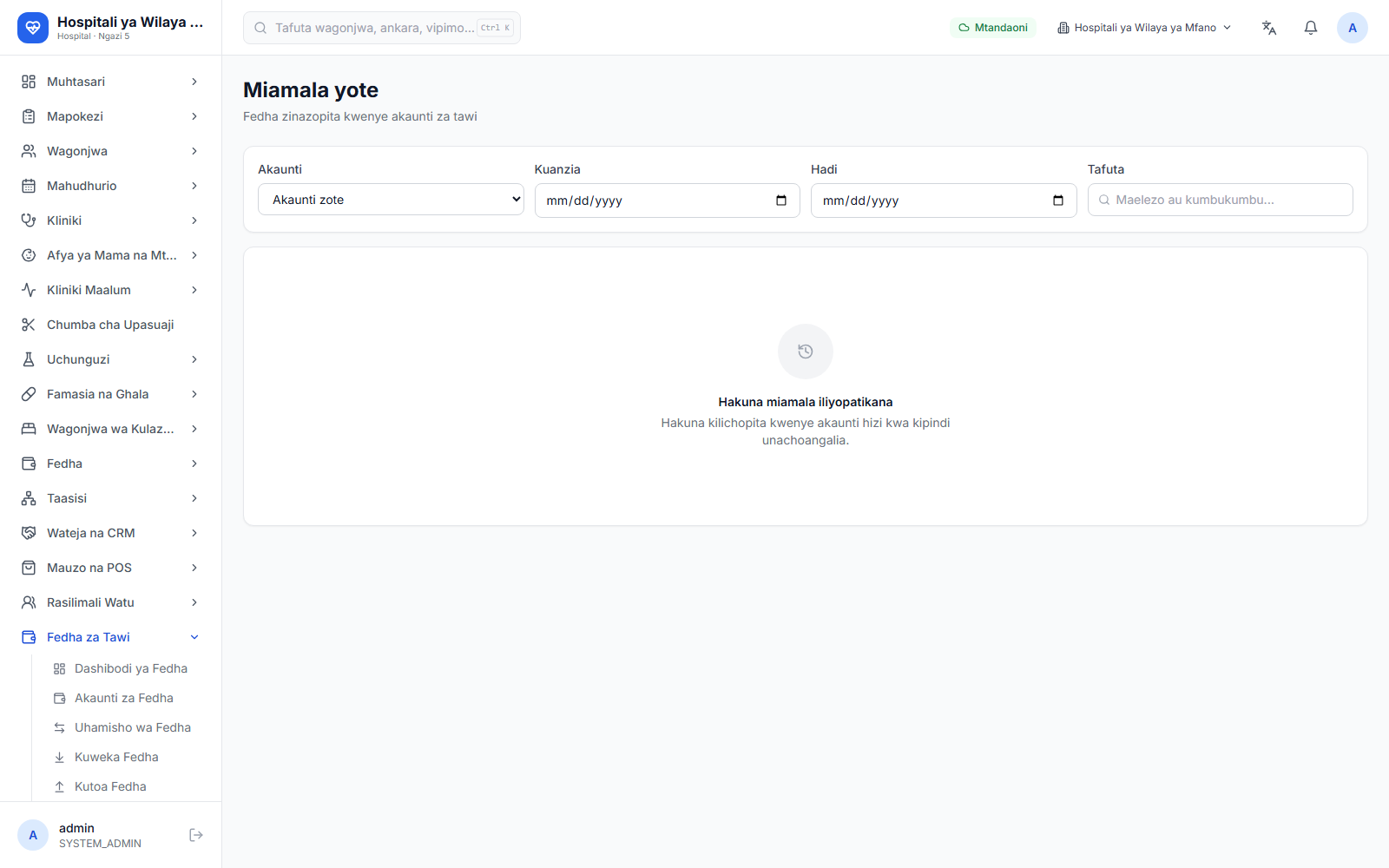
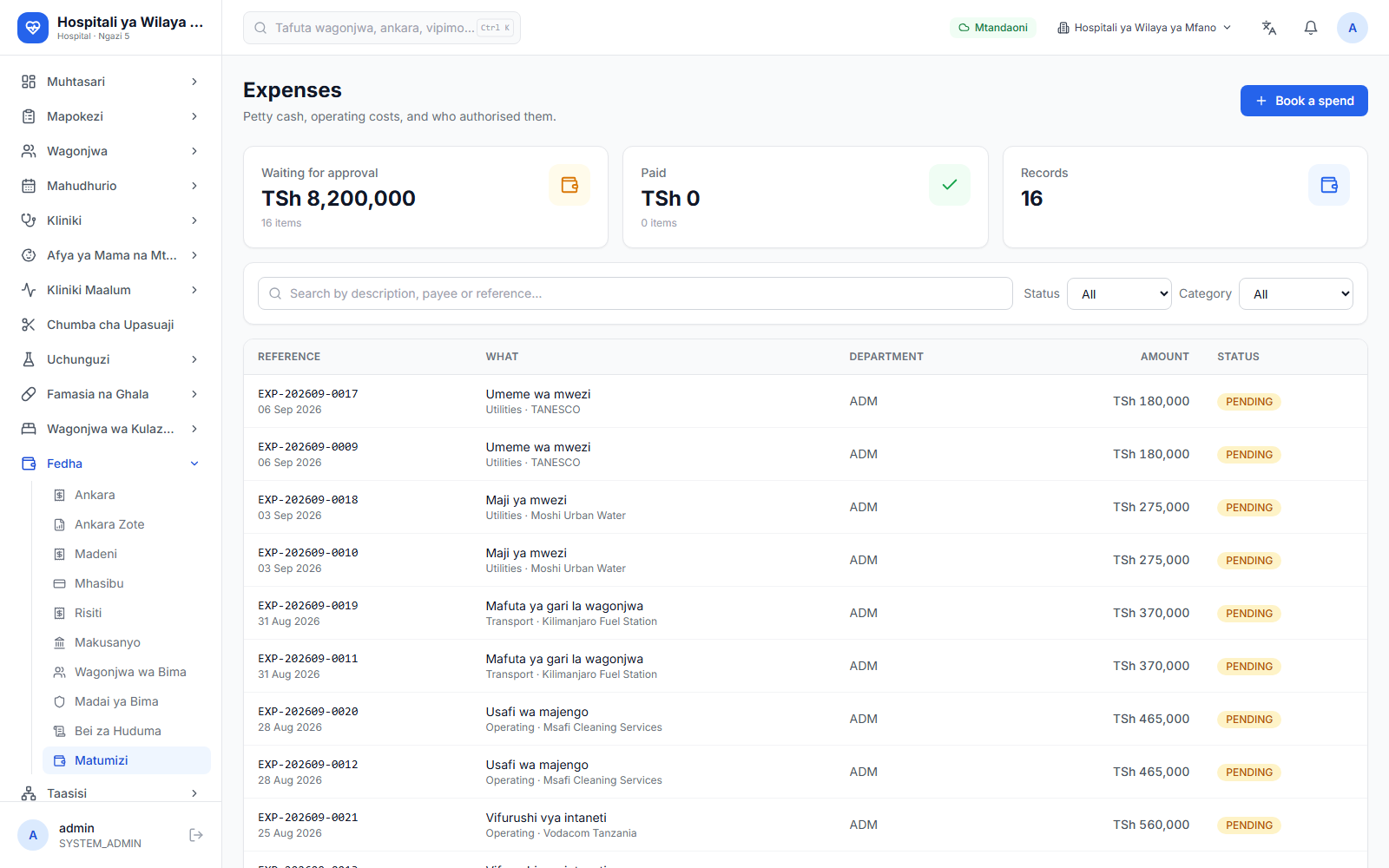
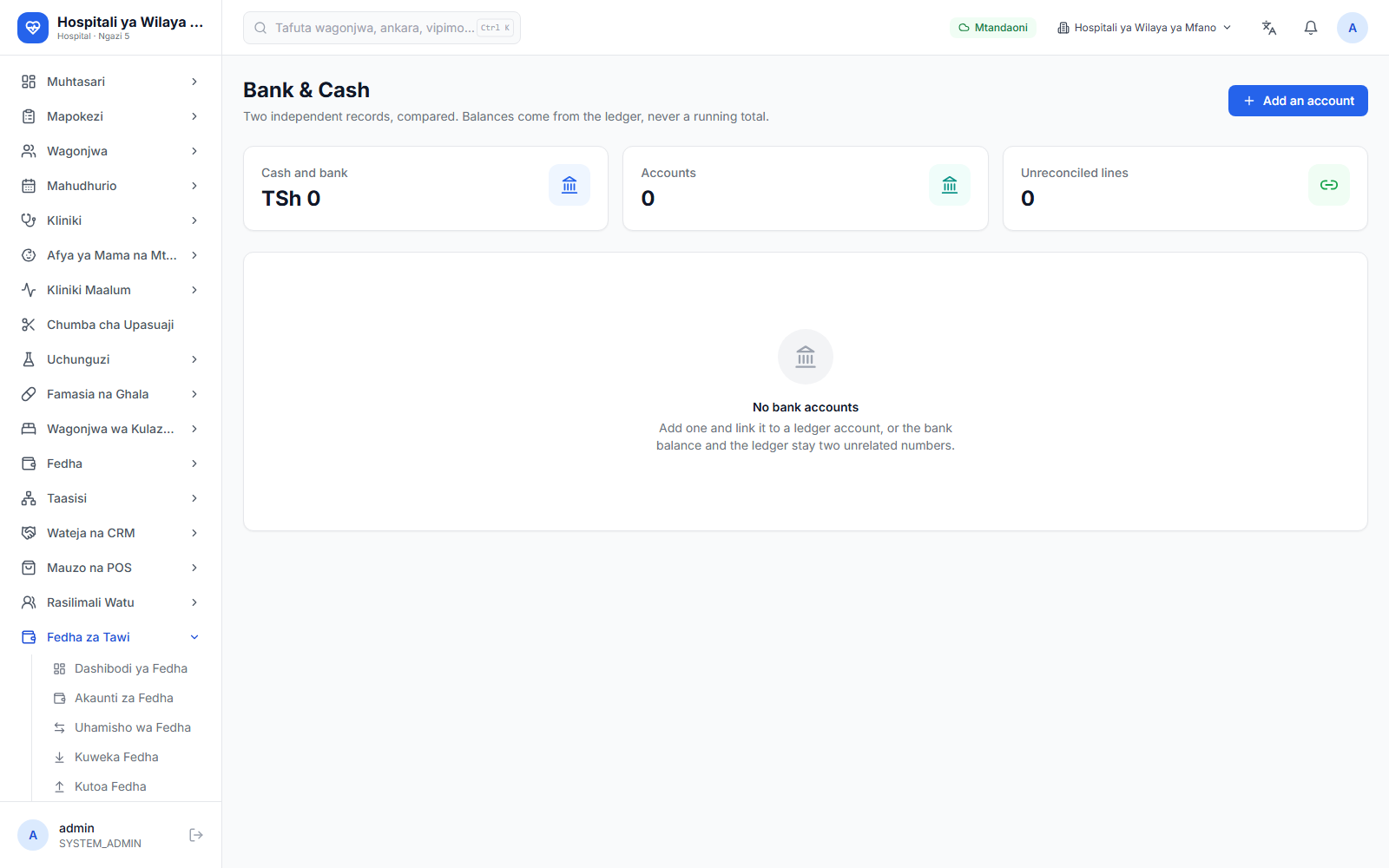
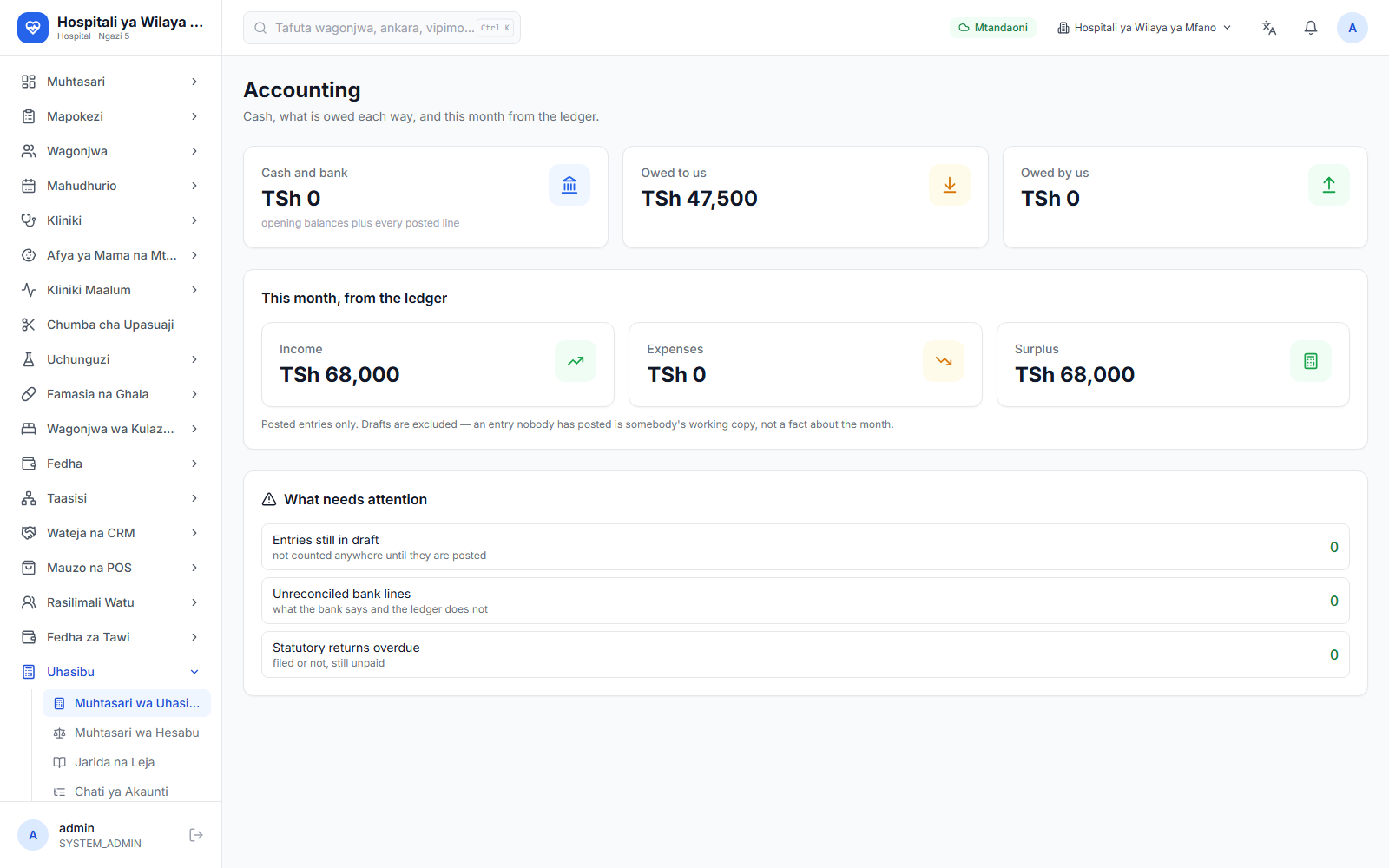
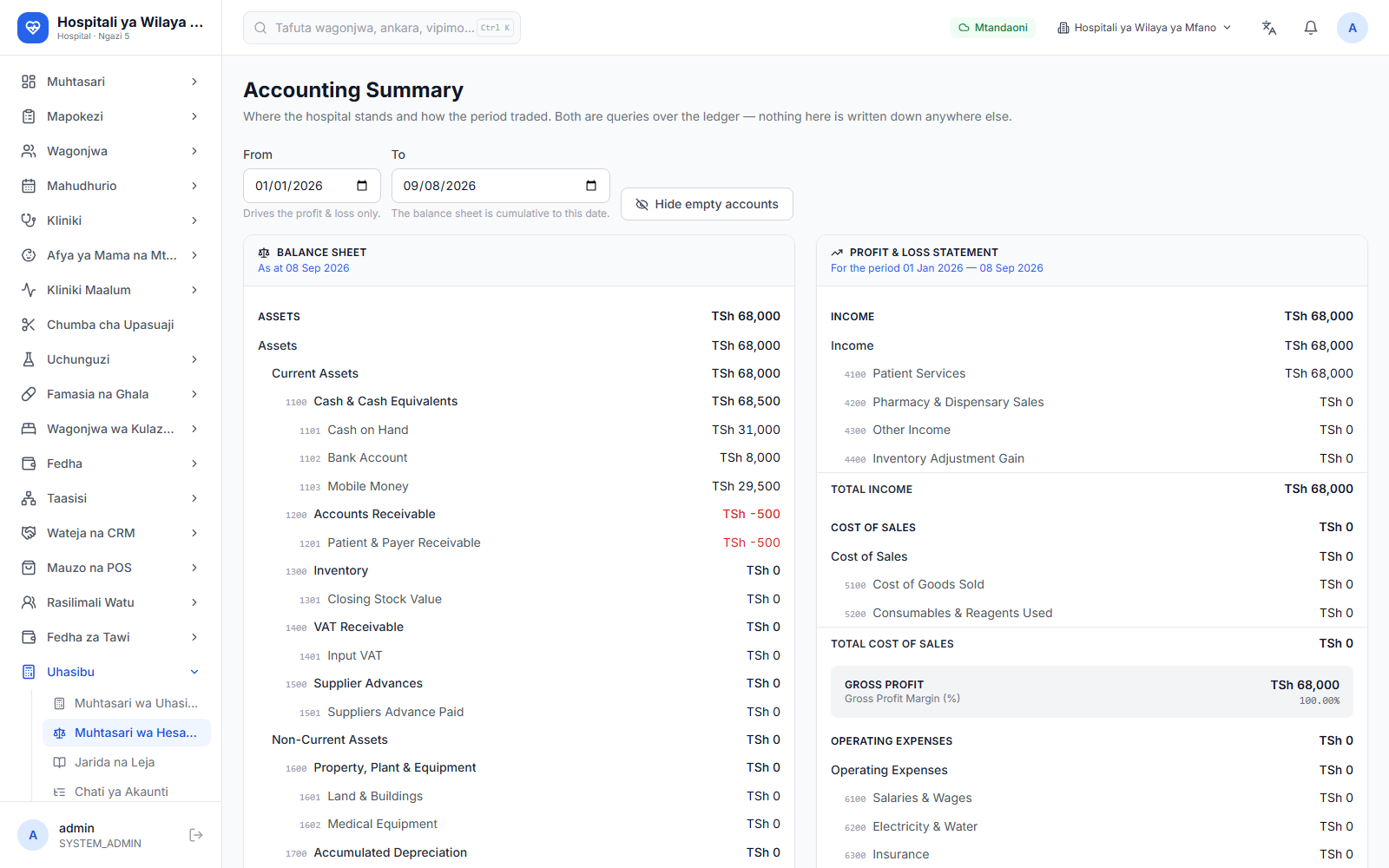
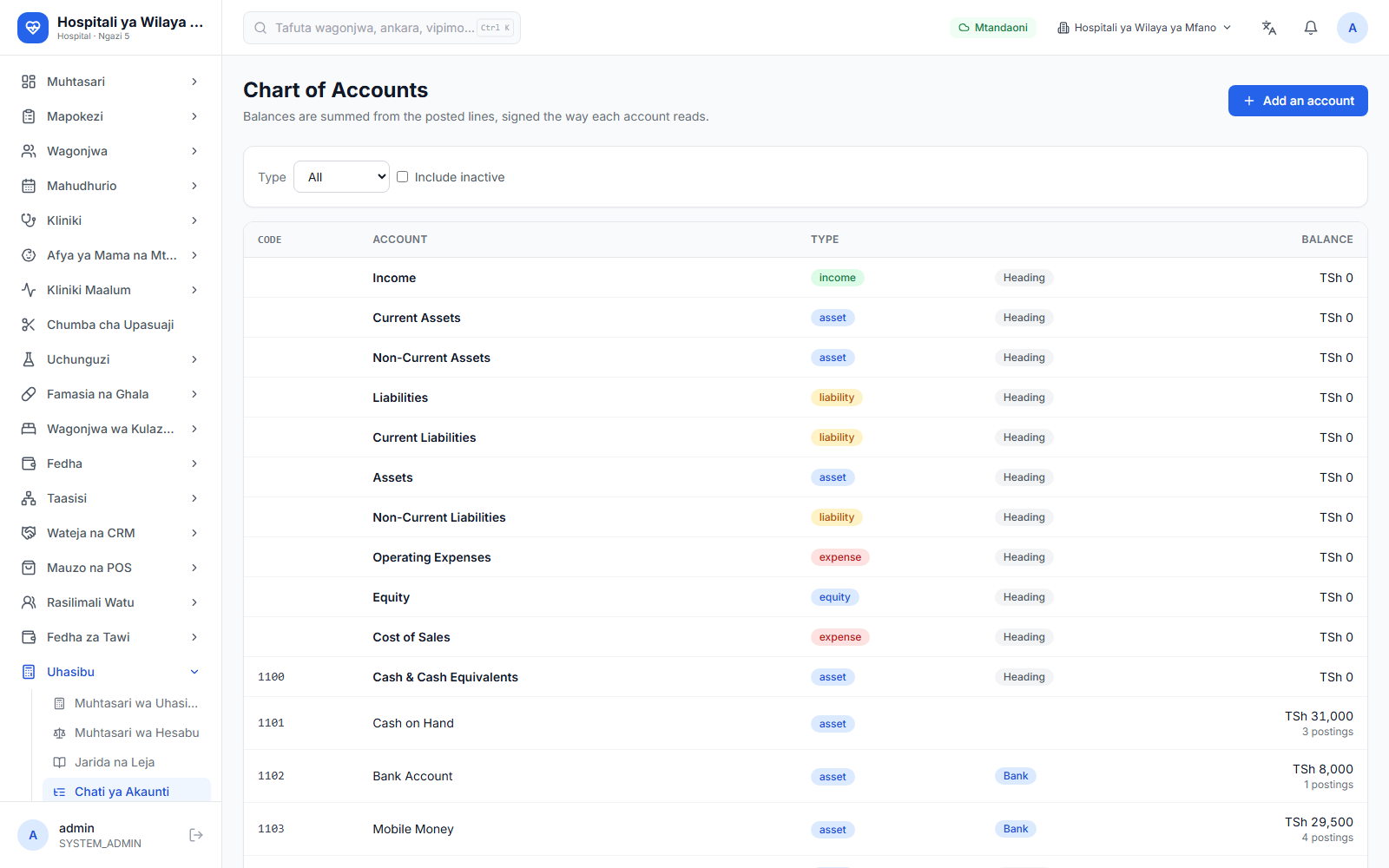
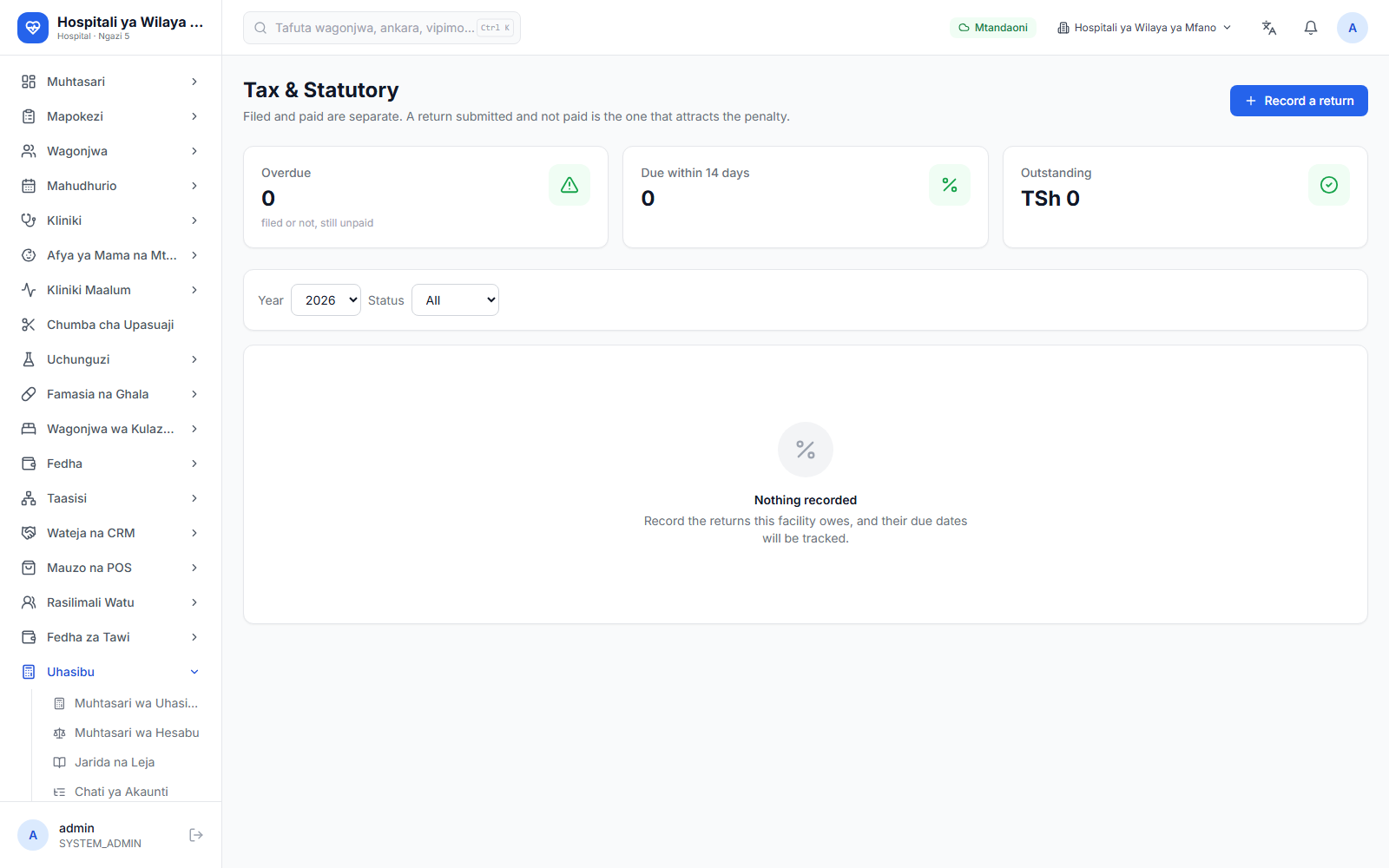
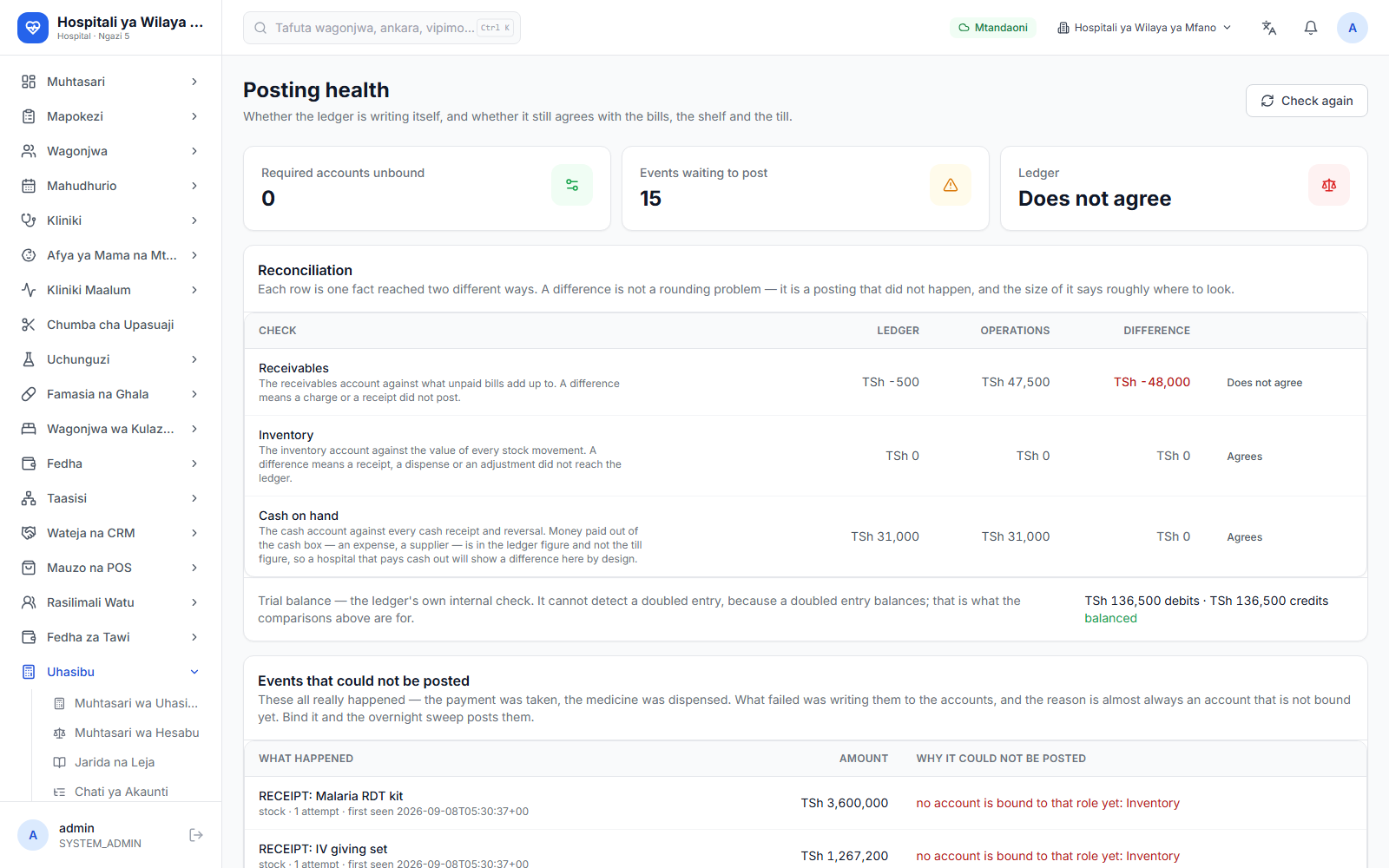
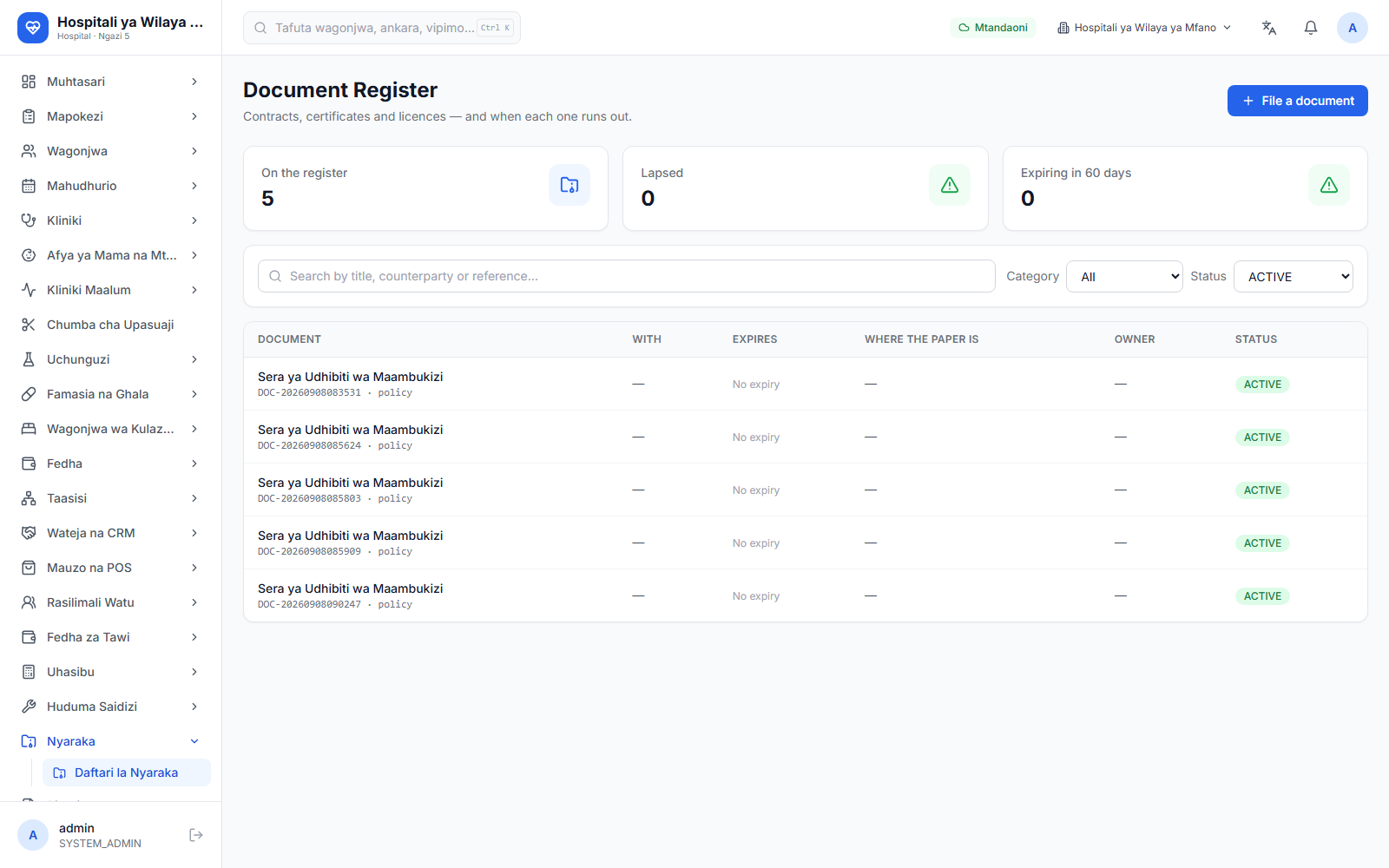
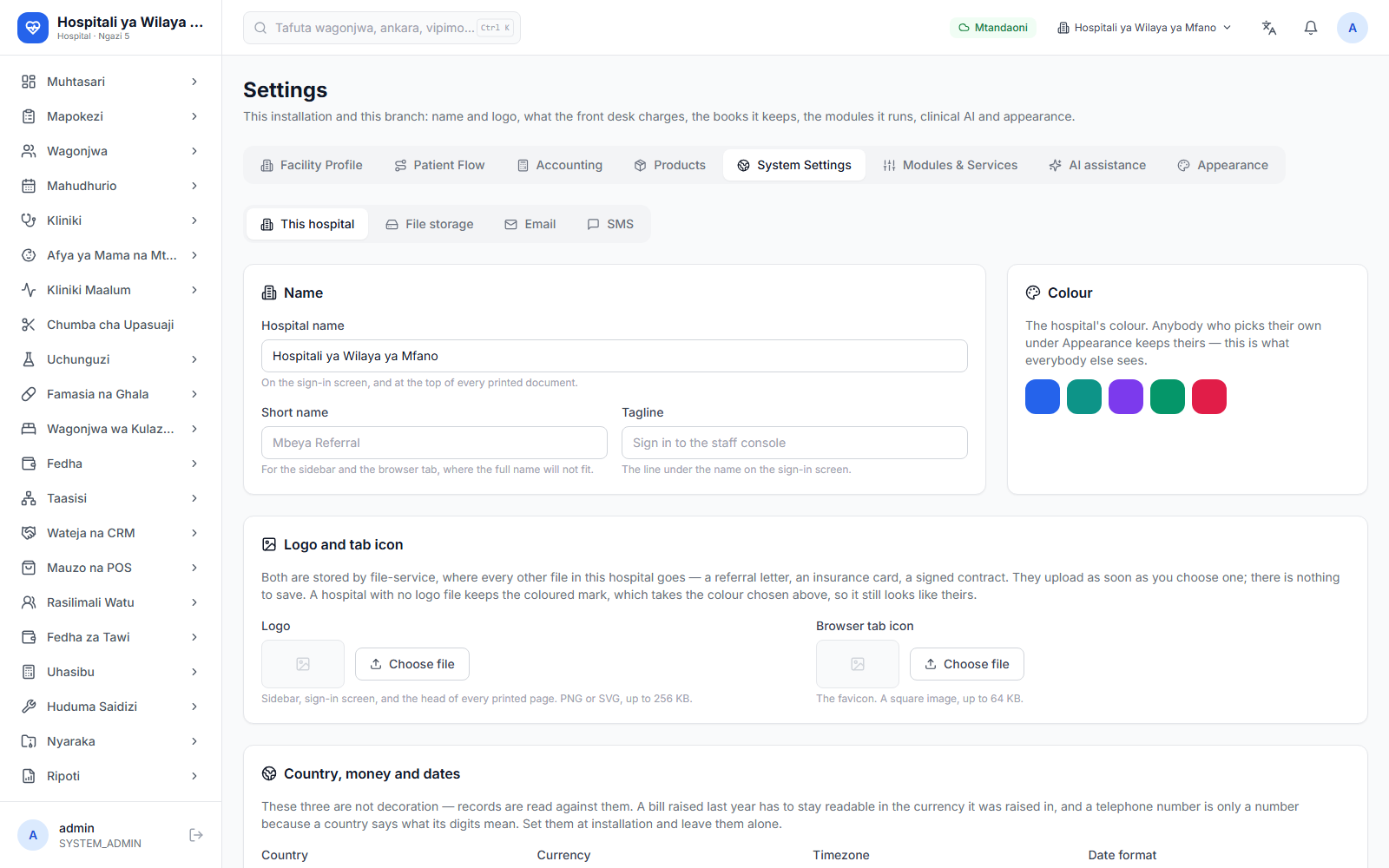
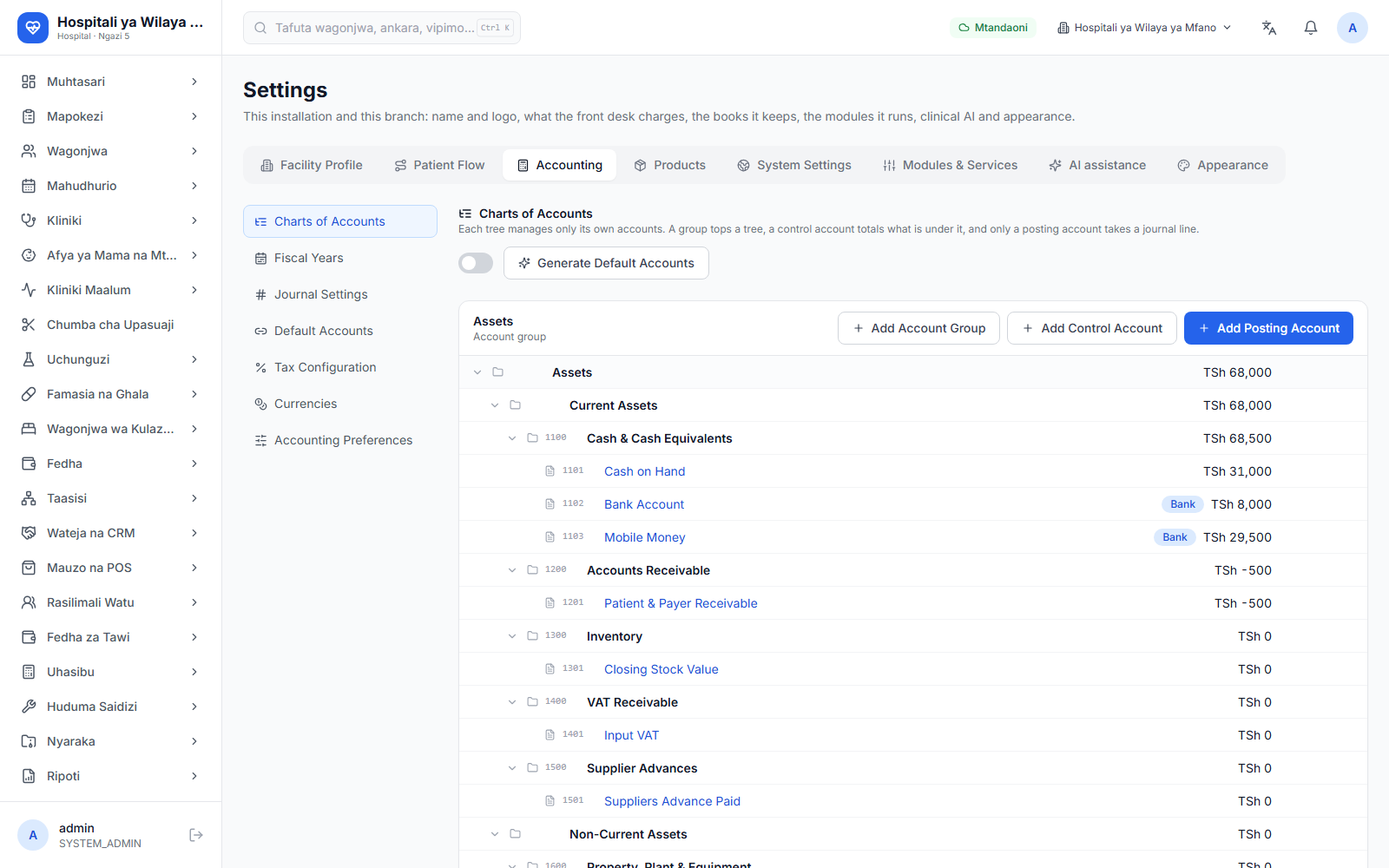
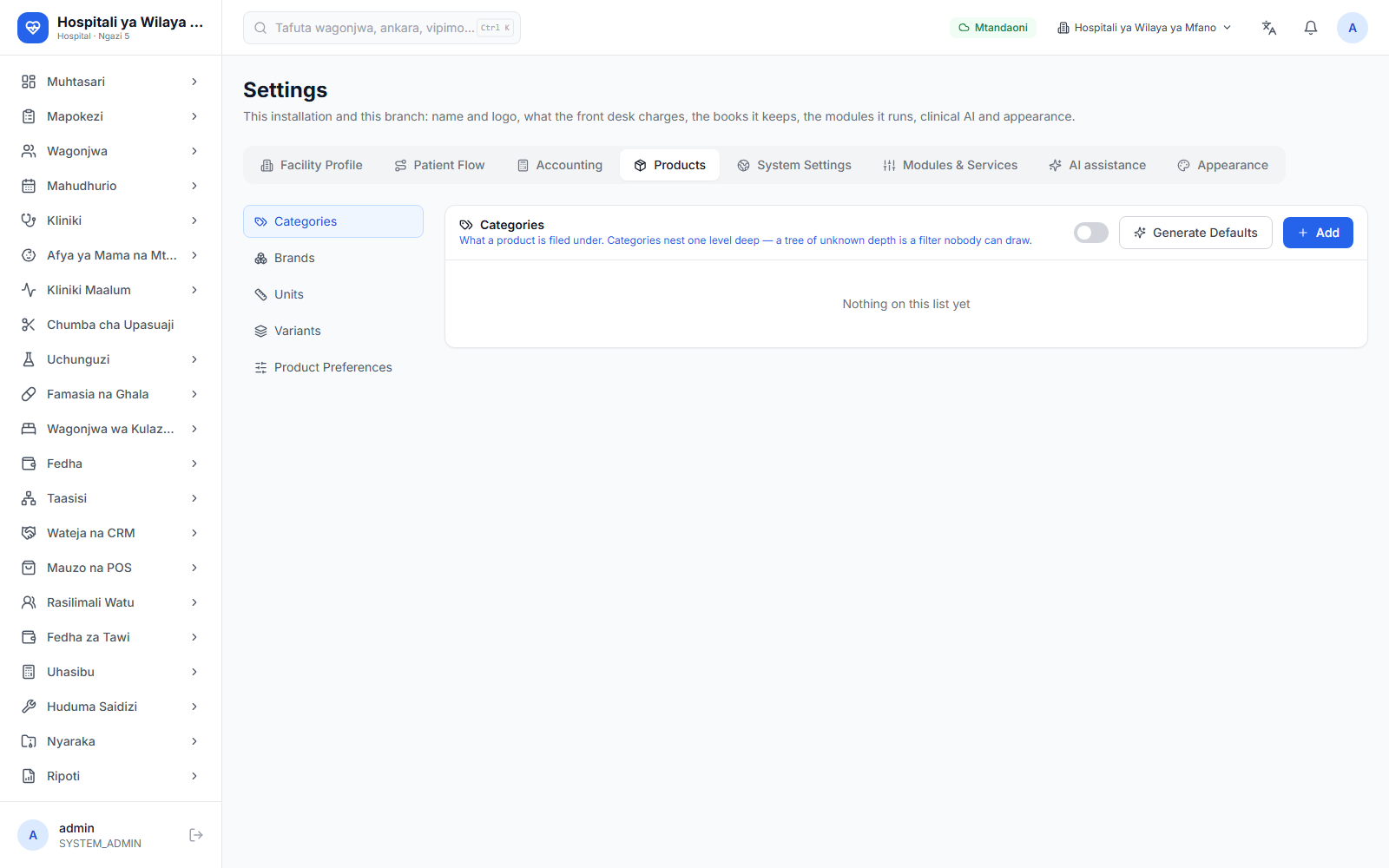
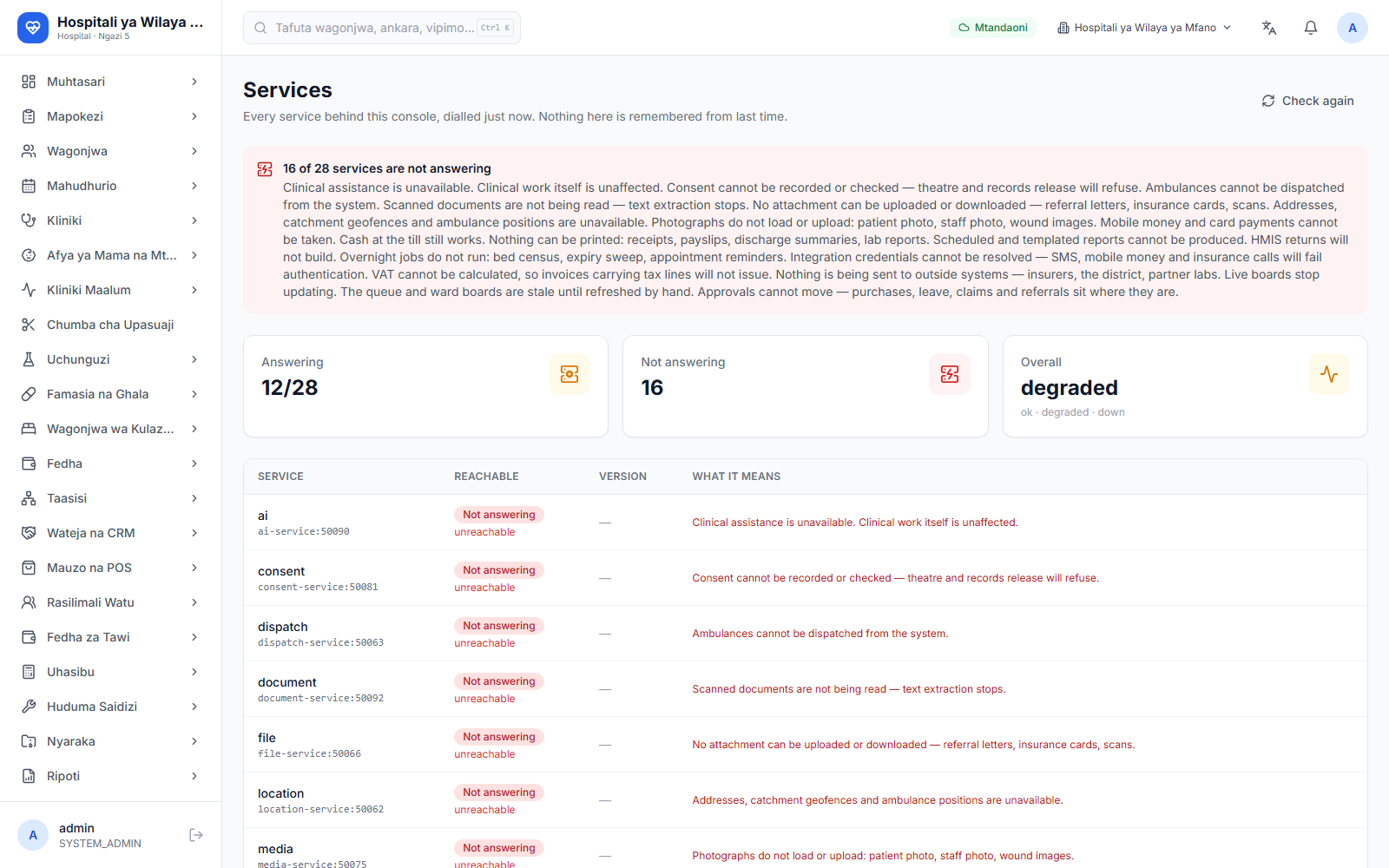
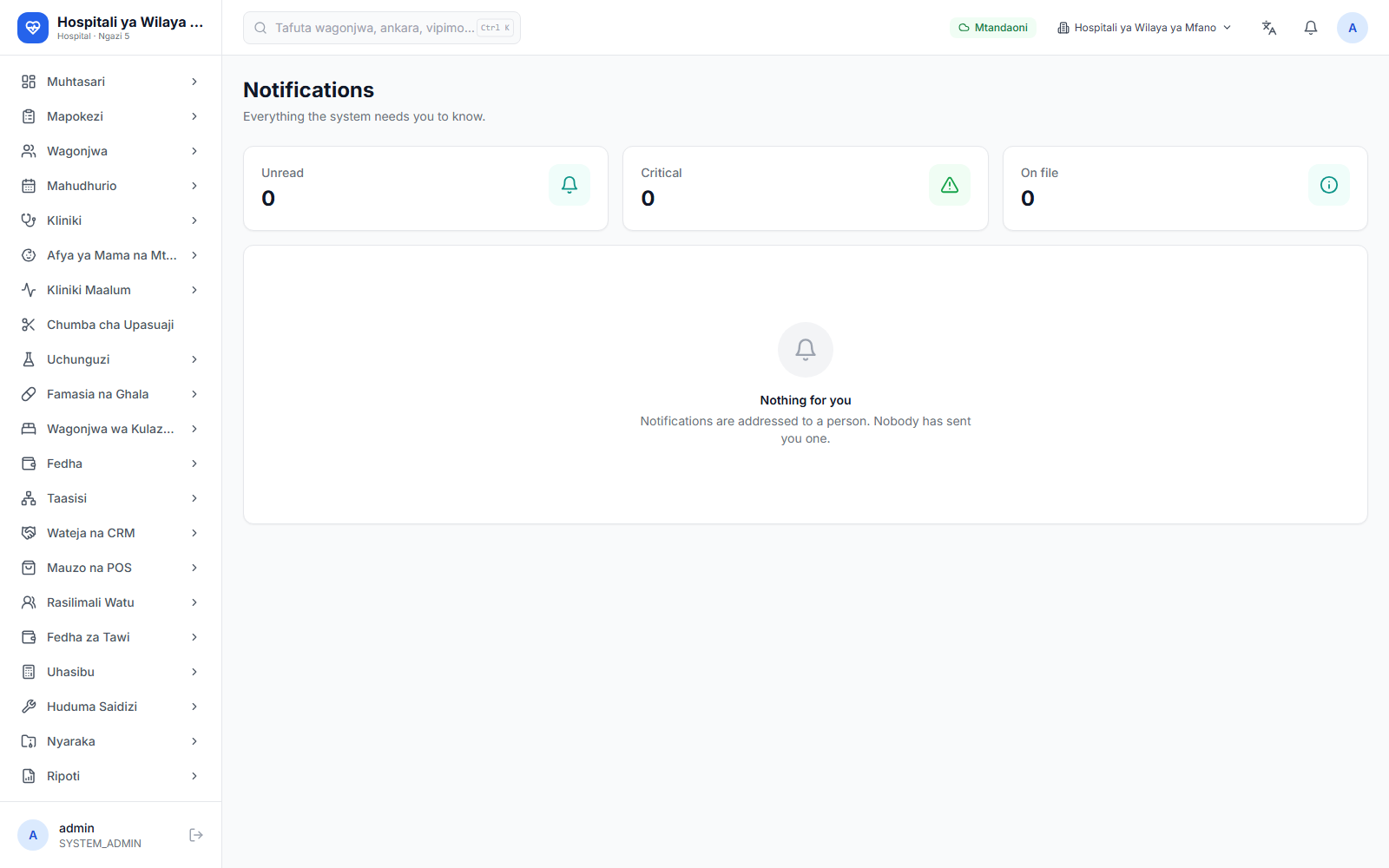
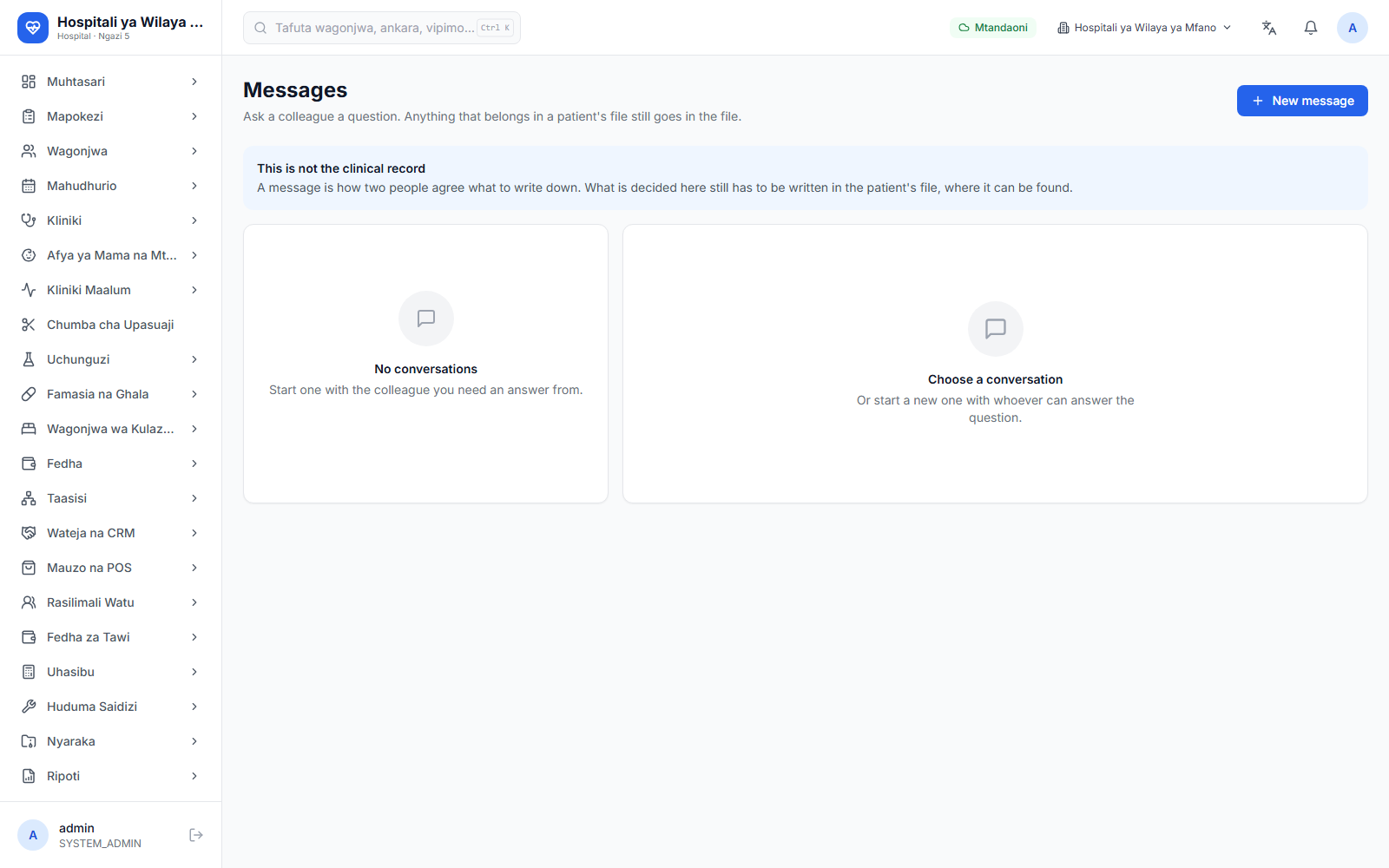
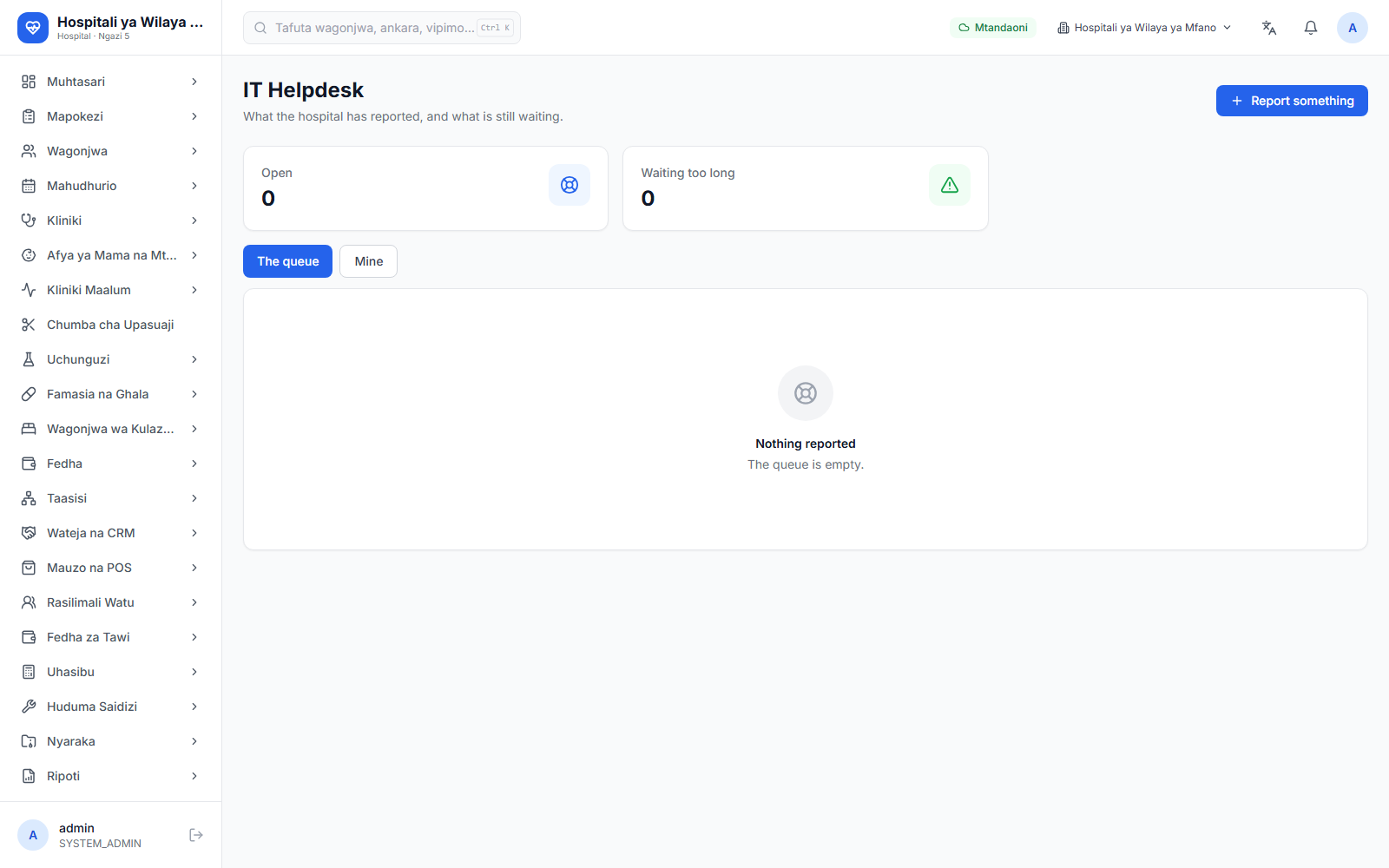
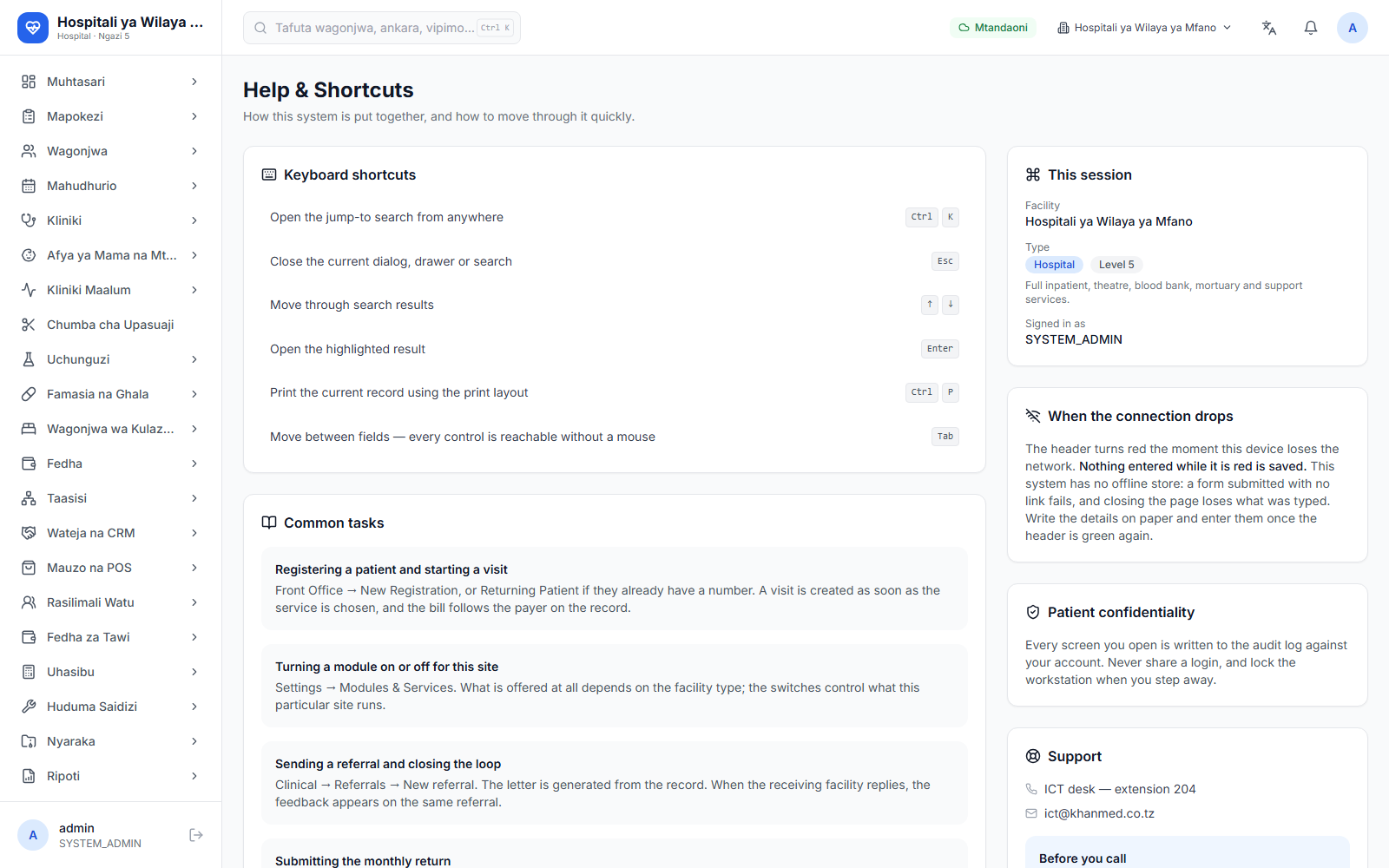
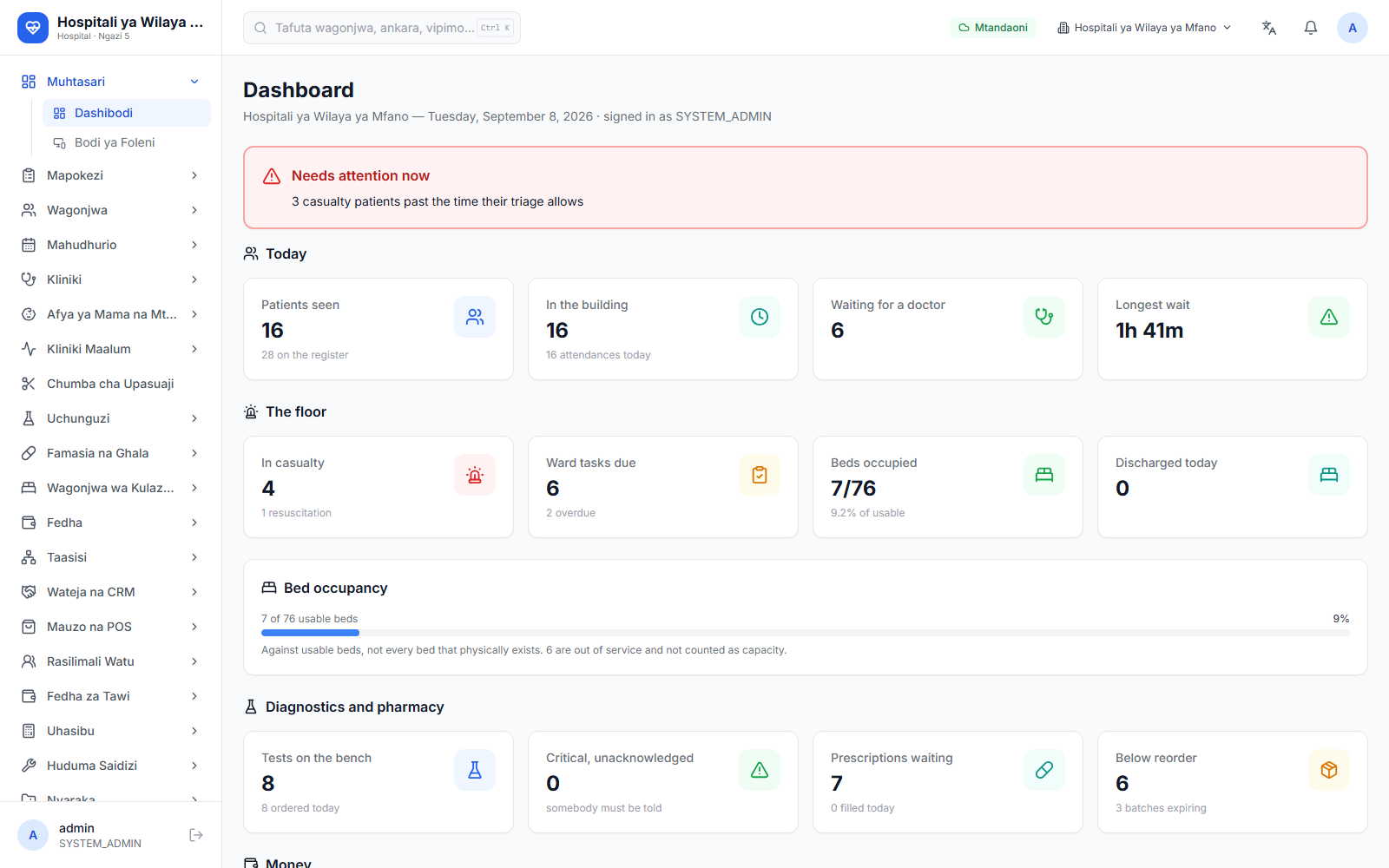
Picha zote zilizo hapa chini zilipigwa kwenye mfumo halisi ukiwa na data ya mfano ya hospitali ya kufikirika. Hakuna rekodi ya mgonjwa halisi iliyotumika. Every image below was taken from the running system, filled with the data of an invented hospital. No real patient record was used.